Column
Pieces edited out of the school’s own material, to show where the reading is. Every one of them leads back into the material itself.

The Currency and Men Bearing the Name Frank
An inscription meaning 'King of the Franks' became the name of a currency. A great king established a silver system that lasted a thousand years, and a printer in a distant land supported the credit of paper money.
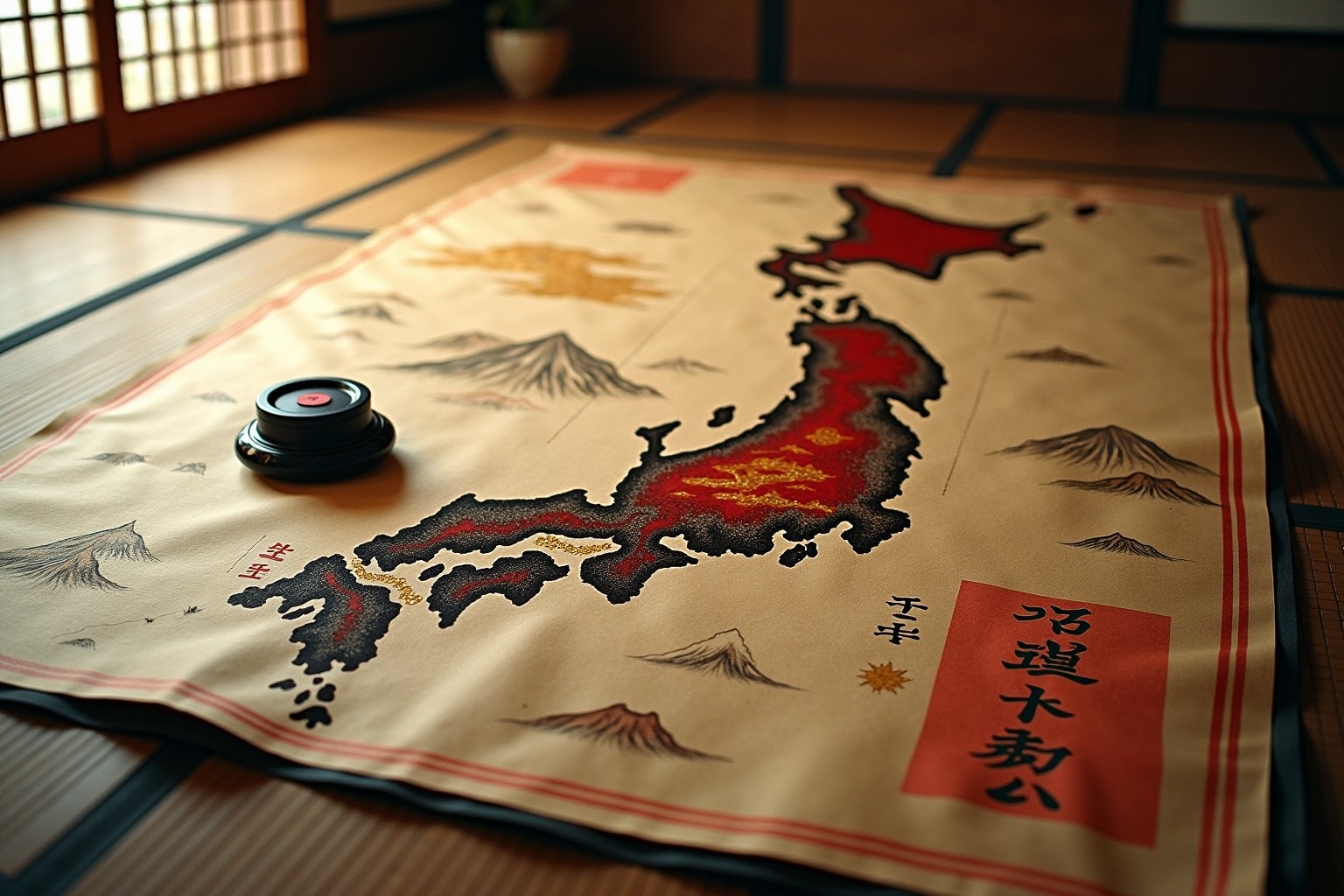
The Fate of Gold, Divided by Its Use
The Toyotomi faction converted the gold and silver left by Hideyoshi into military power, while Tokugawa Ieyasu established a monetary system valid throughout the country. This is the story of how gold and silver from the same era met completely opposite ends depending on how they were used.

The Rebellion that Began with an Account Book, and the Cannonballs Paid for with Rights
The rebellion began not with a sword, but with an account book. Under a daimyō said to have reported his 40,000-koku domain as 100,000 koku, the tax rate doubled. The bodies of those unable to pay were subjected to torture, and to quell the eventual uprising, foreign cannonballs were fired from the sea.

The Accounts of a Kingdom Facing South and Beyond the Sea
In the second half of the twelfth century, Castile struck gold coins with inscriptions entirely in Arabic. From this south-facing kingdom would later emerge the tax system imposed on the silver of the New World.

The Value of the Yen as Defined by the 20 Yen Gold Coin
The old 20 yen gold coin was the highest denomination established by the New Coinage Act. The value of this coin, which equated one yen to 1.5 grams of pure gold, was halved in the 30th year of Meiji. Behind this was the war indemnity left in London.

Coinage Struck on Paper, the Promise of Leiden
In besieged Leiden, silver ran out, and coinage was struck from church books. What backed this paper, which had no metallic support, was a single promise: that if the city survived, it would be redeemed for specie.

The Unit of Weight Called the Grain
The American silver dollar was defined as three hundred seventy-one and one-quarter grains. The Indian rupee is also described in grains. This is the story of a unit of weight that connects two coins from different countries and eras.

The Fate of Paper Inscribed with "Time Flies"
In the center, "FUGIO" (time flies) and a sundial; below it, "MIND YOUR BUSINESS." Printed to finance the War of Independence, the Continental currency, contrary to its motto, lost its value and left an idiom in the English language.

The Three No's and the Unpayable Bill
During the reign of Louis XVI, reformers pledged "no bankruptcy, no new taxes, no borrowing," supported a war with massive debt, and finally challenged the wall of privilege. While sound coinage maintained its standard, the state's finances were heading towards collapse.

How Inheritance Tax Prevented the Rise of Zaibatsu — 1905, 1945, 1950
A tax created to fund the Russo-Japanese War became, forty-five years later, a tax with a top rate of 90 percent. In between lies the dissolution of the headquarters of four zaibatsu. We will examine this through three key years.

The Coin of a Memory: Never Trust Paper
After John Law's bubble burst, French currency returned to metal. The écu of Louis XV was a symbol of stability that lasted for about half a century, yet during this time, the nation's finances were heading towards bankruptcy. In an age of stable coinage, something else was eroding the state.

The Cardinal's Purse and the Debased Copper Coin
After the Fronde ended, Mazarin left a personal fortune of about thirty-five million livres. Around the same time, the liard, a copper coin in the hands of the common people, was devalued to one-third of its face value in about a month.

The Gold Coin That Didn't Change for 500 Years
The Italian city-state of Venice did not change the standard of one of its gold coins for over five hundred years. In a period during which multiple dynasties rose and fell, why did this gold coin remain unchanged and see such widespread use?

The Sun King's Silver Coin and the Empty Treasury
A silver écu struck in 1690. The reforms of the Controller-General of Finances were supposed to have brought the treasury a surplus. Why, then, did France grow poorer? We trace the history behind the minting of this silver coin.

The Coin on the Day the Rice Vanished
When famine swept the land, the single coin that sustained daily life reverted to mere metal. Amid rice riots, policymakers offered different answers. It was a question of circulation versus accumulation.

Tamperers of Scales, Clippers of Coins
“Debasement,” the practice of reminting coins with reduced precious metal content, brings short-term profits to the issuer but invariably leads to price chaos. It is a time when currency, which should represent integrity, becomes an object of anger.

Machine-Struck Credit: The Pillar Dollar
Two pillars topped by a crown flank two hemispheres. From a distorted lump of silver to a perfectly round coin. A single innovation applied to the edge ended a long-standing malady and built the foundation for worldwide credit.

Coins Struck by a Dead King
Even after their authority had vanished, why did people continue to strike the names of long-dead kings on their coins? It is because the trust in a currency outlived the power that created it.

History as Driven by Market Realities
The official value set by laws and agreements, and the true value indicated by the market. The discrepancy between these two can strip people of their wealth or carry precious metals across borders. This article traces the workings of these "market realities"—a force often unmentioned in historical sources.

A Silver Coin with No Place at Home
There was once a silver coin disliked in its homeland for its low fineness. Yet, precisely because it had no place to belong, it embarked on a journey, from the Eastern Mediterranean to North America, making its mark upon the world. This is the long journey of the silver coin that bore the lion.

The Emperor's Four Conduits for a War Fought with Metal
The emperor detested banknotes and demanded metal. This obsession led him to draw war funds from an enemy nation's banks, siphon wealth from conquered lands, and seize control of the bank itself. It was a financial system that functioned only by continuously winning.

Gold: A Single Promise
Paper banknotes could always be exchanged for a fixed amount of gold. This promise, believed in by the 19th-century world, was a system based on the premise that not everyone would doubt it at the same time. That premise collapsed with every war.
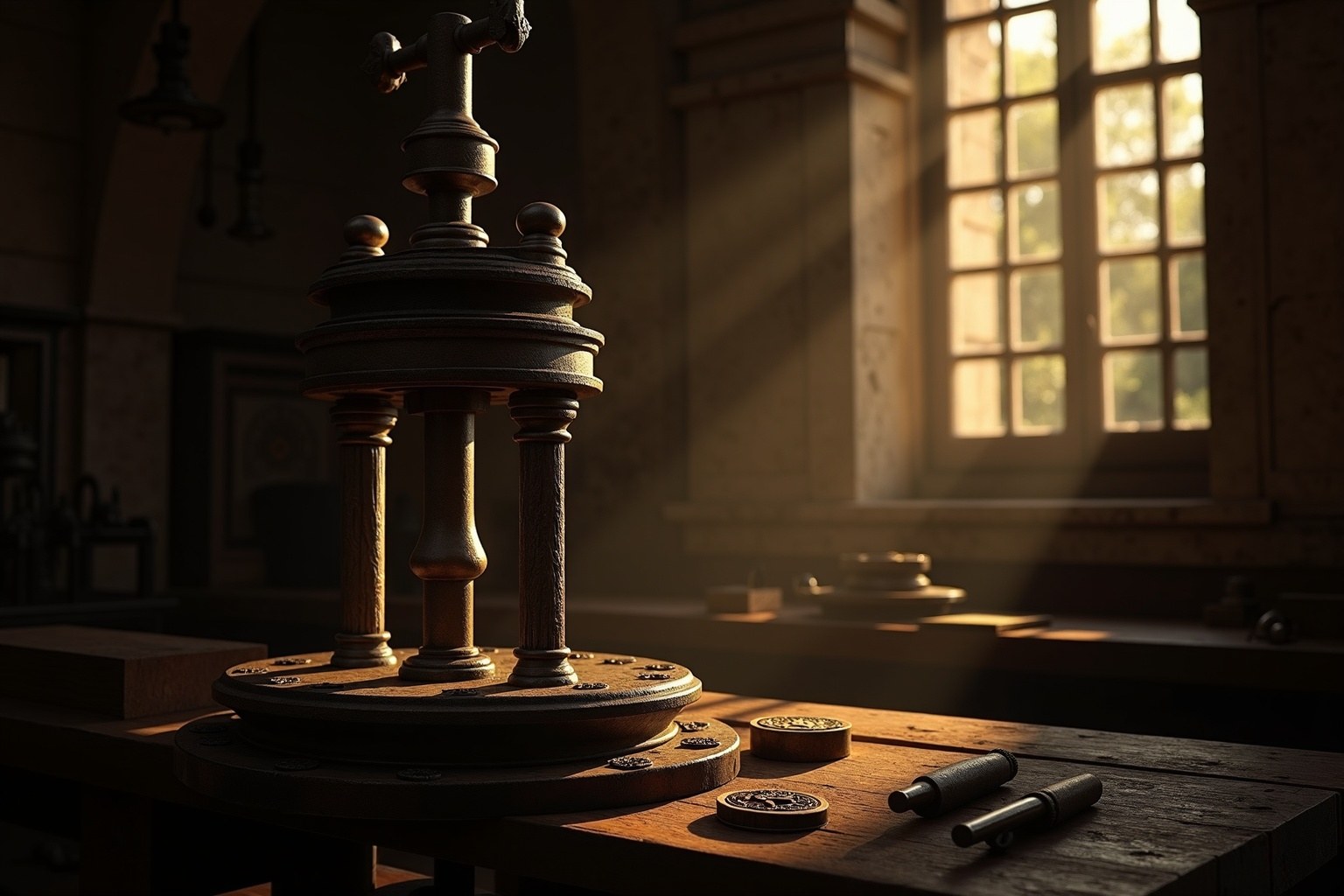
The Precision and Beauty of the Unclippable Gold Coin
The Louis d'or, a gold coin born in 1640. Its perfect circular shape and artistic portrait were intended to thwart the practice of stealing gold. We trace the precision, beauty, and the hidden side of wealth creation embodied in a single coin.
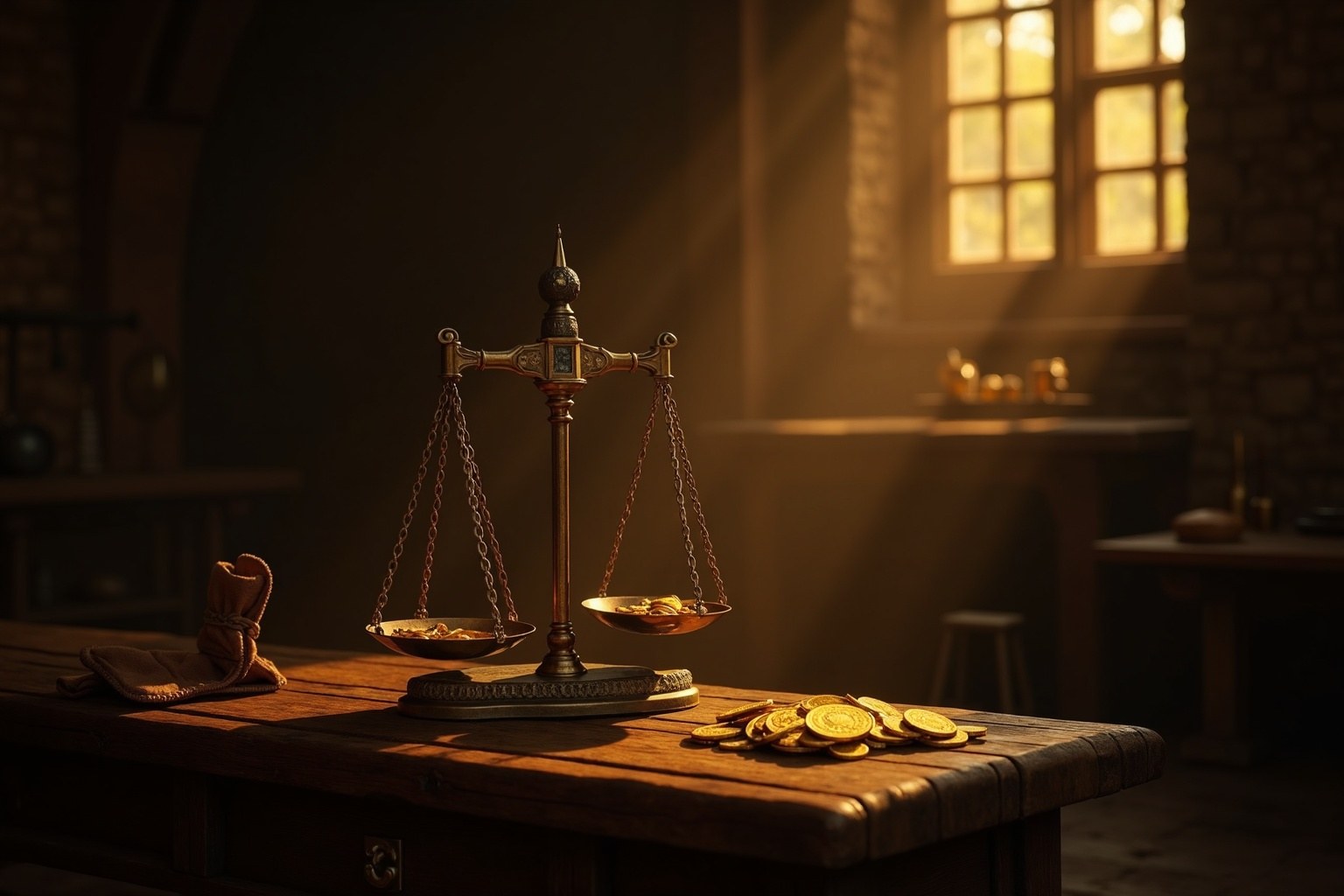
A Face on the Silver, Gold in the Coffer
For the first time, a realistic profile of the king appeared on French coinage. This declaration of royal authority, which began with a single silver coin, would eventually lead to a ransom for a lost war and funding for a brilliant culture.

The phrase "Worth as much as Potosí"
Potosí, a silver mine in South America, became a byword for "immense wealth." Its silver travelled the world and moved history, but for the land where it was mined, it left not riches, but countless deaths.

The Prestige of the Franc That Dropped Two Zeros
In 1960, France issued a new franc, dropping two zeros from the old one. The goal was to restore the prestige of a "heavy franc." The hope entrusted to this single coin would eventually lead to a challenge against the global monetary order, and then against the faceless market.

Coinage of a Conquered Land, Engraved with a Crocodile
A Roman bronze coin minted in Gaul bears the face of the emperor and a crocodile commemorating the conquest of Egypt. What did it mean for a conquered people to use their conqueror's victory in their daily lives?

Those Who Pay in Specie, Those Who Pay in Paper
For the same item, the price differed depending on how you paid. A discount for paying with gold coin, a surcharge for paying with paper. There was a market where this difference fluctuated daily.

The Gold Coin of the Sun that Counted a King's Ransom
A gold coin created to proclaim the brilliance of royal authority. In time, this coin also became the unit for counting the ransom of a captured king. We trace the two scenes of glory and defeat reflected by this particular gold coin.

The Finances of the King Who Struck the Sun
Despised by his enemies as the 'Universal Spider' and praised by his allies as the 'Prudent King', Louis XI's source of power, which allowed him to enrich the nation without fighting, lay in taxes, the army, and a single gold coin struck with a sun.

The Sen That Was Never Issued
In the 20th year of the Shōwa era (1945), Japan attempted to fire coins from clay. Fifteen million pieces emerged from the kilns, but the war ended before a single one was issued.

When a Nation's Debt Becomes an Investment
At the exchange built in 1531, the rates for loans to monarchs were determined. When did the personal debts of kings become objects of investment? The key lies in the system of public bonds.
How to Navigate the Courses
Among the fifty-some courses, there is a recommended path. From the single introductory course to navigating the four axes—this is a guide for the first-time student.

The Temple at the Root of Money
The English word "money" and the French "monnaie" both have their roots in the name of a single temple that stood on a Roman hill.

The Currency That Was Not Accepted
Nueva España, circa 1542. The indigenous people would not accept the copper coins struck by the mint, and cacao beans remained the daily small change.

The Value of a Single Phone Call
Italy in the 1970s. Small change disappeared from circulation, and public telephone tokens began to be used as change.
A silver coin covered in chopmarks
There is an 8 Reales silver coin whose king's face has been obliterated by counterstamps. These marks were not a flaw, but a record of the number of times it had been inspected.

Two notes with the same serial number
In the British Museum, two 500 Escudo notes with the same number are displayed side-by-side. One of them is stamped as invalid.
If you would rather read the material itself
Every piece leads back to a stop, a term or a coin in the material.