Stories of money
Across countries and ages, the same things happen. Stories of that kind, gathered here.

The Wealth of the Realm, and a Handful of Earth
The edict declaring "All the wealth of the realm is mine" continues immediately with "even a handful of earth is welcome." In an age when the country was exhausted by plague and rebellion, copper was gathered to construct the Great Buddha.

The Day a Creditor Nation Became a Debtor
One hundred million guldens. That number, written on the treaty paper, summed up in a single line the fall of a nation that had once lent money to the courts of Europe.
Waiting for the War to End, While Printing Counterfeit Money
Adolf Burger, a printer forced to forge British pound notes in a Nazi concentration camp. We trace the inside of Operation Bernhard through his own testimony and the records of museums and research.

The Mint Opened by a Usurper
In 2010, 52,503 Roman coins emerged from British soil. This enormous hoard tells the story of an era when a usurper used coinage as a tool of governance and opened the first mint in London.

Man of Equations, Man of Evidence
Isaac Newton, the discoverer of universal gravitation, was also an official at the Mint. The same man who calculated the motions of celestial bodies disguised himself, slipped into taverns, and sought evidence to corner counterfeiters.

The Men Who Seized Taxes Instead of Minting Coins
In 939, Taira no Masakado burned the provincial capital of Hitachi and seized its official seals. This amounted to seizing control over the province's tax administration. Even this man, who declared a new state, shows no evidence of having minted his own coins.

The Melted Throne and the Wallet of War
In 1689, Louis XIV melted down the silver furniture that adorned the Palace of Versailles to pay for his war. His throne, covered with silver plaques and sculptures, was among the pieces.

A Kingdom That Created Wealth with Paper, and Was Burned by Paper
A gambler who stabbed a man in a duel and was sentenced to death took control of France's finances. His idea that increasing paper money would stimulate the economy threw the country into a frenzy, eventually leaving long-lasting after-effects.

The Indemnity That Never Reached Japan
The indemnity from the First Sino-Japanese War was a colossal sum, more than four times Japan's annual revenue. However, this money was never transported to Japan; it was received in London as a figure in a ledger.

Who Financed the Meiji Restoration?
In the seventh year of the Ansei era, in an Edo where the Great Elder had been assassinated, the smallest koban in Japan was born. In this year, when political upheaval and currency debasement coincided, both the anti-shogunate and pro-shogunate forces needed money for their respective struggles. Where did that money come from?
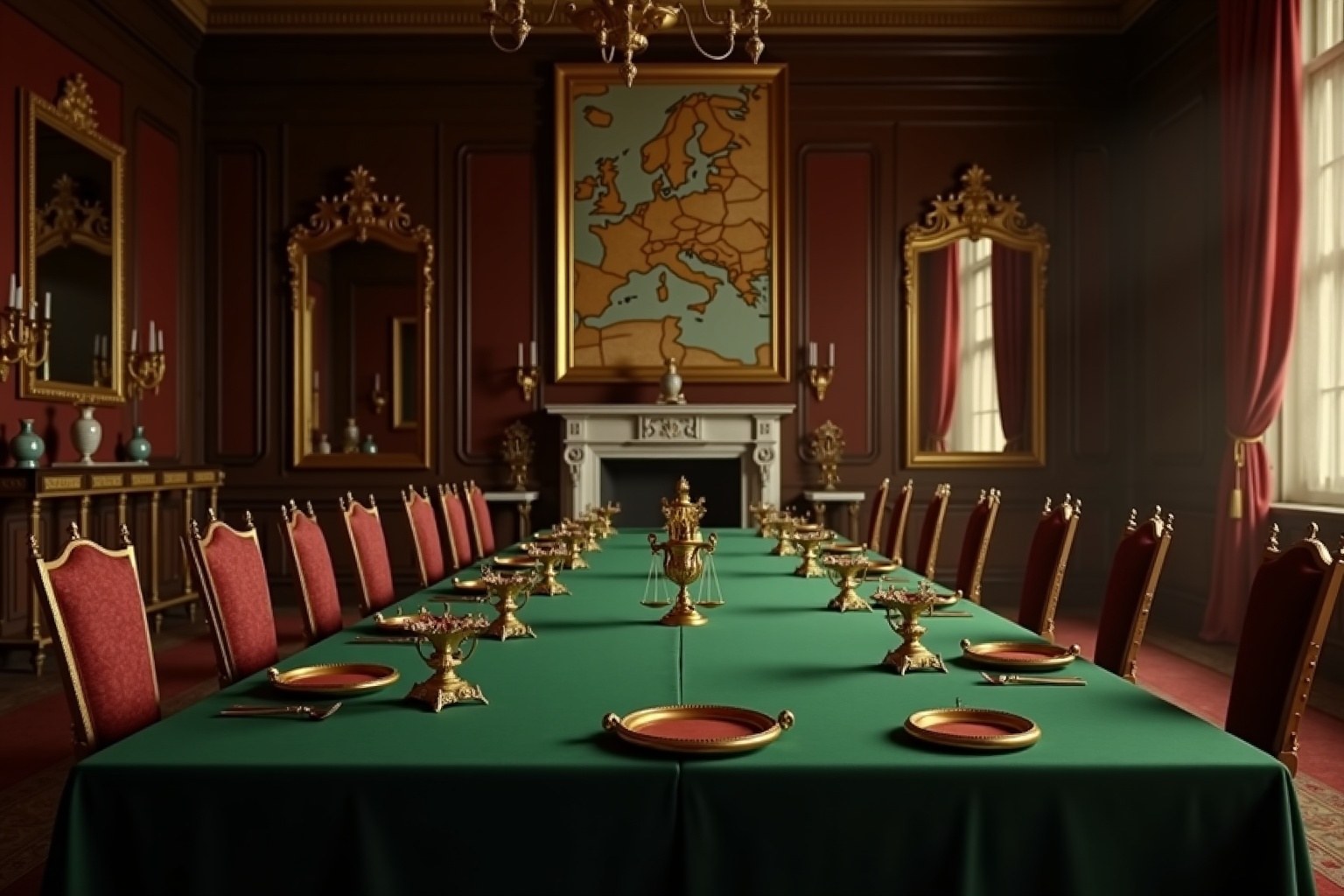
Coins of Different Faces, but the Same Weight
An emperor of France, a king of Belgium, a goddess of Switzerland. Coins bearing different faces, words, and country names on one side circulated at equal value across borders. There was only one promise.
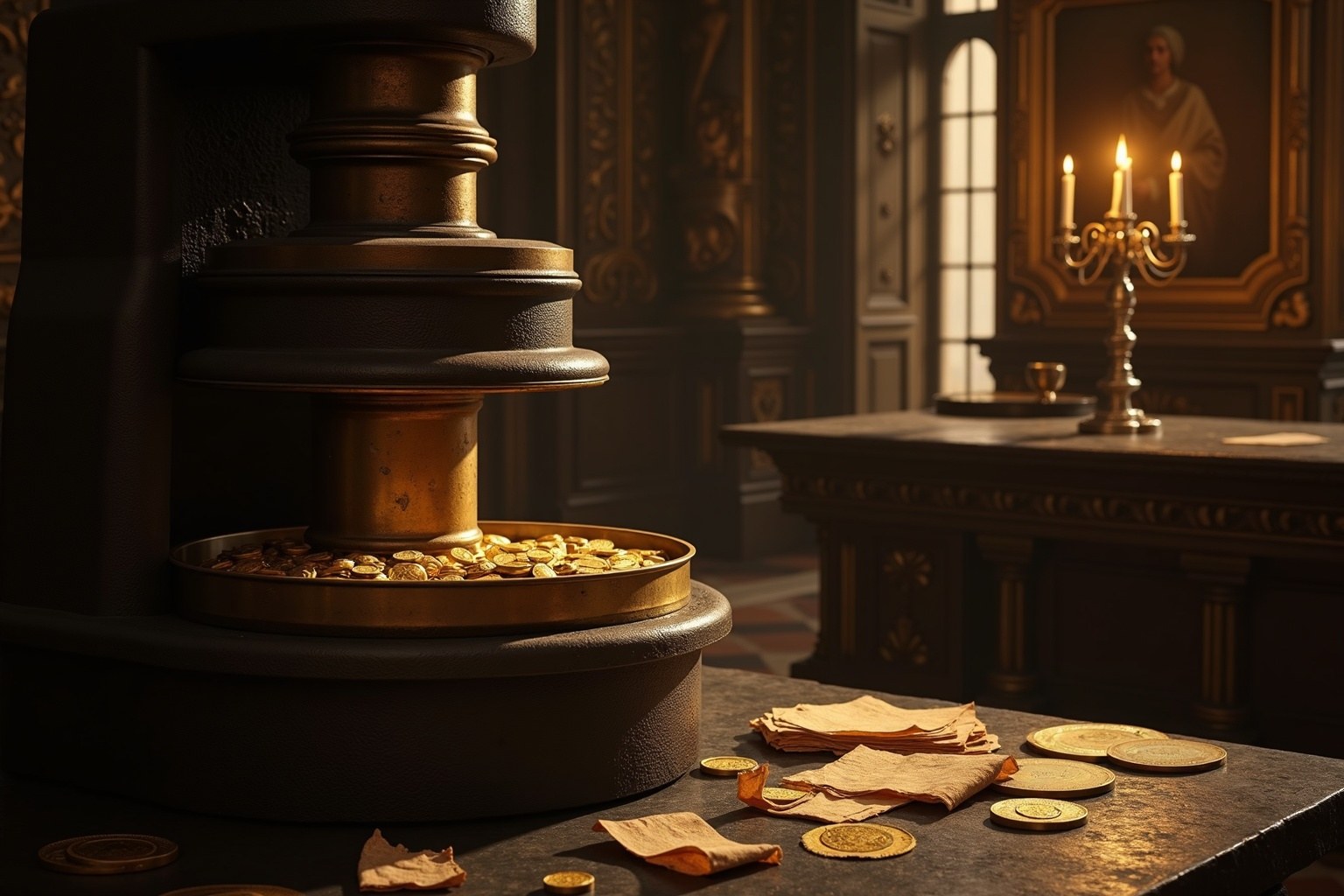
Stable Coinage and a Bankrupt Kingdom
During the era of Louis XV, France's metallic currency remained stable for half a century, and trade grew. Yet, by the end of that same century, the kingdom was bankrupt. If the value of the currency was not changing, why did its finances collapse?

A Promise Locked in a Vault, A Door That Never Opened
In 1917, the promise to exchange gold coins for banknotes was suspended. An economic boom born from the war in Europe created nouveaux riches and queues of people seeking rice, eventually leading to a long recession.

The Rebellion that Began with an Account Book, and the Cannonballs Paid for with Rights
The rebellion began not with a sword, but with an account book. Under a daimyō said to have reported his 40,000-koku domain as 100,000 koku, the tax rate doubled. The bodies of those unable to pay were subjected to torture, and to quell the eventual uprising, foreign cannonballs were fired from the sea.

Coinage Struck on Paper, the Promise of Leiden
In besieged Leiden, silver ran out, and coinage was struck from church books. What backed this paper, which had no metallic support, was a single promise: that if the city survived, it would be redeemed for specie.

The Three No's and the Unpayable Bill
During the reign of Louis XVI, reformers pledged "no bankruptcy, no new taxes, no borrowing," supported a war with massive debt, and finally challenged the wall of privilege. While sound coinage maintained its standard, the state's finances were heading towards collapse.

The Cardinal's Purse and the Debased Copper Coin
After the Fronde ended, Mazarin left a personal fortune of about thirty-five million livres. Around the same time, the liard, a copper coin in the hands of the common people, was devalued to one-third of its face value in about a month.

The Coin on the Day the Rice Vanished
When famine swept the land, the single coin that sustained daily life reverted to mere metal. Amid rice riots, policymakers offered different answers. It was a question of circulation versus accumulation.

Coins Struck by a Dead King
Even after their authority had vanished, why did people continue to strike the names of long-dead kings on their coins? It is because the trust in a currency outlived the power that created it.

The Emperor's Four Conduits for a War Fought with Metal
The emperor detested banknotes and demanded metal. This obsession led him to draw war funds from an enemy nation's banks, siphon wealth from conquered lands, and seize control of the bank itself. It was a financial system that functioned only by continuously winning.

A Face on the Silver, Gold in the Coffer
For the first time, a realistic profile of the king appeared on French coinage. This declaration of royal authority, which began with a single silver coin, would eventually lead to a ransom for a lost war and funding for a brilliant culture.

Coinage of a Conquered Land, Engraved with a Crocodile
A Roman bronze coin minted in Gaul bears the face of the emperor and a crocodile commemorating the conquest of Egypt. What did it mean for a conquered people to use their conqueror's victory in their daily lives?

The Finances of the King Who Struck the Sun
Despised by his enemies as the 'Universal Spider' and praised by his allies as the 'Prudent King', Louis XI's source of power, which allowed him to enrich the nation without fighting, lay in taxes, the army, and a single gold coin struck with a sun.

The Currency That Was Not Accepted
Nueva España, circa 1542. The indigenous people would not accept the copper coins struck by the mint, and cacao beans remained the daily small change.

The Value of a Single Phone Call
Italy in the 1970s. Small change disappeared from circulation, and public telephone tokens began to be used as change.
If you would rather read the material itself
Every article leads on to the money histories by country, the money dictionary and the coin and banknote gallery.