The phrase "Worth as much as Potosí"
Potosí, a silver mine in South America, became a byword for "immense wealth." Its silver travelled the world and moved history, but for the land where it was mined, it left not riches, but countless deaths.
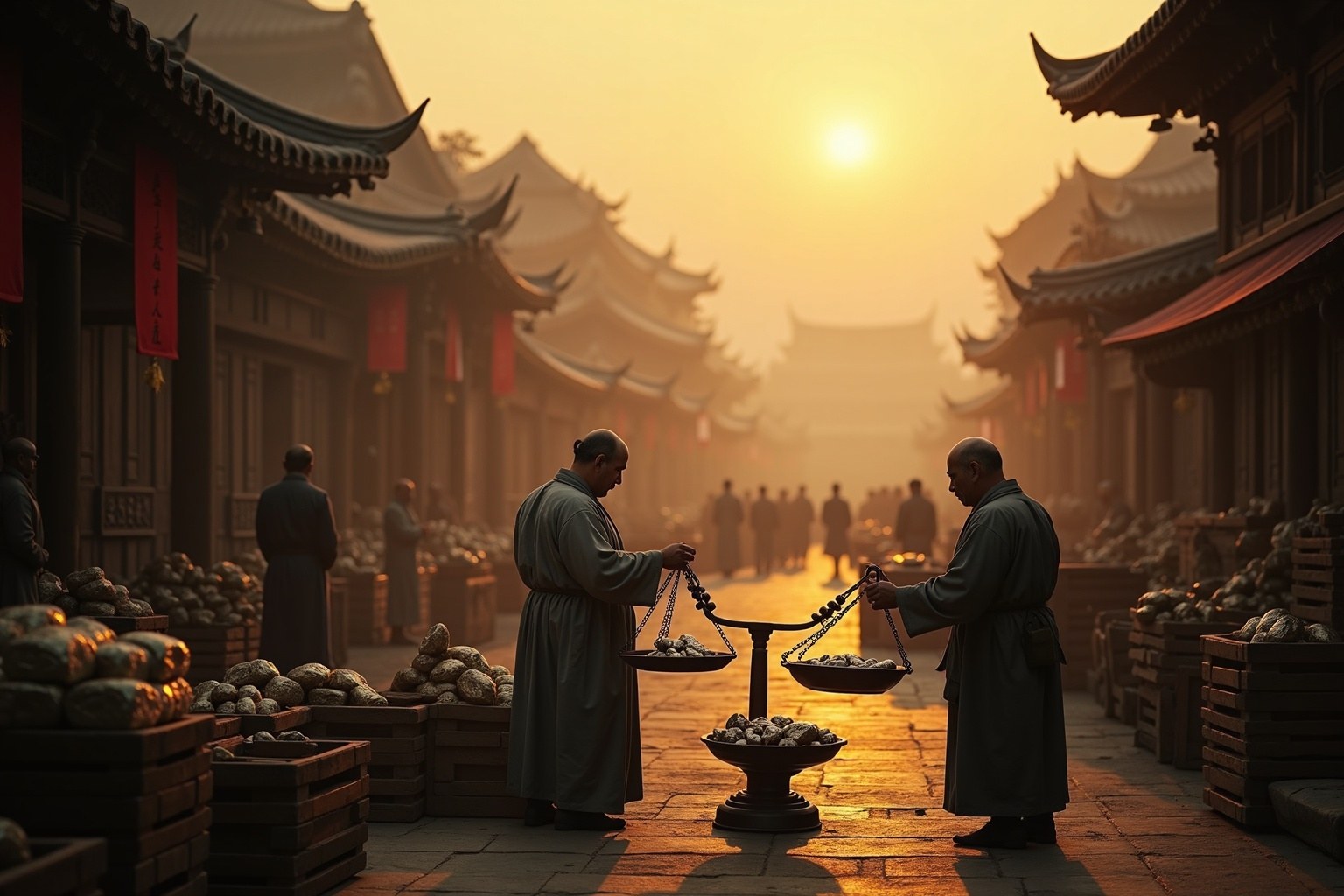
At the Foot of the Mountain of Riches
The phrase "worth as much as Potosí" was even coined to describe immense wealth. This expression refers to a single silver mountain located in the highlands of the South American Andes.
In 1545, a cone-shaped mountain discovered at an altitude of approximately 4,824 meters was named "Cerro Rico," the mountain of riches. At its foot, the town of Potosí was founded.
Silver Carried Out with Blood
In the latter half of the 16th century, the single mountain of Potosí produced about 60% of the world's mined silver. When the technique of refining with mercury was introduced in 1554, production soared even higher.
However, this wealth was built on countless deaths. Approximately 13,000 people were conscripted each year for forced labor known as the "mita." Many perished from falls, lung diseases, and mercury poisoning. The indigenous population of this region eventually lost half of its people. The silver that moved European prices was thus carried out from the depths of the earth, along with blood.
The Spanish Dollar Crosses the Sea
With the silver mined from Potosí and other mines, the Spanish Empire minted large silver coins: the 8-real silver coin, a currency people called the "Spanish dollar."
This silver coin crossed the Caribbean Sea, entered the Atlantic trade network, and flowed into the North American colonies. Despite being British colonies, Spanish silver coins were used for daily payments. A land without its own currency was being filled with the silver coins of another empire. The story of the dollar begins with this scene.
To the Great Sink on the Other Side of the World
The destination for Potosí's silver was not just Europe and North America. It crossed vast oceans and was also drawn into the great sink on the other side of the world: China during the Ming dynasty.
The Ming dynasty, having failed with its own paper currency, mandated that taxes be paid in silver, which the people trusted. This was the Single Whip Reform. The system began with a proposal by Grand Secretary Gui E in August 1530 and was spread nationwide by Grand Chancellor Zhang Juzheng in the 1580s.
Thus, silver from all over the world headed for China. Silver from Potosí, opened in 1545, was also loaded onto ships from Acapulco, Mexico, passed through Manila, founded in 1571, and reached the coast of Jiangnan in China. It was not the countries that produced the silver that grew rich, but the countries through which it passed.
More in The origin of words

The Currency and Men Bearing the Name Frank
An inscription meaning 'King of the Franks' became the name of a currency. A great king established a silver system that lasted a thousand years, and a printer in a distant land supported the credit of paper money.
The Accounts of a Kingdom Facing South and Beyond the Sea
In the second half of the twelfth century, Castile struck gold coins with inscriptions entirely in Arabic. From this south-facing kingdom would later emerge the tax system imposed on the silver of the New World.

The Unit of Weight Called the Grain
The American silver dollar was defined as three hundred seventy-one and one-quarter grains. The Indian rupee is also described in grains. This is the story of a unit of weight that connects two coins from different countries and eras.
If you would like to read on
Everything in these pieces comes from the material itself.