A Coin That Lived for 317 Years
In 1668, a single coin born in Kameido, Edo, brought an end to the era of imported coins. This coin would survive famines and continue to be legal tender in Japan until the Shōwa era.
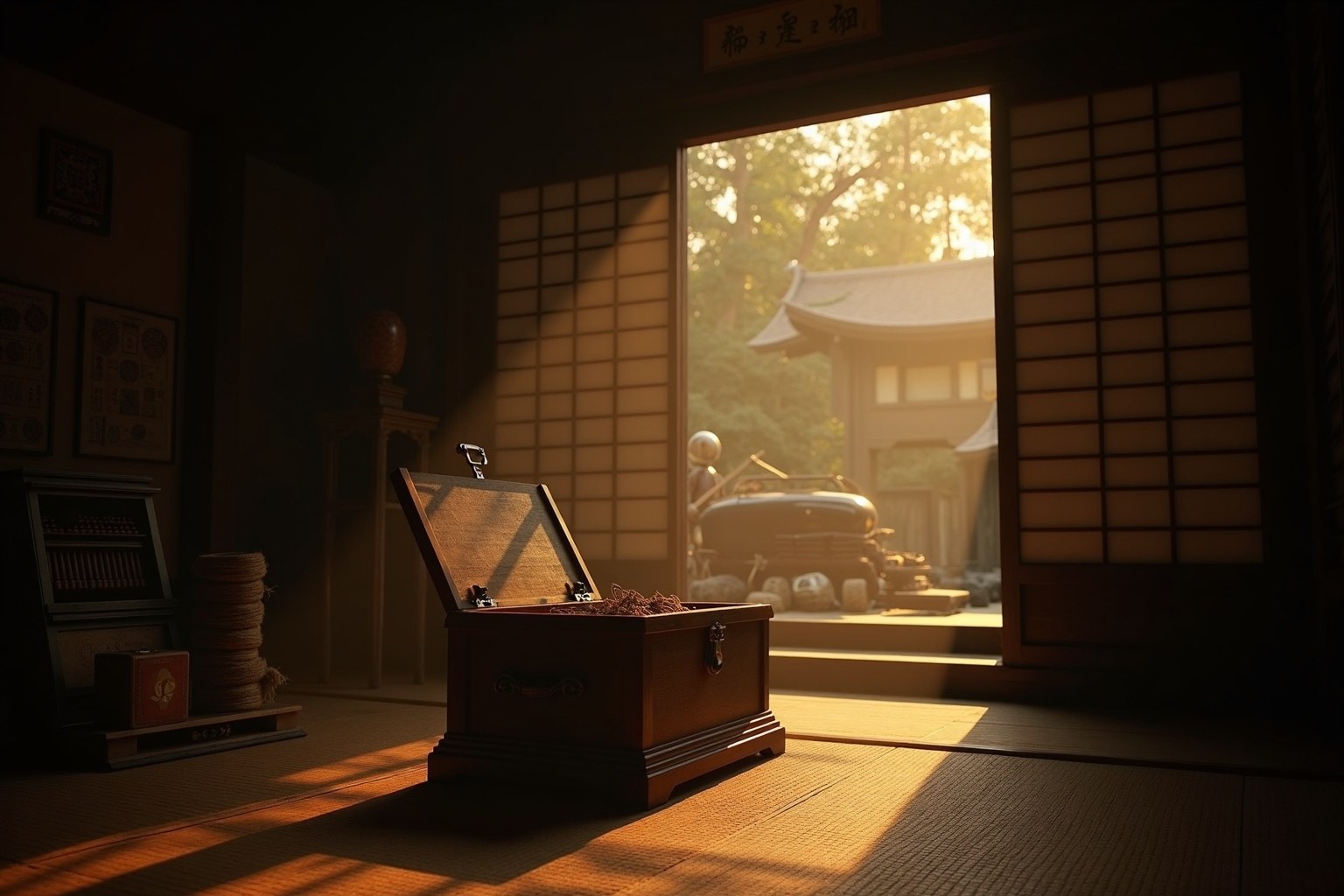
In 1668, a mint was opened in the village of Kameido in Edo, and a large quantity of Kan'ei Tsūhō coins were cast. Because they have the single character "文" (bun) on the reverse, they are called Bunsen.
A Quiet Revolution
The newly cast Bunsen coins were of good quality and available in sufficient quantity. Then, in 1670, the shogunate prohibited the circulation of any coins other than the Kan'ei Tsūhō.
In the cash boxes of money changers, obsolete Eirakusen, Song dynasty coins, and Bitasen were set aside, string by string. The era of living with coins made in China, which had continued since the end of the Heian period, was over. This single coin also settled the era of conflict known as erizeni. While Nobunaga had tried to arbitrate by setting exchange rates, the shogunate eliminated the source of the conflict itself by distributing a sufficient supply of high-quality, uniform coins. It was a quiet revolution.
The Day Coins Reverted to Metal
Coins are a tool for daily life, but they cannot be eaten.
From 1782, the color of the sky changed. The following year, Mount Iwaki and Mount Asama erupted, and dust from the Laki volcano in Iceland covered the Northern Hemisphere, weakening the sunlight. The ash from Asama was not the sole cause; the rice crops had already been failing since the previous year.
In the Hirosaki Domain, over 102,000 people starved to death, and in the Morioka Domain, over 75,000, accounting for roughly a quarter of their populations. Between 1780 and 1786, the country's population decreased by over 920,000. Local records even documented instances of cannibalism. In years without rice, coins are the first thing to revert to being mere metal.
A Memory in the Palm
The prices for daily life in the city of Edo were written in zeni: bathhouses, hairdressers, soba noodles, theater admission. The Kan'ei Tsūhō coins that people handled daily included copper 1-mon coins, iron 1-mon coins, brass 4-mon coins, and iron 4-mon coins.
From around the Genbun era, copper became scarce, and large quantities of iron coins were cast. In the palm of one's hand, the weight of copper and iron felt different. People must have remembered this difference with their fingers. The saying, "Even judgment in hell depends on money," also became ingrained during this age of zeni.
Change in the Shōwa Era
The Kan'ei Tsūhō coin itself first began to be minted in 1636. Three hundred and seventeen years passed. This coin was officially demonetized by law in the 28th year of Shōwa (1953), under the Small Currency Disposition Act.
A coin from the Edo period was still money in Shōwa Japan. There are few examples of a single type of coin remaining in circulation for so long. Stories even remain of these coins being mixed in with the change at candy stores in the Shōwa era.
Today, a Kan'ei Tsūhō can be acquired for a few hundred yen. Yet, each single coin carries with it the hands of the artisans who cast it and three hundred years of the people who used it. The worn characters are the traces of countless palms that have smoothed them over time.
More in A closer look at coins
The Country That Minted Them and the Country That Used Them
Yongle Tongbao coins were minted in Ming China, but hardly circulated within the country. There was a country that minted coins for export which it did not use itself, and a country that did not mint its own coins but used imported ones as its standard.
A Coin Born the Year Before the Rebellion
The shogunate began minting the domestic Kan'ei Tsūhō coin the year before the Shimabara Rebellion. In an age when the bodies of those unable to pay taxes became collateral, a domestic coin was created for the first time in 678 years.
Silver Coins Valued by Weight, and a Realm Moved by Gold
The Keichō Chōgin, which had no face value, was valued directly by its weight on a scale. In the era when this silver coin was created, gold and silver shook faiths, gathered a hundred thousand soldiers, and decided the fate of castles.
If you would like to read on
The rest of the story is in the material of NOMISMA.
Price
After purchase, the full courses, the illustrated books, every country’s story and the numismatics examination are open to you.
See the price →