The Wealth of the Realm, and a Handful of Earth
The edict declaring "All the wealth of the realm is mine" continues immediately with "even a handful of earth is welcome." In an age when the country was exhausted by plague and rebellion, copper was gathered to construct the Great Buddha.
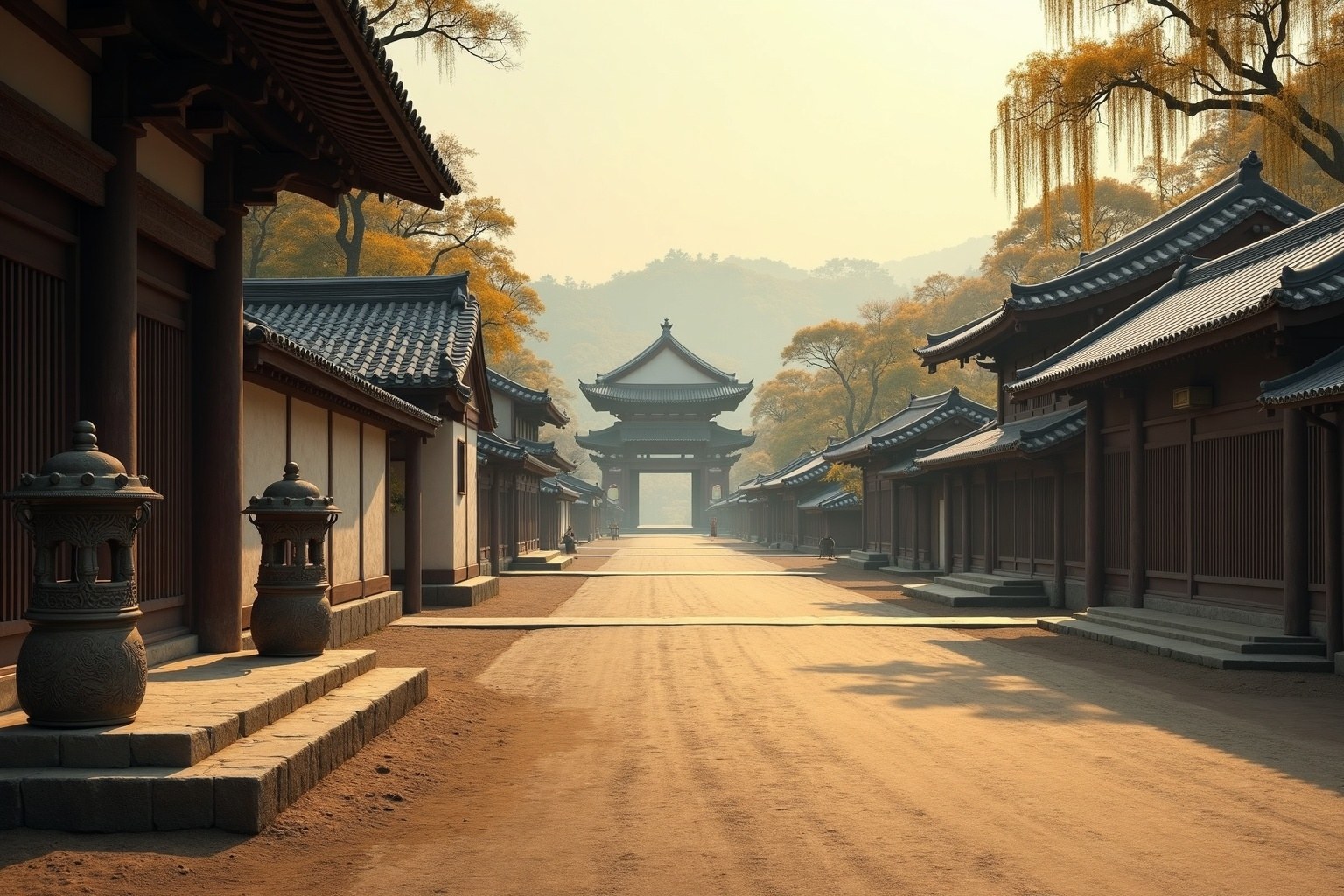
Plagues and Rebellions Shook the Nation
In 735, a plague broke out in the jurisdiction of the Dazaifu (the government headquarters in Kyushu). Although it seemed to have subsided, it flared up again in the fourth month of 737 and by the seventh month had spread east from Heijō-kyō and the Kinai region. Some estimates place the death toll at 1 to 1.5 million people, or 25% to 35% of the population at the time. However, the population figures themselves are also later estimates.
Taxes were levied per capita. As people died, the state treasury shrank. The capital, where the economy was based on coinage, was hit the hardest. In that year, the four Fujiwara brothers who held the reins of government also died one after another.
When political power shifted to Tachibana no Moroe, Fujiwara no Hirotsugu was transferred to the post of Dazai Shōni (Junior Governor of Dazaifu). In the ninth month of 740, Hirotsugu raised an army. The army mobilized by the imperial court was reportedly 17,000 strong, while Hirotsugu's side is said to have numbered over 10,000, but the actual numbers for either side cannot be confirmed. Hirotsugu used the Dazaifu—a financial stronghold that controlled all of Kyushu's tax revenue—as his military fund, but the rebellion was suppressed within a month.
The Wandering Capital and Privatized Land
Upon receiving news of Hirotsugu's rebellion, Emperor Shōmu left Heijō-kyō. In the twelfth month of 740, he moved to Kuni-kyō, and thereafter to Naniwa-no-miya and Shigaraki-no-miya, moving the capital four times in five years. Each time, the cost of building the new capital was drawn from the state treasury and the corvée labor of the people.
In the midst of this, in the fifth month of 743, the law permitting permanent ownership of newly cultivated land (Konden Einen Shizai Hō) was issued. This law allowed for the permanent private ownership of reclaimed land, with the amount varying according to one's court rank. With the state's recognition of private land ownership, the principle of "public land, public people" (kōchi kōmin) effectively lost its substance. Powerful aristocrats and large temples and shrines accumulated reclaimed land, giving rise to the first shōen (manorial estates).
The Edict That Declared Wealth and Begged for Help
On the fifteenth day of the tenth month of that same year, the edict for the construction of the Great Buddha was issued at Shigaraki-no-miya. It called for the creation of a single gilt bronze statue of the Rushana (Vairocana) Buddha. The edict began thus: "He who possesses the wealth of the realm is I. He who possesses the power of the realm is also I. With this wealth and power, I shall build this venerable statue."
However, it continued immediately after with the following: "If there are any who wish to help in the construction of the statue with even a single sprig of grass or a handful of earth, let them be permitted to do so." Immediately after declaring possession of all wealth, it says that even a handful of earth is welcome. The edict itself admits that the state treasury alone was not enough.
A Scale Unpayable with Coinage
The construction of the statue first began at Kōga-dera temple in Shigaraki, and when the capital returned to Heijō-kyō, it was restarted at Tōdai-ji. The *Tōdai-ji Yōroku* (Essential Records of Tōdai-ji) records the materials used. The amount of copper is stated to be approximately 500 tons, but this was the total amount used in the casting. There are various theories on the conversion for the amount of gold, with estimates ranging from approximately 150 kg to 440 kg—a difference of more than double.
The copper came from the Nagatō mine in Nagato Province. The gold was domestically produced, discovered in Mutsu Province in 749. It is said that a total of over 2.6 million people were mobilized for this project. The Wadōkaichin coins, which some believe were used to pay wages for the construction of Heijō-kyō, had been issued in an earlier period. In an age when a day's wage was between one and ten mon, a project mobilizing a total of 2.6 million people was not on a scale that could be paid for with coinage.
More in Stories of money
The Day a Creditor Nation Became a Debtor
One hundred million guldens. That number, written on the treaty paper, summed up in a single line the fall of a nation that had once lent money to the courts of Europe.
Waiting for the War to End, While Printing Counterfeit Money
Adolf Burger, a printer forced to forge British pound notes in a Nazi concentration camp. We trace the inside of Operation Bernhard through his own testimony and the records of museums and research.
The Mint Opened by a Usurper
In 2010, 52,503 Roman coins emerged from British soil. This enormous hoard tells the story of an era when a usurper used coinage as a tool of governance and opened the first mint in London.
If you would like to read on
The rest of the story is in the material of NOMISMA.
Read next
A Coin That Lived for 317 Years →Price
After purchase, the full courses, the illustrated books, every country’s story and the numismatics examination are open to you.
See the price →