939
In Hitachi Province, a man refused to pay his taxes and turned to Taira no Masakado for help.
In 939, Taira no Masakado burned the provincial capital of Hitachi and seized its official seals. This amounted to seizing control over the province's tax administration. Even this man, who declared a new state, shows no evidence of having minted his own coins.
A 3-Minute Guide: The Men Who Seized Taxes Instead of Making Coins
Swipe to see more
939
In Hitachi Province, a man refused to pay his taxes and turned to Taira no Masakado for help.
939
Masakado burned down the provincial capital and seized the official seals and warehouse keys.
1,000 soldiers vs. 3,000
Masakado's soldiers vs. the provincial army
What this meant
Seizing the seals and keys meant controlling that province's taxes.
December 939
Masakado declared himself the 'New Emperor' and gave his followers the job of collecting taxes.
Even so
Even this man who declared his own state shows no sign of having made his own coins.
Around the same time, in the western seas
Fujiwara no Sumitomo attacked ships carrying taxes to the capital.
February 14, 940
Masakado was defeated and killed.
940
The reward for defeating him wasn't coins, but rank and the post of provincial governor.
Post of provincial governor = the right to collect taxes
3000
The provincial army defeated by Masakado. Masakado had 1,000 soldiers.
You are the Imperial Court, and you have no coins. You must give a reward to the warrior who put down the rebellion. What do you give them?
Pick one
For a one-time reward, that's possible. But the real court gave something else.
This is what actually happened. Fujiwara no Hidesato, who defeated Masakado, was promoted in rank and appointed governor of Shimotsuke. The post of governor was the right to collect taxes itself.
In a country with no coins, rewards can only be paid with the right to take. And once given, that right is gone from the giver's hands forever.
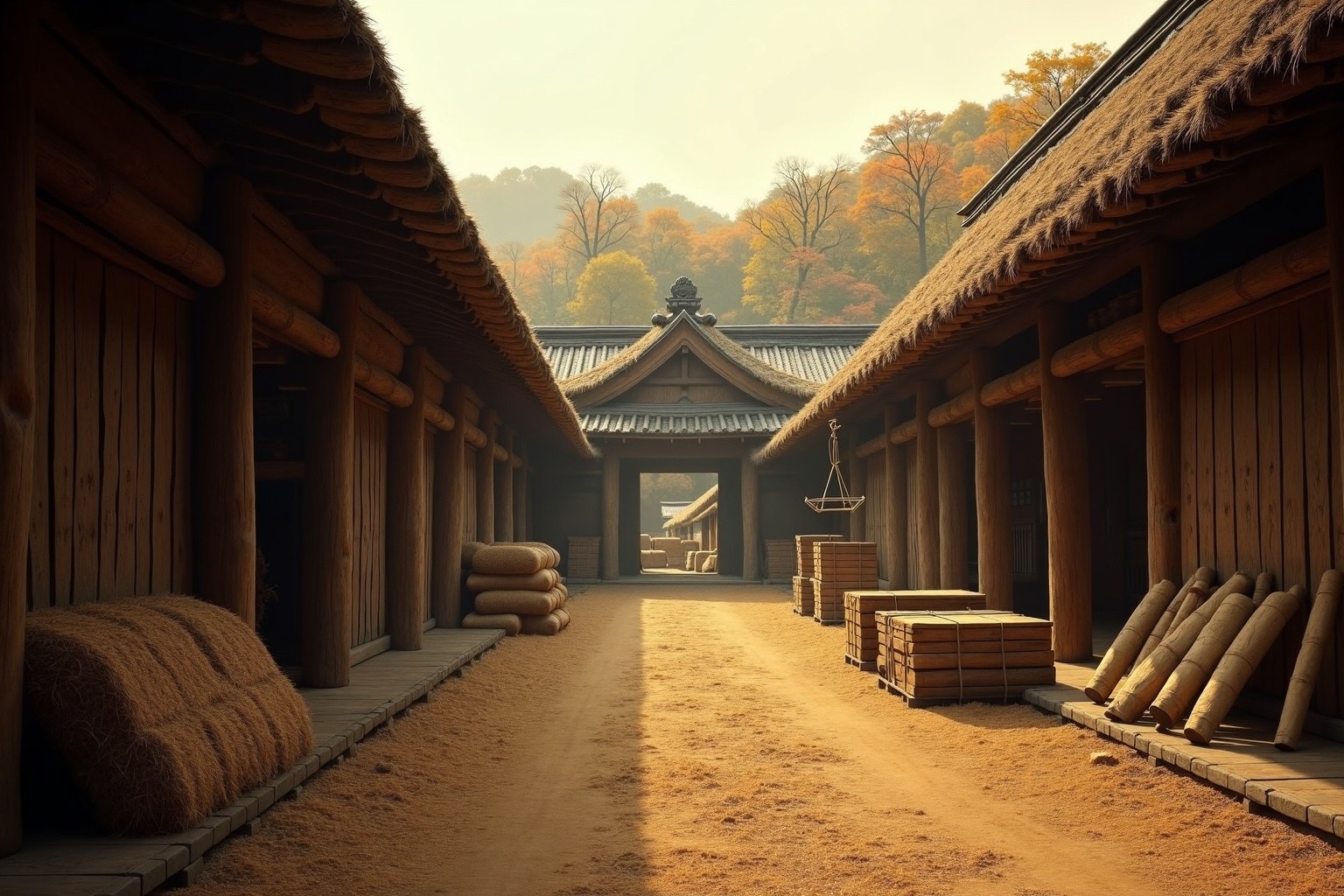
In 939, a resident of Hitachi Province, Fujiwara no Haruaki, failed to pay his taxes. When the provincial governor issued an order for his arrest, Haruaki sought refuge with Taira no Masakado. The act of sheltering a single tax defaulter ignited a rebellion that would shake the Bandō region.
Masakado led a thousand soldiers to the provincial capital of Hitachi, defeated the three-thousand-strong provincial army, set fire to the capital, and seized the official seals. To seize the governor's seals and the keys to the storehouses was to take control of the province's tax administration. Military funds and provisions came from the *chōyō* and *shōzei* taxes stored in the *shōsō* and *fudōsō* (main and immovable) storehouses of the provincial government. The only comprehensive record detailing the events of this rebellion is the *Shōmonki*. However, it is believed to have been compiled between the early and late 11th century and is not a contemporary account.
After Hitachi, Masakado occupied the provincial capitals of Shimotsuke and Kōzuke one after another. In the twelfth month of 939, at the provincial capital of Kōzuke, he proclaimed himself the "New Emperor" (*Shinnō*). The *Shōmonki* relates that a shamaness, claiming to be a messenger of the Great Bodhisattva Hachiman, bestowed upon him a certificate of rank. However, this scene is a narrative from the *Shōmonki*, and what actually occurred cannot be confirmed.
Masakado conducted his own appointment ceremonies (*jimoku*), naming his younger brothers and allies as provincial governors of the Bandō provinces. Appointing provincial governors meant distributing the authority to collect taxes. What Masakado sought to create in the Bandō region was a tax collection system that did not remit revenues to the capital. The real wealth of the Bandō region consisted of pastures for raising horses, developed private rice paddies, and the storehouses of each province's government office. Even this man who declared himself the head of a new state shows no evidence of having minted his own coins.
At the same time, in the western seas, Fujiwara no Sumitomo was leading his own forces. There are stories that Masakado and Sumitomo conspired together, but there is no evidence of this in historical sources. What Sumitomo attacked were the ships sailing through the Seto Inland Sea, the main artery for transporting the *chō* and *yō* taxes from the western provinces to the capital. The state taxes being transported were the target itself. In 939, he attacked the provincial capitals of Awaji and Sanuki, and in the fifth month of 941, he invaded from Hakata Bay and captured the Dazaifu government headquarters.
The Imperial Court first attempted to appease Sumitomo by granting him the court rank of Junior Fifth Rank, Lower Grade. For a state without coinage, the means of negotiation was to distribute court ranks. Even without coinage, wealth could be seized. The thirty-one articles of impeachment filed in 988 against Fujiwara no Motonaga, the governor of Owari, listed offenses such as harsh collection of *suiko* (government loans of rice) and falsification of tax ledgers. As this was a document from the accusers, it cannot be taken as established fact, but it illustrates that seizing goods in kind was often easier.
Roughly two months after proclaiming himself New Emperor, on the fourteenth day of the second month of 940, Masakado was defeated and killed by the forces of Fujiwara no Hidesato and Taira no Sadamori. The rewards for those who suppressed the rebellion were neither coinage nor land.
In the third month of 940, for his merit in defeating Masakado, Fujiwara no Hidesato was promoted to the Junior Fourth Rank, Lower Grade, and in the eleventh month of the same year, he was appointed Governor of Shimotsuke. Taira no Sadamori was promoted to the Junior Fifth Rank, Upper Grade, and later held positions such as *Chinjufu Shōgun* and Governor of Mutsu. The rewards were court rank and appointment as a provincial governor. The appointment as a provincial governor was the right to collect taxes itself. The victors received the right to collect taxes as their reward and used it as capital to build their local power base. In a country without coinage, rewards could only be paid in the form of rights to take. And once given, the right to take is permanently lost from the hands of the giver.
The edict declaring "All the wealth of the realm is mine" continues immediately with "even a handful of earth is welcome." In an age when the country was exhausted by plague and rebellion, copper was gathered to construct the Great Buddha.

One hundred million guldens. That number, written on the treaty paper, summed up in a single line the fall of a nation that had once lent money to the courts of Europe.
Adolf Burger, a printer forced to forge British pound notes in a Nazi concentration camp. We trace the inside of Operation Bernhard through his own testimony and the records of museums and research.
The rest of the story is in the material of NOMISMA.
Price
After purchase, the full courses, the illustrated books, every country’s story and the numismatics examination are open to you.
See the price →