A Promise Locked in a Vault, A Door That Never Opened
In 1917, the promise to exchange gold coins for banknotes was suspended. An economic boom born from the war in Europe created nouveaux riches and queues of people seeking rice, eventually leading to a long recession.
To a Creditor Nation
In July 1914, war broke out in Europe. Japanese goods flowed into markets where production had halted, and the total value of exports and imports nearly quadrupled between 1914 and 1919.
During this period, the trade surplus was 1.4 billion yen, and the surplus from shipping and other services was 1.3 billion yen. Specie reserves grew from 340 million yen to 1.59 billion yen. The nation, which had a debt of 1.1 billion yen at the end of 1914, became a creditor with over 2.7 billion yen in loans by 1920. However, this surplus was not born from any Japanese invention; it arose because competitors had vanished due to the war.
Nouveaux Riches and Stagnant Wages
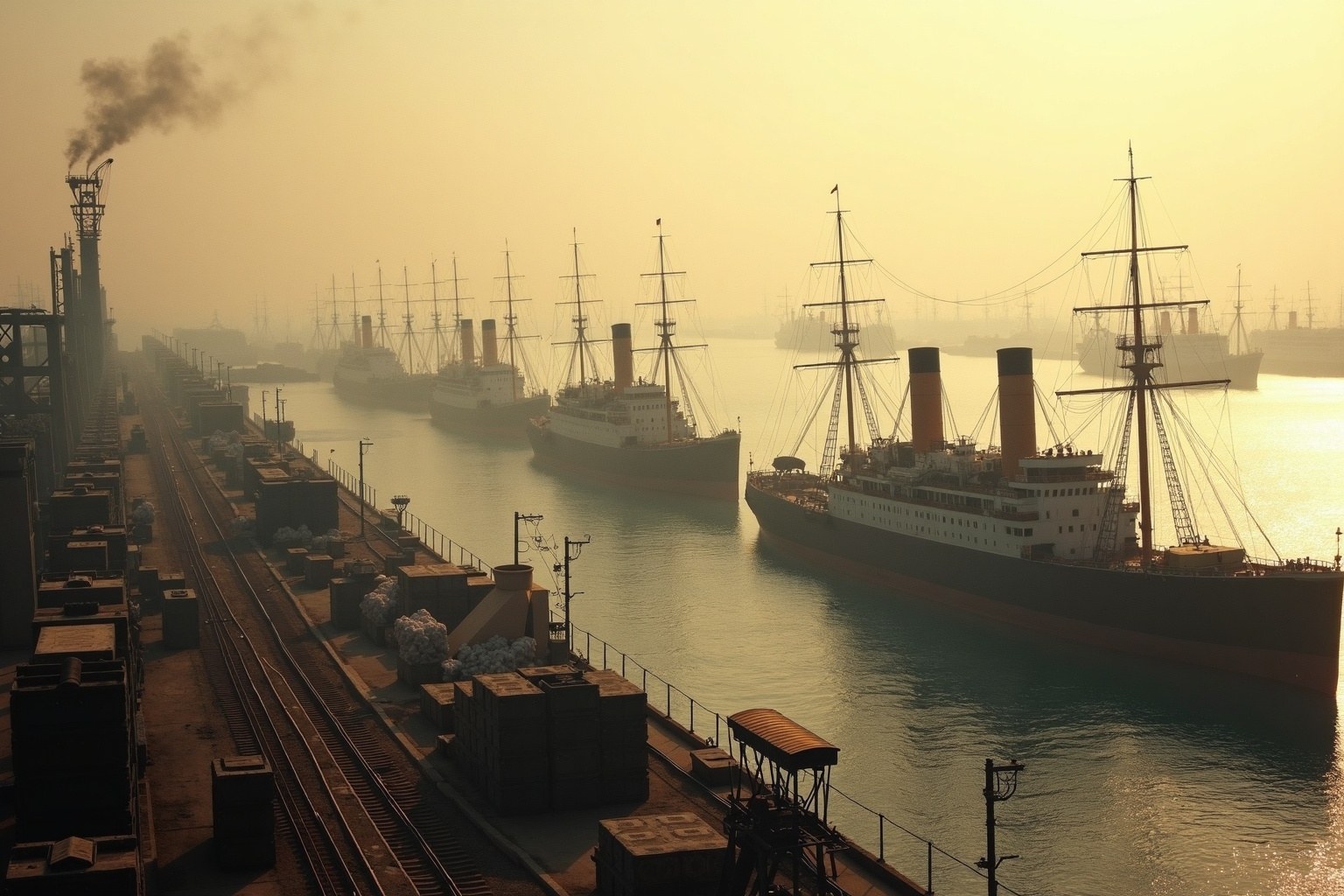
A shortage of ships caused freight charges to soar, giving rise to the term *funa-narikin*, or "shipping nouveaux riches." One steamship company, founded in 1914 with less than 20,000 yen in capital and a single chartered vessel, paid a dividend six times its initial capital two years later. By the year after the Great War ended, the founder's personal fortune is said to have swelled to 70 million yen.
Meanwhile, workers' wages failed to keep pace with inflation. Wholesale prices in 1920 were more than two and a half times what they were in 1913. The price of rice also skyrocketed in 1918, jumping from 15 yen per *koku* to over 50 yen in a single month. This was not due to a particularly poor harvest. Rather, the Terauchi cabinet's declaration of the Siberian Intervention led speculators to hoard rice in anticipation of military demand. On the mere rumor of war, the price of rice more than tripled. A movement started by women in Toyama demanding a halt to rice shipments eventually spread across one special district, three urban prefectures, and thirty-seven other prefectures, forcing the cabinet to resign en masse.
A Wound Carried Forward
In March 1920, the market crashed. Stocks plummeted to half or even a third of their value. Cotton yarn and raw silk prices fell by more than half within the year. From April to July, runs occurred at 169 banks as people queued to withdraw their deposits, forcing 21 of them to suspend operations. The subsequent decade is known as the "chronic recession."
Most of the bad loans that defaulted in the financial crisis of 1927 originated in 1920. The Great Kantō Earthquake of 1923 was not the source of these problems but served as an excuse to postpone addressing them. The Bank of Japan issued rescue loans, but some argue this only kept insolvent companies and banks afloat, carrying the wound forward for seven years.
The Door Remains Unopened
A little before this boom and bust began, in September 1917, Japan banned the export of gold. This was the day the promise to exchange banknotes for gold coins effectively came to a halt. The vault doors were closed, and the piles of gold coins were plunged into darkness.
When the war ended, Western nations began reopening their "gold doors" one by one, returning to the gold standard. Japan hesitated. The Great Kantō Earthquake in 1923, the financial crisis in 1927—each event pushed the opportunity to reopen the doors further away. "When will we reopen the doors?" became the most fiercely debated question of the decade. The old 20-yen gold coin, established by the New Coinage Act, was minted with the promise that one yen was equivalent to 1.5 grams of pure gold.
More in Topics in money

The Rebellion that Began with an Account Book, and the Cannonballs Paid for with Rights
The rebellion began not with a sword, but with an account book. Under a daimyō said to have reported his 40,000-koku domain as 100,000 koku, the tax rate doubled. The bodies of those unable to pay were subjected to torture, and to quell the eventual uprising, foreign cannonballs were fired from the sea.

Coinage Struck on Paper, the Promise of Leiden
In besieged Leiden, silver ran out, and coinage was struck from church books. What backed this paper, which had no metallic support, was a single promise: that if the city survived, it would be redeemed for specie.

The Three No's and the Unpayable Bill
During the reign of Louis XVI, reformers pledged "no bankruptcy, no new taxes, no borrowing," supported a war with massive debt, and finally challenged the wall of privilege. While sound coinage maintained its standard, the state's finances were heading towards collapse.
If you would like to read on
Everything in these pieces comes from the material itself.