The Currency That Was Not Accepted
Nueva España, circa 1542. The indigenous people would not accept the copper coins struck by the mint, and cacao beans remained the daily small change.
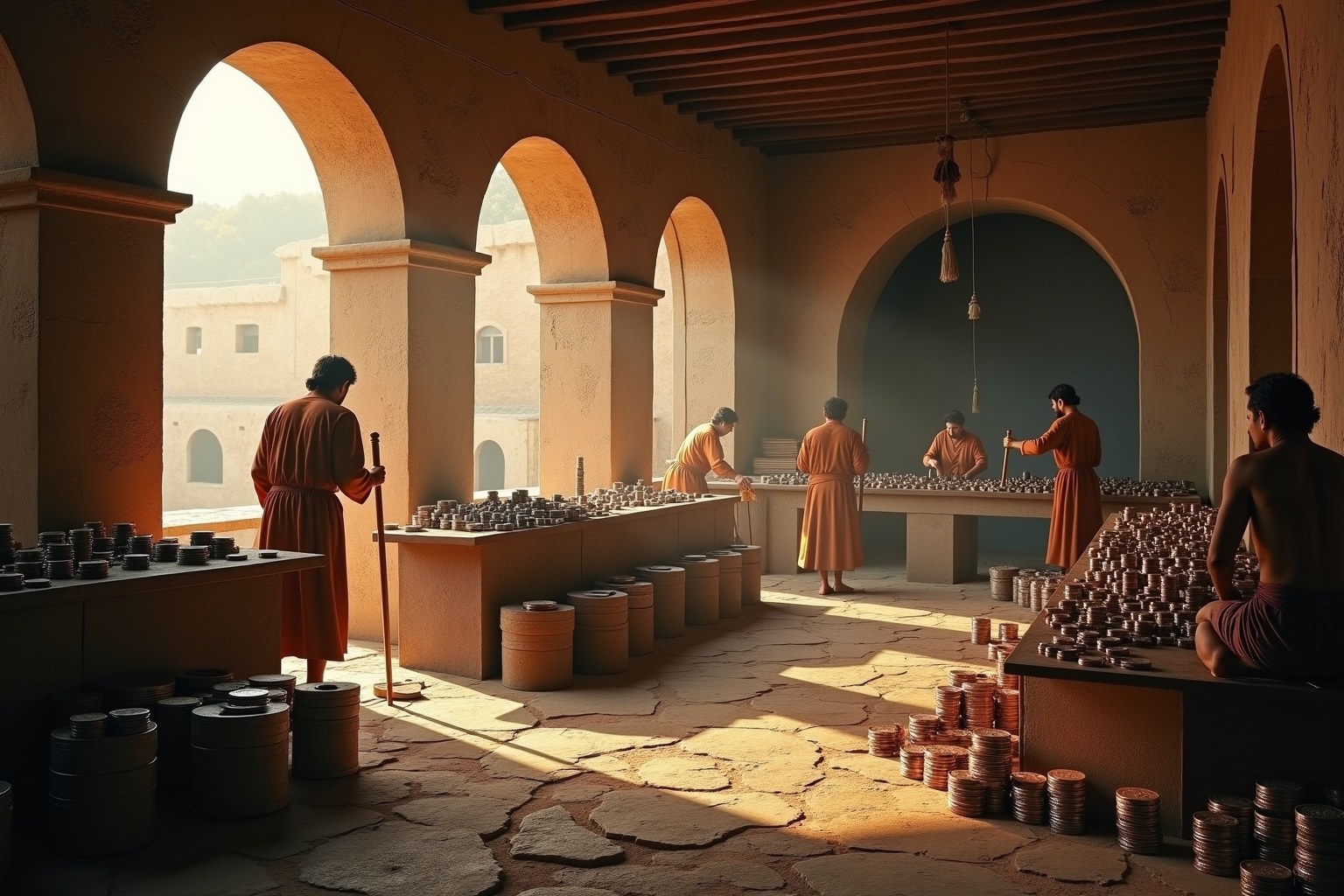
In 1535, the first mint in the Americas was established in Mexico City. The 8-real silver coins struck here would eventually become a global currency.
Slightly later, the same mint struck copper coins: 4 and 2 maravedís. These were small-denomination coins for everyday small transactions.
They were not accepted.
The Record of Them Being Thrown into a Lake
The indigenous people disliked these copper coins. It is said that Friar Motolinia recorded that the disliked coins were thrown into a lake.
I write this with caution. This anecdote is a common theory based on chronicles, and the scale of the disposal is unknown. It has also not been confirmed to what extent the scene at the lake was a real event.
The Predecessor: Cacao
Why were they not accepted? Because there was already a form of small change in use.
Before the conquest, there was no minted coinage in this land. Nevertheless, the markets were highly sophisticated. What was counted were cacao beans. Cotton cloth, axe-shaped copper, and quills filled with gold dust also served as stores of value.
In the market, one turkey was one hundred cacao beans; one rabbit was thirty. People made purchases by counting beans. Deceitful individuals made counterfeits by filling cacao husks with mud. The fact that counterfeits were made is proof that cacao was accepted as currency.
Into this world came unfamiliar metal discs. Their value was guaranteed by the newly arrived conquerors. The beans were more certain.
What the Issuer Cannot Decide
Cacao continued to be used for daily small transactions. The minted silver, in large denominations, was directed outward, while local small change remained scarce. The land that minted the world's silver coins suffered from a lack of its own small change.
This incident demonstrates one of the limits of currency. The issuer can strike it and declare its value. It cannot force its acceptance.
It is the market that decides whether to accept it. The currency that failed here was defeated not by laws or minting technology, but by the beans that were already there.
However, a rejected currency does not always disappear. This school's materials also cover how paper money is less likely to be rejected as long as tax collection remains effective. The case of the copper coins is a case study of the opposite situation.
More in Topics in money

The Rebellion that Began with an Account Book, and the Cannonballs Paid for with Rights
The rebellion began not with a sword, but with an account book. Under a daimyō said to have reported his 40,000-koku domain as 100,000 koku, the tax rate doubled. The bodies of those unable to pay were subjected to torture, and to quell the eventual uprising, foreign cannonballs were fired from the sea.

Coinage Struck on Paper, the Promise of Leiden
In besieged Leiden, silver ran out, and coinage was struck from church books. What backed this paper, which had no metallic support, was a single promise: that if the city survived, it would be redeemed for specie.

The Three No's and the Unpayable Bill
During the reign of Louis XVI, reformers pledged "no bankruptcy, no new taxes, no borrowing," supported a war with massive debt, and finally challenged the wall of privilege. While sound coinage maintained its standard, the state's finances were heading towards collapse.
If you would like to read on
Everything in these pieces comes from the material itself.