The World of the
Gold Standard
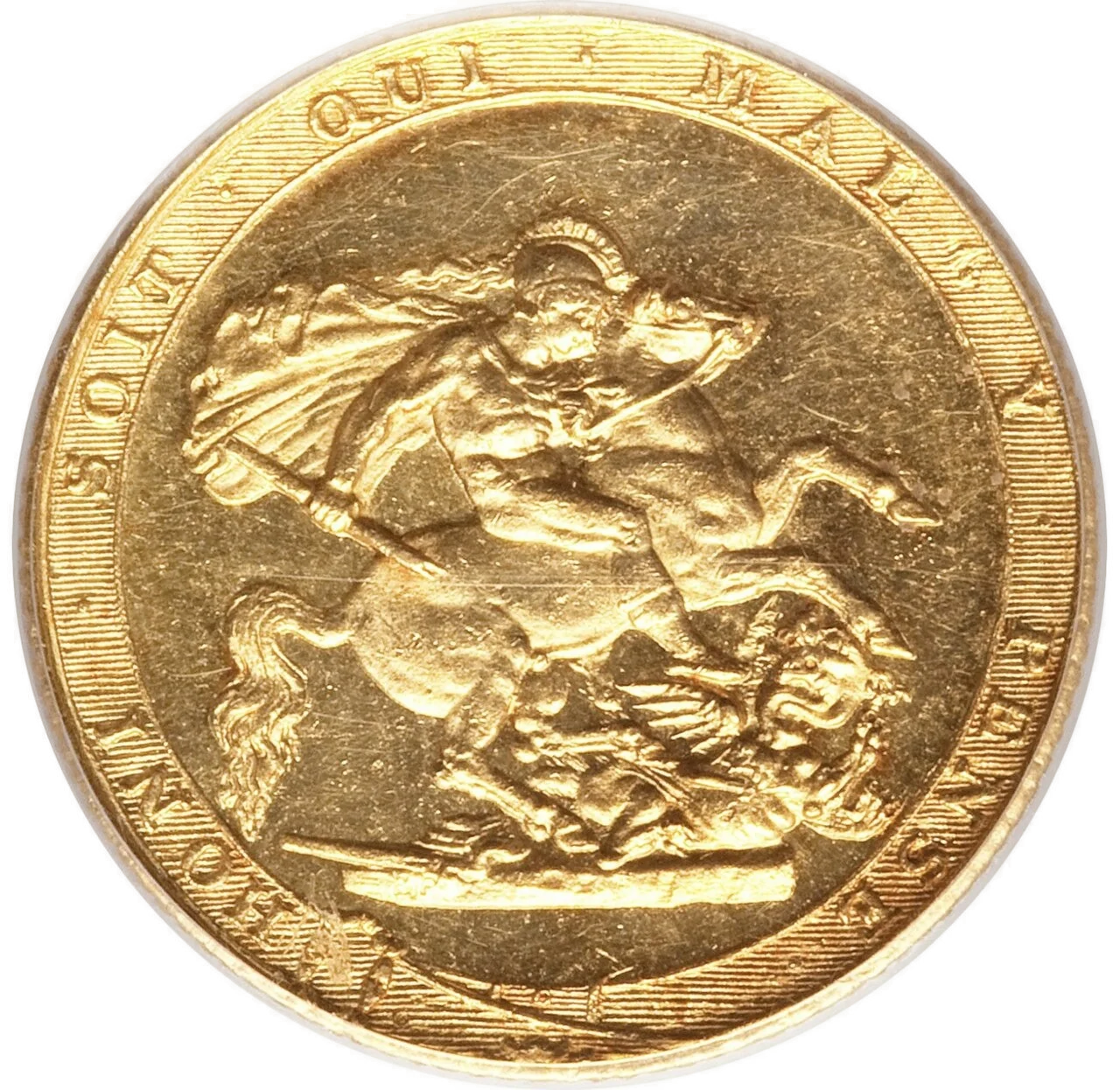
Metropolitan Museum of Art / CC0 (Wikimedia Commons)
What did a world that used gold as its measure gain, and what did it build without a firefighter?
This textbook in 3 minutes
- In 1816, an island nation established by law that only gold would be the standard, and the following year it struck the sovereign, a gold coin worth exactly one pound. In the same year, the Netherlands adopted the decimal system, Vienna established a national bank, and America created the Second Bank of the United States.
- Even with gold coins, it was not decided how much paper money could be issued. The Peel Act of 1844 tied paper to gold, a tie that was loosened with every crisis. In countries without a central bank, a forest of several thousand types of banknotes flourished.
- The first half of the 19th century was a time of correcting crooked currencies. India unified the silver of its three presidencies, the Ottomans stopped debasing their coins for the first time in 500 years, Russia fixed the value of its paper money at 3.5 to 1, and the German-speaking world decided on 30 silver coins from 500 grams.
- The system rests on the supply of raw materials. Gold gushed forth in California in 1848 and Australia in 1851, tipping the bimetallic scales toward gold. In the East, where gold did not arrive, the state earned money by multiplying face values a hundredfold.
- The children of the 8-reales were the world's yardstick. The Qing accepted customs duties in Mexican silver dollars, the treaty in Yokohama stipulated that one foreign silver coin was equal to three ichibu-gin, and Japanese gold crossed the sea, transformed into three times its value in silver.
- War creates paper. The green paper of the reverse sank to two and a half dollars against gold, and the paper of the defeated South lost only its master of promise. Unified Italy abandoned convertibility in five years.
- In 1865, four countries formed a union with coins of the same dimensions. There was no common institution, no means of punishment, and they could only exclude the Papal States, which had debased their silver coins.
- In 1873, the five billion francs from defeated France became gold marks, and the silver released by Germany crashed the world's silver price. In the same year, the American Coinage Act quietly removed the standard silver dollar from the list.
- From silver's perspective, 1893 was the year the door closed. The mints in India stopped accepting private silver, and though gold did not arrive, the currency was tied to the pound on the books. The thirty-year war ended in a victory for gold, a victory partly due to South African gold.
- The gold standard was not a matter of prestige, but a qualification for borrowing from abroad. Vienna went on gold in 1892, Russia in 1897, and Japan in 1897 with the indemnity from Qing China. In countries that borrowed and could not repay, an empire of ledgers took up residence.
- In 1913, the country that had twice buried its central bank built a third one, and the following summer, war brought the world of gold to a halt. The house of the gold standard had no firefighter in the form of a lender of last resort. That is the conclusion of this book.
Table of Contents
- IntroWhat changed about money in this era?
- 11816 — A law for gold alone, and the apparatus of four nations
- 2How much paper can be issued? — The Peel Act and the forest of banknotes
- 3Correction — Straightening crooked currencies
- 4The fortune of the earth and the temptation of face value — Countries where gold arrived, and where it did not
- 5The world's yardstick — The children of the 8-reales and the opening of ports
- 6The paper of war — Greenbacks and legal tender
- 7The Union — Uniform dimensions and the absence of a punitive mechanism
- 81873 — Indemnity, the gold mark, and the collapse of silver
- 9From silver's side — Closing the mints
- 10A qualification for borrowing — Nations going on gold
- 11The empire of ledgers — Bankruptcy and the live-in debt collector
- 121913 — The house without a firefighter
- OutroWhat was left from this era for the next?
- EndmatterSUMMARY / GALLERY / PEOPLE / TIMELINE / DATA / QUESTIONS / DRILL / SOURCES / REVISION HISTORY
Countries began to appear that narrowed the standard, long shared by gold and silver, to a single metal. An island nation was the first in 1816, followed by Germany in 1871, the Netherlands in 1875, Austria in 1892, Russia and Japan in 1897, and the United States in 1900, all legally establishing gold alone as the standard. As the currencies of various nations became tied to the same measure, a law enacted in Berlin could cross the seas and shake the value of silver in a distant country. The world's money became connected like a single piece of cloth.
This book walks through the hundred years during which that cloth was woven. Striking gold coins and deciding how much paper money to issue were separate tasks. Going on gold was not a matter of prestige, but a qualification for borrowing from abroad. In countries that borrowed and could not repay, it was not the sword but double-entry bookkeeping that took up residence. And what supported the entire cloth was the fortune of the earth: new gold mines were continually discovered at the same pace as the economy grew. While intending to discuss the system, this book repeatedly returns to the topic of raw materials.
1816 — A law for gold alone, and the apparatus of four nations
This book begins with a single year: 1816. The year after the Napoleonic Wars ended and the Congress of Vienna redrew the map, four nations each set up a different apparatus. An island nation, a law; a low country, the decimal system; Vienna, a bank; a young republic, a second bank. The four may seem disparate, but they are answers to the same question: In what form should the promises broken by war be re-established?
What, after all, is a pound?
During the war, the island nation's paper money was disconnected from gold. When the war ended, it faced an unresolved question: What is a pound? In 1816, under the administration of Lord Liverpool, the Coinage Act was passed, establishing gold as the standard. Silver became subsidiary coinage, with a limit on the amount that could be accepted. Until then, gold and silver had long shared the weight of the pound. This law ended that coexistence.
No country in the world had yet chosen this path by law. The starting point of what this book calls "the world of the gold standard" is not a gold coin, but this single law. The gold coins would come the following year.
One coin for one pound
In 1817, a new gold coin was born. Its name was the Sovereign. It was a gold coin worth exactly twenty shillings, or one pound. It weighed 7.32 grams, with a fineness of 0.917. The obverse featured a profile of George III, and the reverse depicted St. George slaying the dragon by the Italian engraver Pistrucci. This design would remain the face of the Sovereign for the next two hundred years.
The birth of the Sovereign also marked a farewell. The Guinea gold coin, with its odd value of twenty-one shillings, ceased to be minted. One coin was now exactly one pound. The name of the currency and the name of the unit of account were now perfectly aligned.
What remained was to reconnect paper and gold. In 1821, the Bank of England resumed gold convertibility. If you presented a banknote at the counter, you would receive a Sovereign in return. The gold standard, established by law, came into effect for the first time that year. The fact that paper could be exchanged for gold in London—trust in this single point—persuaded merchants around the world to hold pounds.
One gulden is one hundred cents
In the same year, 1816, the new kingdom in the Low Countries established a coinage act. Its core was a single short line: One gulden is one hundred cents. The old world where one gulden was twenty stuivers ended, and the world of the decimal system arrived. There were two models: the franc of revolutionary France and the American dollar. The country that had taught the world the art of credit learned the decimal system from its conqueror and its former pupil.
This law gave legal tender status to both gold and silver coins, starting a bimetallic standard. The Dutch Bank, founded by the king in 1814, was the first central bank in the country's history to print banknotes. This bimetallic system faltered whenever the price ratio between gold and silver fluctuated, and with the coinage act of 1847, the country chose a monometallic silver standard. Daily life in the Netherlands in the mid-19th century was a world of silver coins.
A Vault Built on the Ashes
In Vienna, the Privileged Austrian National Bank was founded in 1816. It was the country's first true central bank. This was just five years after the state's bankruptcy. The purpose of its establishment was to never again slide down that slope. The core of its design was distance: taking the authority to issue banknotes away from the government and giving it to an independent bank. The government could no longer simply turn on the printing presses itself just because it needed war funds.
Its shareholders included merchants and financiers from Vienna. After the state's credit had collapsed, there was no choice but to rebuild it by borrowing from private credit. Convertibility to silver coin was established, and people, hesitantly, began to accept paper money again. Trust was not something built in a day, but something rebuilt little by little, every day.
A Renewed Experiment
Across the Atlantic, another institution was established in 1816: the Second Bank of the United States. Having buried the First Bank with its own hands, the country, chastened by the financial chaos of the War of 1812, set up this renewed experiment for a limited twenty-year term, as a "one more time" effort. Its capital was thirty-five million dollars, making it the largest corporation in the United States at the time.
The experiment began with a stumble. The fledgling bank loosened its lending reins too much, then hastily tightened them too much. In the Panic of 1819, the Second Bank was branded an enemy of the people. Eventually, under Nicholas Biddle, its operations stabilized, and it came to function as a de facto central bank, disciplining the banknotes issued by various state-chartered banks. Yet the question remained: a private corporation in Philadelphia held the nation's money. To whom did that monetary power belong?
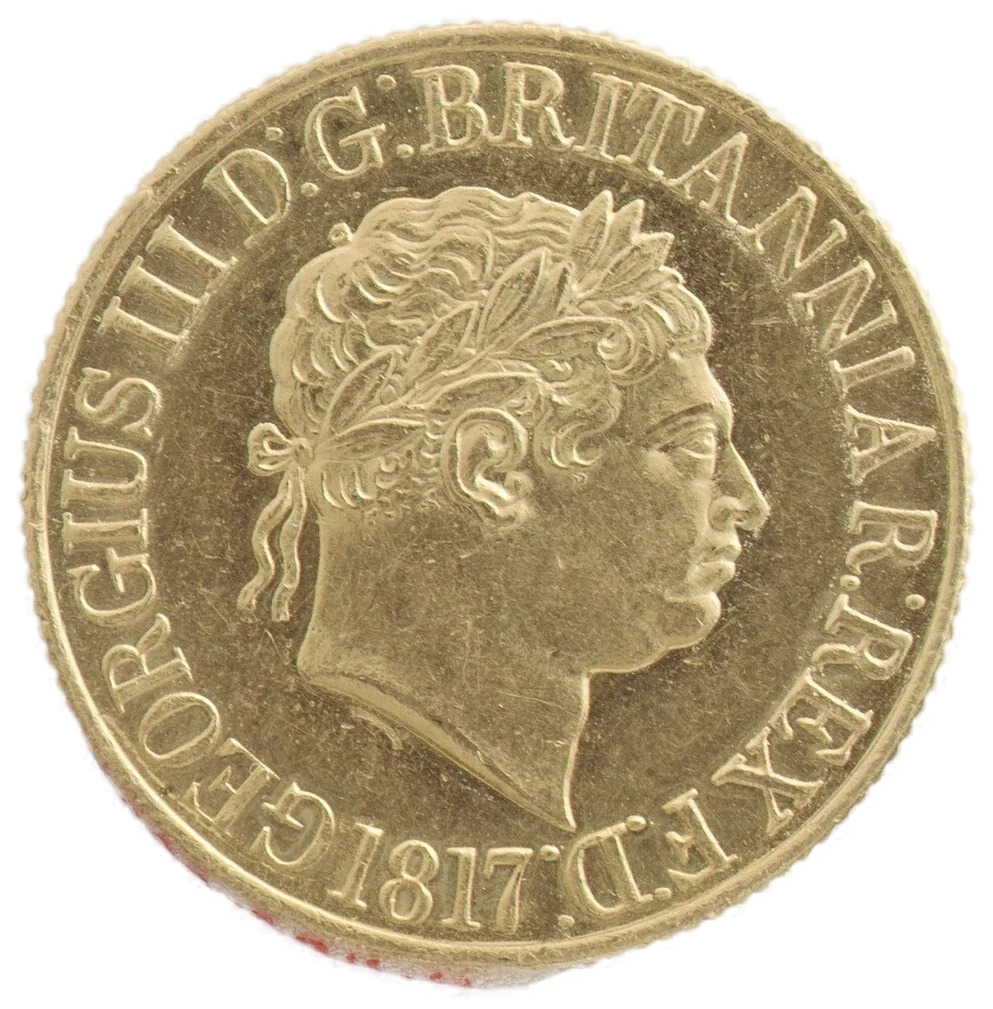
What to look for: The composition of the knight and dragon on the reverse. Compare it with a later Sovereign in the object database to confirm that the same design was used 200 years later.
Metropolitan Museum of Art / CC0 (Wikimedia Commons) → Object Database
- What is known
- The British Coinage Act of 1816, the Dutch coinage law of 1816, the Privileged Austrian National Bank of 1816, the charter for the Second Bank of the United States of 1816. The specifications for the Sovereign were 7.32 grams and a fineness of 0.917. Resumption of convertibility was in 1821.
- What is not known
- Whether there was any mutual reference among the four countries that acted in the same year. The material in this book only goes as far as describing the individual circumstances of each country's course, and does not cite historical sources that connect the four.
- What happened in that era
- Promises broken by war were re-established using four mechanisms: legislation, the decimal system, an independent bank of issue, and a bank with a twenty-year charter. The first country to legally establish gold alone as its standard appeared.
- The underlying mechanism
- To keep a promise, you need distance—keeping the authority to issue currency out of government hands—and a counter where it can always be exchanged for gold. Trust is not built by declaration, but grows through the daily repetition of the counter being open.
- Questions that remain today
- What does central bank independence mean in terms of distance from the government? The distance answered by Vienna in 1816 remains, in a different form, in modern central bank laws. → P09 The Birth of Central Banks
- Points of difference
- The Sovereign was gold itself, and the promise at the counter was backed by gold reserves. Today, central bank liabilities are not convertible to gold, and the root of trust lies not in reserves but in the predictability of the issuer's actions. → P11 The Link with Gold is Severed
- See — Open the 1817 Sovereign and the Sovereign from the general introduction side-by-side in the object database.
- Observe — Compare the composition of St. George on the reverse. Note the direction of the horse, the position of the dragon, and the lettering on the edge. Articulate the points where the same design has been maintained.
- Explore — Imagine and describe a scenario of making a payment to illustrate the inconvenience of a one-pound gold coin being worth twenty shillings while a Guinea was worth twenty-one.
- Look up — Look up gold standard, convertibility, central bank, and decimal system in the glossary.
- Answer — The four mechanisms in the four countries are answers to the same question. Write that question in one sentence.
Open to enrolled students
Ahead: Correction — Straightening bent currency, The Earth's Fortune and the Temptation of Face Value — The Countries Where Gold Came, and Where It Did Not, The World's Measuring Stick — The Children of the Eight Reales and the Opening of the Ports, The Paper of War — Greenbacks and Legal Tender, The Union — An agreement on dimensions and the absence of an enforcement mechanism, 1873 — Reparations, the Gold Mark, and the Collapse of Silver, From the Silver Side — Closing the Mints, Qualification to Borrow — Nations on Gold, The Ledger Empire — Bankruptcy and the Resident Debt Collector, 1913 — The House Without a Fireman — and the reference section (timeline, people, sources).
Already enrolled? Log in. Free sample: Vol. 1, Source Criticism (free in full).