Where did
money come from?
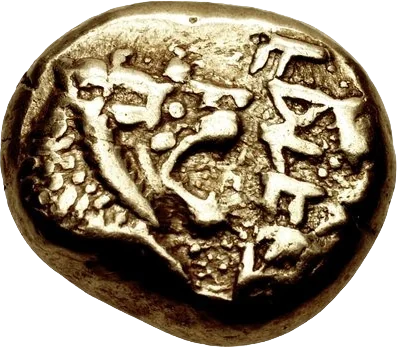
CNG coins / CC BY-SA 3.0 (Wikimedia Commons)
Why did people stop using scales and start trusting marks?
This volume in 3 minutes
- The oldest records are not of barter, but of debts inscribed on clay tablets. Currency was needed for transactions with strangers.
- More than a thousand years before coinage, value was weight itself. The time spent weighing and verifying fineness for each transaction was the cost of the transaction.
- The King of Lydia struck a lion's mark on the river's gold, and the state guaranteed its weight and fineness. What disappeared was not the metal, but the time spent in doubt.
- The inventing kingdom fell in less than a century, but its mint and its invention were inherited by its conquerors. Even if a state vanishes, a single coin in the palm of a hand remains.
- A single fire from the East switched to silver in the Aegean and was divided among the furnaces of over a hundred cities. The imagery was the city's declaration of identity.
- Three weight standards coexisted, and the choice of which scale to use determined in which trade sphere one lived. The scale's measure was the measure of diplomacy.
- The Athenian owl, with its silver from the mines, its unchanging imagery, and its three-letter inscription, became the first international currency of the Mediterranean.
- War melted down coinage and gave birth to silver-plated bronze. Credit was restored by a single official who sat in the public square and inspected coins every day.
- Money exists not by nature, but by convention. In 4th century BC Athens, the words that would give this school its name were written.
- India and China each invented money separately in their own lands: silver that kept its weight but lost its shape, and bronze that retained the shape of tools.
Table of Contents
- IntroWhat changed about money in this era?
- 1What came before money — From clay tablets to the lion's mark
- 2The richest king — The question of Croesus, and the inheritance of coinage
- 3The fire from the East — From Ionia to a hundred furnaces
- 4The three scales — When weight was diplomacy
- 5The silver that names itself — From Wappenmünzen to the Owl
- 6Silver from the earth, ships on the sea — From Laurion to Salamis
- 7Imperial currency and debased coinage
- 8The inspector and the Nomos — Rebuilding trust
- 9Beauty and signatures — The great silver coins of Syracuse
- 10Three lands — India's punch-marked silver, China's knives and cowries, and the eve of Rome
- 11Gold from the mountains, name of the king — Macedonia
- OutroWhat was passed on from this era?
- EndmatterSUMMARY / GALLERY / PEOPLE / TIMELINE / DATA / QUESTIONS / DRILL / SOURCES / REVISION HISTORY
A world that paid by weight became a world that counted by trusting a mark. The king's mark took over the time spent weighing and verifying fineness for each transaction. This single move changed not the metal, but the speed of transactions and the size of the market. This volume walks through the time before and just after this change occurred.
A mark works only as long as its issuer is trusted. When kings fell, cities lost their silver in war, and silver-plated bronze circulated in the market, people did not return to scales but instead established inspectors and laws. The world of trusting marks had, within this era, already tried a full range of mechanisms to maintain that trust.
What came before money — From clay tablets to the lion's mark
Textbooks teach us this: people bartered, and because it was inconvenient, currency was born. But the oldest records speak not of barter, but of credit and record-keeping.
3000 BC, Mesopotamia. Temple scribes inscribed on clay tablets who had lent how much barley to whom. What was written there was not an amount, but a relationship: who owed what to whom. If that was known, payment could be made later. For people you knew, a record was enough. Currency was needed for transactions with strangers.
No primary sources have yet been found to support the explanation that currency arose from barter. That is not to say that barter did not exist. All that can be said is that the oldest records were ledgers of debt.
Paying by weight
In Babylonia, there was the word shekel. Today it is the name of a currency, but it was originally a unit of weight: the weight of a certain amount of barley. Eventually, this weight came to be measured in silver. For each transaction, people placed a piece of silver on a scale. This silver, cut and weighed, is called hacksilver. More than a thousand years before coinage, value was weight itself.
In a world that pays by weight, currency is not needed. Scales are sufficient. However, one must weigh and verify the fineness for each transaction. The time spent on verification itself becomes a transaction cost. It was the next invention that eliminated this cost.
Shells, knives, cattle
In various parts of the world, people used different things as money. Cowrie shells from the Indian Ocean circulated from Asia to Africa. In China, there were small knife- and spade-shaped currencies made of bronze. In Homer's epic poems, the value of armor and people was expressed in "head of cattle."
What shells, knives, and cattle had in common was that everyone knew their value. The prerequisite for currency is not the preciousness of its material, but the shared belief that one's neighbor will accept it. Currency always takes the form of a social agreement.
- What is known
- The oldest records are of debts inscribed on clay tablets. The shekel was originally a unit of weight, and silver was used by being cut and weighed.
- What is not known
- Primary sources to support the idea that "currency arose from barter." The idea has been cited for two hundred years, but no such sources have been found.
Gold from the riverbed
Lydia, in Asia Minor. The Pactolus River, flowing down from Mount Tmolus, carried gold in its sands. Legend has it that King Midas, who turned everything he touched to gold, washed away his curse in this river. Sleeping in the riverbed was electrum, a natural alloy of gold and silver. It was not yet a coin, just a lump of valuable metal.
The trouble was that the proportion of gold and silver differed in each lump taken from the river. Even if they looked the same, their value was different. The receiver had to be suspicious each time. This uncertainty led to the invention of striking a mark.
Striking a mark
A lump of metal must be checked for weight and purity each time it is received. What if a ruler were to strike a mark on that metal, guaranteeing its weight and purity? The trouble of checking with every transaction would disappear. The act of striking was not for decoration. It was an event in which the state guaranteed the value. For the state to vouch for it meant that the state took on the burden of the time spent doubting.
If the trouble of checking disappears, the number of transactions increases. If transactions increase, the market itself grows. What the single act of striking changed was not the metal, but the speed of society.
The first electrum coins had no design. There were only striations. These striations are thought to be marks from the anvil used for striking. Just a lump, without even an image. But a mark was certainly struck on it. A mark before marks. The earliest electrum coins appear around 600 BC. Some sources suggest they may have appeared slightly earlier.
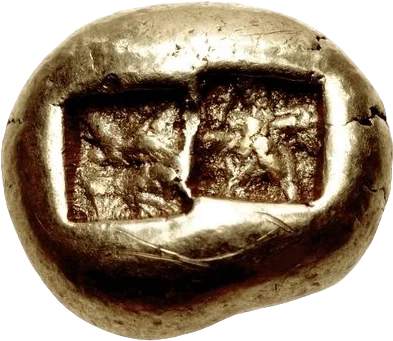
Points of observation: What is the mark on the obverse? What remains on the reverse? Is the edge round?
CNG coins / CC BY-SA 3.0 (Wikimedia Commons) → Object Database
The Lion's Mark
600 BC, in the Lydian capital of Sardis. The king struck a lion's mark on lumps of metal from the river. The state guaranteed their weight and purity. This is considered the first moment humans promised value with metal. The lion's mark was a declaration that this lump was of this weight and this fineness. Only one who is not doubted can make such a declaration. That is why the first coins belonged to the king.
Sardis was a city of gold. The historian Herodotus wrote that the Lydians were the first people in the world to set up shops and engage in commerce. In the marketplace, instead of being weighed on scales, there were coins struck with marks. Being able to use them just by counting meant not having to carry scales around. For those who bought and sold dozens of times a day, the time spent weighing was a matter of life and death. Coinage changed the very form of commerce.
Separating Gold and Silver
King Croesus of Lydia. His reign was from 561 to 546 BC. His name became a synonym for wealth. He abandoned electrum and, for the first time, produced separate coins of pure gold and pure silver. Production began around 550 BC. Craftsmen developed the refining technique to separate electrum into gold and silver. They split a natural alloy in two with human hands.
This is counted among the first gold coins whose purity was guaranteed by the state. The world's first bimetallic system, using gold and silver coins side by side, was also born here.
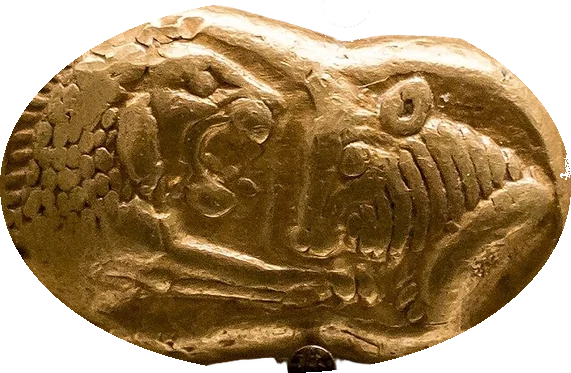
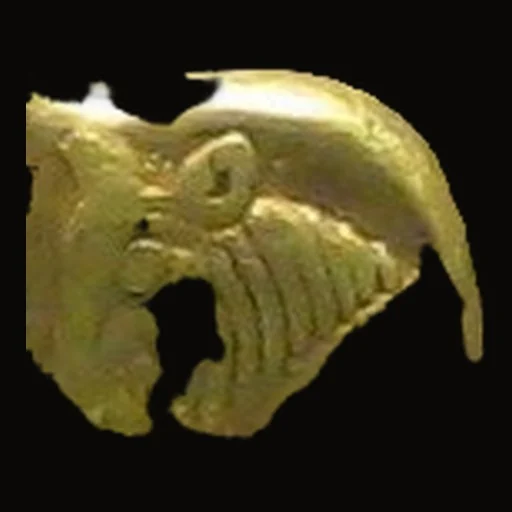
Points of observation: Compare with KEY OBJECT 1 to see the difference in material color and mark. In the arrangement of the two animals facing each other, where does observation end and interpretation begin?
ArchaiOptix / CC BY-SA 4.0 (Wikimedia Commons) → Object Database
The State Vanishes, the Mark Remains
In 546 BC, Sardis fell. It is said that a single Persian soldier scaled a cliff thought to be impregnable, and the gates were opened from within. Lydia disappeared from the map. The kingdom that invented coinage perished in less than a hundred years.
But it was the state that perished, not the invention. Persia continued to use the mint in Sardis as it was. Conquerors do not destroy good systems; they just make them their own. Persia would eventually strike its own gold coin, the Daric, but its form and weight standard were inherited from Lydia. Even if a country disappears from the map, a single piece in the palm of the hand remains. A pattern we will encounter many times in this book appears here for the first time.
- What Happened in That Era
- In a world of payment by weight, the king struck a mark. The time spent weighing and checking fineness with each transaction was replaced by the state's guarantee.
- The Underlying Mechanism
- The time spent doubting was shouldered by one who was not doubted. The value of the mark was supported by two things: the metal's content and the trust in the one who struck the mark.
- A Question That Remains Today
- What can the other party receive without doubt? When you receive a 10,000 yen banknote today, what do you accept without checking? → P12 What Do You Offer for Trust?
- Points of Difference
- The Lydian mark guaranteed the content of the metal. Today's banknotes contain no metal and derive their value as a liability on the issuer's books. The type of thing the mark guarantees is different. → Issue 10 'Whose Debt Is Modern Money?'
- See — Open the Electrum Trite and the Croeseid in the object database.
- Observe — Look at the obverse and reverse, and describe the mark, edge, and material color in words. The lion is an 'observation'; its meaning is an 'interpretation'.
- Search — Check the issuing authority and the way the date is written in the ledger. Consider why the date ranges are written differently: '610–560 BC' and 'c. 550 BC'.
- Look up — Look up electrum, weight, fineness, bimetallism, and weighed money in the glossary.
- Answer — What trouble was eliminated from transactions by striking a mark? Write it in one sentence.
Open to enrolled students
Ahead: Fire from the East — From Ionia to a Hundred Furnaces, Three Scales — Weight as Diplomacy, Coins That Declare Their Name — From Wappenmünzen to the Owl, Silver from the ground, ships on the sea — From Laurion to Salamis, The Currency of an Empire, and its Debasement, The Examiner and the Nomos — Rebuilding Trust, Beauty and Signature — The Great Silver Coins of Syracuse, Three Lands — India's Punched Silver, China's Knives and Shells, and Pre-Roman Times, The Gold of the Mountains, the Name of the King — Macedonia — and the reference section (timeline, people, sources).
Already enrolled? Log in. Free sample: Vol. 1, Source Criticism (free in full).