Where Did Money Come From?
A01 — A General History ① — From 3000 BC to 336 BC
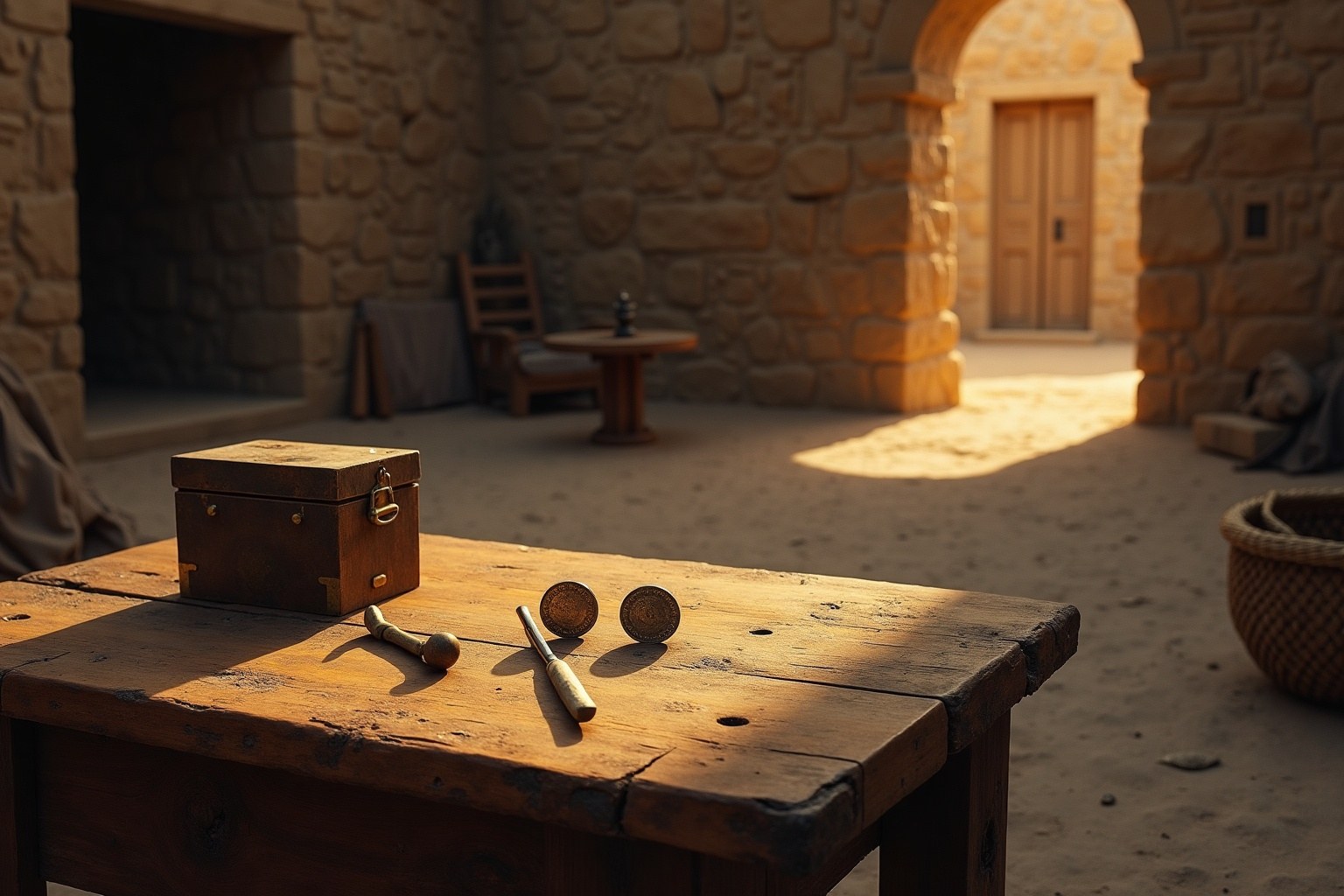
Why did people stop using scales and start trusting marks?
Supervised by: Mitsuru Hayama / Reading time (main text): course text ~10 min + textbook ~106 min = ~116 min / Beyond the text: 6 exercises · 3 readings
What this course teaches you to do
- Can explain what was eliminated from transactions by the stamping of a mark, using the language of time rather than metal.
- Can arrange three weight standards using numbers and state why they were able to circulate concurrently.
- Can explain the difference between anonymous and marked silver coins in terms of who guarantees their quality.
- To be able to explain, from the evidence on actual coins, why broken trust was restored not by returning to the scales, but through law and assayers.
TEXTBOOK
『Where Did Money Come From?』 First Edition(2026)
A full illustrated textbook. 31 figures, about 106 min
Lessons (8)
- From a World of Weight to a World of MarksThe act of stamping a mark eliminated not the metal, but the time spent in doubt. Only one who is not doubted can make such a declaration.
- The State Vanishes, the Mark RemainsCoinage is not bound by the survival of its issuer. Gold coins move the few, while silver coins move the many.
- The Fire from the East, and the Three ScalesSame name, different weight. The choice of a weight standard was the choice of a trading sphere, and integer relationships allowed different coinages to circulate side by side.
- From Unnamed to Named Silver CoinsThe inscription is a declaration of who guarantees the quality. A recognized design becomes a strength when it is not changed.
- Silver from the Earth, Ships on the SeaDistributed, it vanishes; consolidated, it takes form. When two historical sources conflict, present them both without making a determination.
- Imperial Currency and Debased CoinageIf two currencies of different value are forced to be accepted at the same face value, the good one is hoarded. The theatre stated it first.
- The Assayer and NomosTrust lies not in the material, but in the convention and the system for inspecting it.
- Three Lands, and the Name of the KingSeparate answers in three lands. The era of city emblems ended, and the king's name appeared on gold coins.
Case studies — applied in the materials (3)
- Before the beginning Overview: 2,700 years of the world 3000 BC Mesopotamia
Section 1. The first stop on the journey of the general introduction, which begins not with barter, but with records of credit and debt. - The Examiner Greece 375/4 BC Excavation area of the Agora
Section 7. The stele of the "Law Concerning Silver Coinage," at a stop on the Greek journey. - The sixteen kingdoms strike coins India 6th century BCE Punching workshop
Section 8. A stop on the Indian journey, noting that the symbols on punched-marked silver coins are "unknown."
Assessment
6 exercises in this course (4 check, 0 compare, 2 written). Progress is recorded by self-assessment.