A silver coin covered in chopmarks
There is an 8 Reales silver coin whose king's face has been obliterated by counterstamps. These marks were not a flaw, but a record of the number of times it had been inspected.
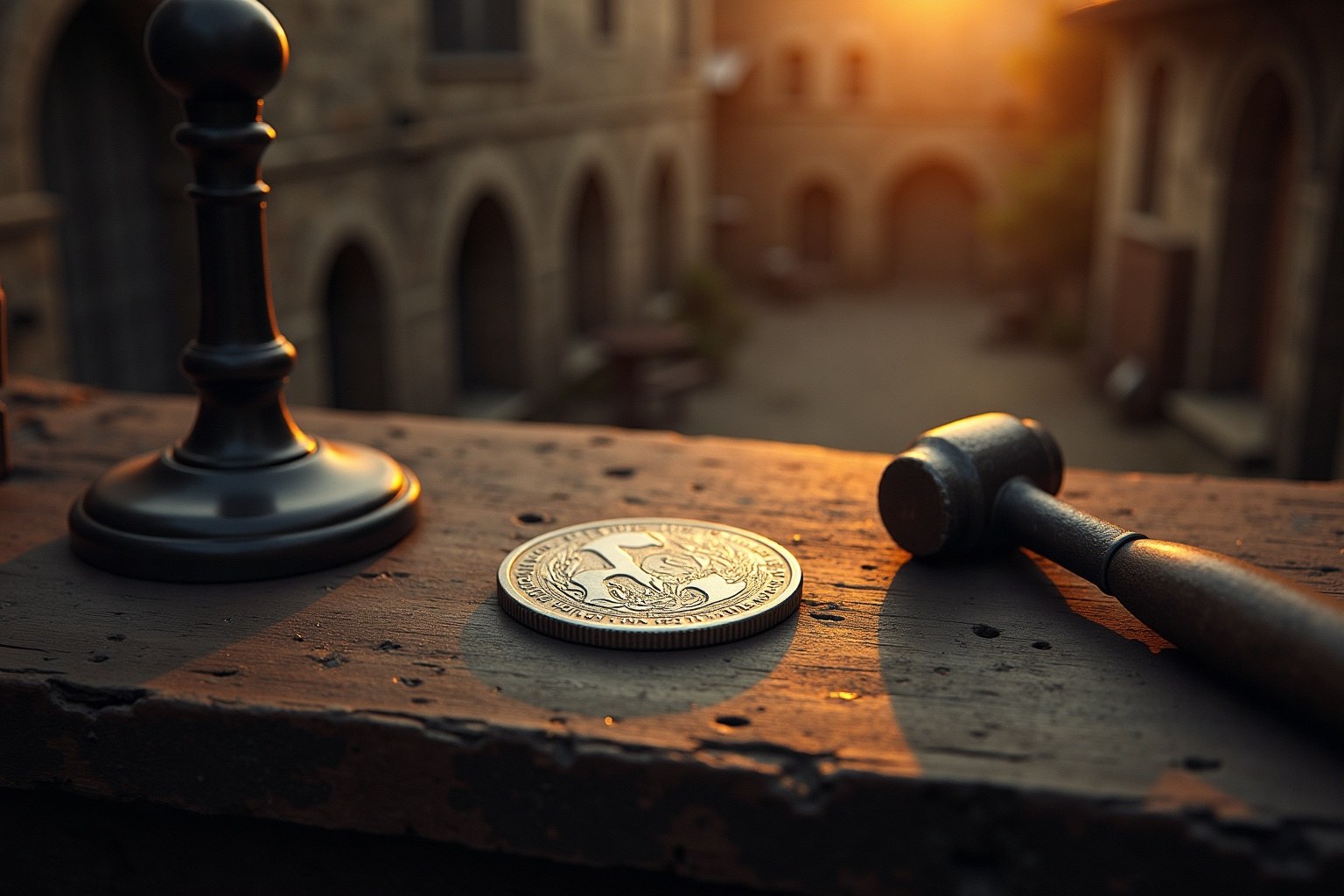
There is a silver coin whose surface is filled with small stamps. The original design is obliterated, and even the king's face is unrecognizable. It is an 8 Reales silver coin—a large silver coin struck in Spanish America that circulated around the world.
These stamps are called *sōki* (戳記). In English, they are known as chopmarks.
Who made the marks?
Experts on the Chinese side awaited the 8 Reales coins that had crossed the Pacific. They were silver assayers belonging to money changers, known as shroffs.
A shroff would inspect each silver coin he received. If he deemed it good, he would strike it with his own chopmark. This small stamp served as a mark of inspection.
Whatever the distant King of Spain may have promised, it was the eye of the local assayer that allowed a silver coin to pass in this market.
Why did they continue to circulate even when obliterated?
The more hands it passed through, the more marks it accumulated. After passing through many hands, the surface would be filled with marks. The portraits of kings and emperors sometimes disappeared beneath the stamps of unknown merchants.
And yet, these silver coins continued to circulate.
Being covered in stamps was not a flaw. It was an accumulation of records showing that the coin had been inspected many times and had passed each time. An 8 Reales coin layered with chopmarks was a currency that wore a résumé of its credibility.
What happened in a country of scales
Behind this was China's monetary system. In this country, silver was held in bullion form and weighed on scales for each transaction. It had no face value. The weight and fineness (the proportion of silver content) of the silver itself was its value.
Moreover, the weight of one tael differed from region to region: the Haikwan tael, the Kuping tael, the Tsaoping tael. The same name, but different weights.
Into this environment came foreign silver coins of a consistent weight and fineness. They could be counted by piece, avoiding the need for scales. From the 18th to the 19th century, foreign silver coins became the de facto standard in the open ports.
Trust can also be built from the bottom up
However, there is now no way to confirm what each individual chopmark guaranteed. Most clues for identifying whose mark it was have also been lost. The only thing that can be read is the fact that the marks are layered.
Nevertheless, this silver coin tells us one thing. Who verified it was more important than who issued it. The credibility of currency was not something that was only bestowed from above.
More in Reading a coin
The Fate of Gold, Divided by Its Use
The Toyotomi faction converted the gold and silver left by Hideyoshi into military power, while Tokugawa Ieyasu established a monetary system valid throughout the country. This is the story of how gold and silver from the same era met completely opposite ends depending on how they were used.

The Value of the Yen as Defined by the 20 Yen Gold Coin
The old 20 yen gold coin was the highest denomination established by the New Coinage Act. The value of this coin, which equated one yen to 1.5 grams of pure gold, was halved in the 30th year of Meiji. Behind this was the war indemnity left in London.

The Fate of Paper Inscribed with "Time Flies"
In the center, "FUGIO" (time flies) and a sundial; below it, "MIND YOUR BUSINESS." Printed to finance the War of Independence, the Continental currency, contrary to its motto, lost its value and left an idiom in the English language.
If you would like to read on
Everything in these pieces comes from the material itself.