Reading Articles
and Ledgers
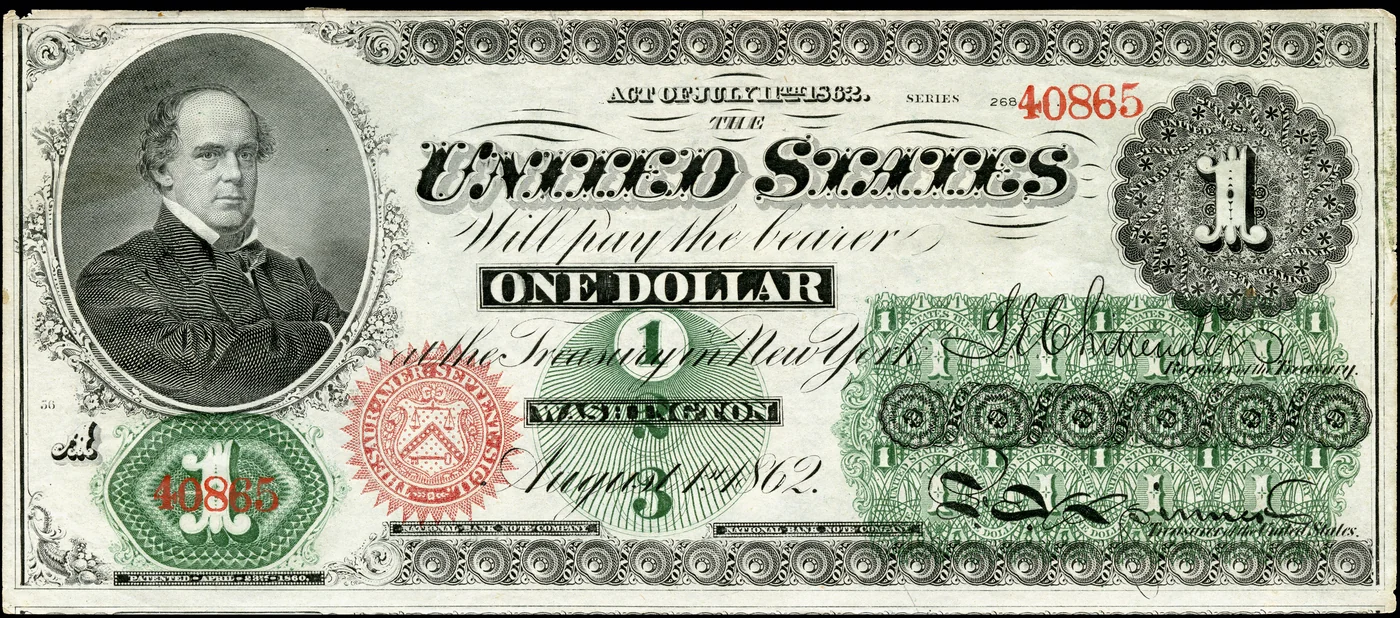
National Museum of American History / Public domain (Wikimedia Commons)
How should one read a document to turn it into evidence?
This book in 3 minutes
- The archives of this school contain legal articles, central bank decisions, institutional explanations, ledgers and statistics, and research and reports. This book teaches you to read all of them using the same method.
- The method is borrowed from Course E10. Arrange, separate, formulate a question, and attempt to deconstruct. Arrange items with different conditions, not similar ones, mechanically list commonalities and differences in two columns, and turn the differences into a question.
- Read articles by asking "who, what, and in which article." Read decisions by arranging dates and noting the span between them. Read explanations by posing the same question to two institutions. Read ledgers by comparing the left and right columns.
- Each item in the archives is a record with a title, institution, date, language, verification level, content fingerprint (hash), claims, and reference points. The "reading" in this book is also practice in reading the columns of that record.
- All answers were mechanically assembled from the archive records. The answers to the readings are not interpretations, but rather arrangements of dates or lists of claims found in only one source. Interpretation is created by the reader beyond these answers.
- Source Room as of publication (2026-09-07): 338 entries, 1432 claims, 21 reading comprehension questions.
Table of Contents
- IntroHow to Use This Book
- 1Overview of the Archives — Reading the Seventy Records by Their Columns
- 2Reading Articles — Who, What, and in Which Article
- 3Reading Decisions — The Sequence of Dates and the Span Between Them
- 4Reading Explanations — The Same Question for Two Institutions
- 5Reading Ledgers — Comparing the Left and Right Columns
- 6Reading Research and Reports — Attempting to Falsify
- 7Connecting Sources and Stops — How Records Become Scholarship
- AfterWhere to Go from This Book
- EndSUMMARY / DATA / QUESTIONS / DRILL / SOURCES / INDEX / REVISION HISTORY
Physical objects can be verified on a scale, but documents cannot. To use a document as evidence, a different method is required. Who wrote it, when, and for what purpose? Which sentence is a claim, and which is a definition? How do different institutions answer the same question? This book uses the seventy documents in the archives as material to practice this method across seven chapters.
The "Reading Comprehension" section of each chapter is a page where one or two cases from the Archive are opened, and a question and answer are presented. The answer is not an interpretation but a mechanical arrangement of facts from the Archive's records (dates, number of items, claims unique to one side). The interpretation is created by the reader, who sees that arrangement, using the method from Course E10. Once separated, question the differences. Once a question is posed, attempt to deconstruct it.
A case in the Archive is a ledger. It contains the title and institution, date of the original text and date of publication, language, whether it is primary or secondary, the level of verification (at this school, all items are read directly), the time of verification, a content fingerprint, a list of claims, and the stops and textbooks that cite the source. Before the reading comprehension, first read the columns of the ledger. If you can read the columns, you can open any unfamiliar document using the same method.
Overview of the Archives — Reading the Seventy Records by Their Columns
The archives of this school are a ledger of evidence. For each item, the title, institution, type, language, primary or secondary status, verification level, verification time, content fingerprint, claims, and reference points and textbooks are recorded. In this chapter, we will count the seventy items by type, language, and institution, and read the columns of one record in order. All numbers reflect the values in the archives at the time of publication.
| Type × Language | fr | German | English | Japanese | Dutch | # |
|---|---|---|---|---|---|---|
| Document | 11 | 14 | 141 | 100 | 2 | 268 |
| Data | · | 2 | 18 | 20 | · | 40 |
| Electronic | · | · | 6 | · | · | 6 |
| System | · | · | 8 | 16 | · | 24 |
| 11 | 16 | 173 | 136 | 2 | 338 |
| Institution | # |
|---|---|
| Bank of Japan | 42 |
| The Rothschild Archive | 18 |
| Board of Governors of the Federal Reserve System | 11 |
| Japan Pension Service | 11 |
| National Tax Agency | 7 |
| e | 6 |
| Statistics Bureau of Japan | 6 |
| Bank of England | 5 |
| U.S. Bureau of Labor Statistics | 5 |
| U.S. Securities and Exchange Commission, Investor.gov | 5 |
| National Diet Library, Search System for Minutes of the Diet | 5 |
| Government of Japan | 5 |
| European Central Bank | 4 |
| GOV.UK | 4 |
| House of Commons | 4 |
| Financial Services Agency | 4 |
| Ministry of Finance | 4 |
| Bank for International Settlements | 3 |
| Louis XV | 3 |
| Parliament of the United Kingdom | 3 |
| Social Security Administration | 3 |
| The Royal Swedish Academy of Sciences | 3 |
| United States Congress | 3 |
| Ministry of Health, Labour and Welfare | 3 |
| Consumer Affairs Agency | 3 |
| Life Insurance Policyholders Protection Corporation of Japan | 3 |
| Japan Legal Support Center | 3 |
| A. Piatt Andrew | 2 |
| Anne Goldgar | 2 |
| Carola Frydman, Eric Hilt, Lily Y. Zhou | 2 |
| Charles Mackay | 2 |
| Conseil d'État du Roi | 2 |
| Consumer Financial Protection Bureau | 2 |
| European Commission | 2 |
| Federal Open Market Committee | 2 |
| Federal Reserve Bank of New York | 2 |
| François de Callataÿ | 2 |
| François R. Velde | 2 |
| Goethe | 2 |
| Irving H. Picard, SIPA Trustee for the liquidation of BLMIS | 2 |
| Office of the Comptroller of the Currency, U.S. Treasury Department | 2 |
| Social Security Administration, Office of the Chief Actuary | 2 |
| U.S. Department of the Treasury | 2 |
| U.S. Securities and Exchange Commission | 2 |
| Universität Wien | 2 |
| Ministry of Economy, Trade and Industry | 2 |
| Ministry of Health, Labour and Welfare, Information Publication System for Long-term Care | 2 |
| National Tax Agency, National Tax College, Tax History Museum | 2 |
| Financial Bureau, Ministry of Finance | 2 |
| Author unknown | 2 |
| Financial Markets Department, Bank of Japan | 2 |
| Research and Statistics Department, Bank of Japan | 2 |
| Ministry of Justice | 2 |
| Deposit Insurance Corporation of Japan | 2 |
| 「Junius」 | 1 |
| 「Vel Quasi」 | 1 |
| 110th Congress of the United States | 1 |
| American Numismatic Society | 1 |
| Andrew Odlyzko | 1 |
| Antoin E. Murphy | 1 |
| Ashmolean Museum and Oxford Roman Economy Project, University of Oxford | 1 |
| Ashmolean Museum, University of Oxford | 1 |
| Ashmolean Museum, University of Oxford et al. | 1 |
| Barthélemy Marmont du Hautchamp | 1 |
| Bibliographisches Institut, Leipzig | 1 |
| BIS | 1 |
| Charles P. Kindleberger | 1 |
| Circle Internet Group | 1 |
| CoinsWeekly | 1 |
| D. Morier Evans | 1 |
| Deutsche Bundesbank | 1 |
| Dictionary of National Biography | 1 |
| Earl A. Thompson | 1 |
| Edward T. Newell | 1 |
| Encyclopædia Britannica, 11th edition | 1 |
| Encyclopaedia Judaica | 1 |
| Ernst Heinrich Krelage | 1 |
| Ethan Gruber | 1 |
| European Consumer Centres Network | 1 |
| Federal Deposit Insurance Corporation | 1 |
| Federal Reserve History | 1 |
| Federal Trade Commission | 1 |
| Financial Crisis Inquiry Commission | 1 |
| Financial Services Compensation Scheme | 1 |
| FWF Austrian Science Fund | 1 |
| G5 Finance Ministers and Central Bank Governors | 1 |
| Gareth Campbell | 1 |
| Gareth Campbell, John D. Turner | 1 |
| Gary B. Gorton, Andrew Metrick | 1 |
| Gary Gorton, Andrew Metrick | 1 |
| Gary Gorton, Ellis W. Tallman | 1 |
| Georges Dairnvaell | 1 |
| Hubert Emmerig | 1 |
| Ignatius Balla | 1 |
| Internal Revenue Service | 1 |
| International Numismatic Council | 1 |
| Jean Buvat | 1 |
| John Francis | 1 |
| John Law | 1 |
| John Reeves | 1 |
| Jon R. Moen, Ellis W. Tallman | 1 |
| Jüdisches Museum Frankfurt | 1 |
| Maristella Botticini・Zvi Eckstein/Princeton University Press | 1 |
| Markus K. Brunnermeier | 1 |
| Martha White Paas | 1 |
| Martin Wörle | 1 |
| Mike Dash | 1 |
| N. W. Posthumus | 1 |
| National Bureau of Economic Research, Business Cycle Dating Committee | 1 |
| Nicolas Dutot | 1 |
| NUMiD | 1 |
| O. M. W. Sprague | 1 |
| OECD | 1 |
| Oliver Volckart | 1 |
| Peter M. Garber | 1 |
| Pew Research Center | 1 |
| Report Fraud & Cyber Crime Reporting Centre | 1 |
| Royal Numismatic Society | 1 |
| Satoshi Nakamoto | 1 |
| Securities Investor Protection Corporation | 1 |
| Senta Herkle・Marius Wieandt | 1 |
| SILVER project, KBR | 1 |
| The Gentleman's Magazine | 1 |
| The London Gazette | 1 |
| Thomas Tooke | 1 |
| U.S. Attorney's Office, Southern District of New York | 1 |
| U.S. Consumer Financial Protection Bureau | 1 |
| U.S. Department of the Treasury, Bureau of the Fiscal Service | 1 |
| U.S. District Court, Southern District of New York | 1 |
| U.S. Federal Housing Finance Agency | 1 |
| U.S. Internal Revenue Service | 1 |
| U.S. Securities and Exchange Commission, Office of Inspector General | 1 |
| U.S. Social Security Administration | 1 |
| UK Government | 1 |
| UK Office for National Statistics | 1 |
| Ulrich Rosseaux | 1 |
| Universität Wien, Institut für Numismatik und Geldgeschichte | 1 |
| W. A. Shaw | 1 |
| Zoltan Pozsar, Tobias Adrian, Adam Ashcraft, Hayley Boesky | 1 |
| Japan Real Estate Institute | 1 |
| Kunio Okina, Masaaki Shirakawa, Shigenori Shiratsuka | 1 |
| Noriyuki Kikuchi | 1 |
| Central Council for Financial Services Information | 1 |
| Financial Services Agency, Supervisory Bureau, Coordination Division, Supervisory Research Office | 1 |
| National Police Agency | 1 |
| Mitsui Bunko (The Mitsui Research Institute for Social and Economic History) | 1 |
| Emperor Ferdinand I and the Imperial Estates | 1 |
| Ministry of Land, Infrastructure, Transport and Tourism, Land and Water Bureau, Land Price Research Division | 1 |
| National Consumer Affairs Center of Japan | 1 |
| Courts of Japan | 1 |
| Statistics Bureau of Japan, Ministry of Internal Affairs and Communications & National Statistics Center | 1 |
| Non-Life Insurance Policyholders Protection Corporation of Japan | 1 |
| Edited by Michio Muramatsu and Masahiro Okuno | 1 |
| Tokyo Legal Affairs Bureau | 1 |
| Anonymous | 1 |
| Cabinet Office | 1 |
| Economic and Social Research Institute, Cabinet Office | 1 |
| Payment and Settlement Systems Department, Bank of Japan | 1 |
| Nihon Keizai Shimbun, Inc. | 1 |
| Edited by Nikkei Inc. | 1 |
| Japan Federation of Bar Associations | 1 |
| Yukio Noguchi | 1 |
Reading a Single Record by Its Columns
Let's examine an item from the archives, column by column. Title and institution. Type (document, data, electronic) and primary or secondary status. Language. Original and publication dates. Verification level and verification time. Content fingerprint (hash of the retrieved text). List of claims. And finally, the reference points and textbooks that cite the source.
- Article 46, Paragraph 2: Bank of Japan notes shall be legal tender and shall be used for payment without limit.
- Article 1: The purpose of the Bank of Japan is to issue banknotes, to carry out currency and monetary control, and to ensure smooth settlement of funds among financial institutions.
- Article 2: The principle of currency and monetary control is to contribute to the sound development of the national economy through the pursuit of price stability.
- Article 33: Ordinary business (discounting of bills, loans against collateral such as government securities, buying and selling of government securities, accepting deposits, etc.).
- Article 34: Loans to the government and underwriting of government bonds are within the scope of the Diet's resolution under the proviso of Article 5 of the Public Finance Act.
Open to enrolled students
Ahead: Reading the Decision Statements — The Sequence of Dates and the Width of Transitions, Reading Explanations — The Same Question at Two Institutions, Reading Ledgers — Comparing the Left and Right Columns, Reading research and reports — an attempt to deconstruct, Connecting Sources and Stops — How Records Create Scholarship — and the reference section (timeline, people, sources).
Already enrolled? Log in. Free sample: Vol. 1, Source Criticism (free in full).