The Japanese
Monetary System
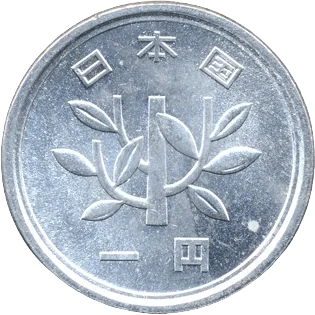
As6673 / CC BY-SA 3.0 (Wikimedia Commons)
What can the law define about money, and what can it not?
This volume in 3 minutes
- The yen was created by the New Coinage Act of 1871, and it took 14 years for the issuance of banknotes to be consolidated under the Bank of Japan. The law came first, and the system followed.
- Legal tender is defined by two articles of law. Bank of Japan notes are unlimited legal tender, while coins are legal tender up to 20 times their face value. It is the law, not the material, that confers this status. The authority to issue is determined by law, while the amount issued is determined by demand.
- Article 1 of the Bank of Japan Act states three objectives, and Article 2 states its philosophy. The two percent figure is not in the Act; it was set by a monetary policy meeting in 2013.
- Article 5 of the Public Finance Act prohibits underwriting by the Bank of Japan, while Article 33 of the Bank of Japan Act includes buying and selling as part of its regular operations. The side that was not prohibited has come to account for 40% of its holdings.
- The law sets the maximum reserve ratio at 20 percent, but the actual rate is determined by the Policy Board and has not changed since 1991. The treatment of excess reserves has been altered three times, not by law, but by the system.
- Government bonds shifted from physical certificates in 1980 to book-entry form in 2003, and over 99.9 percent are now settled by transfer. RTGS and DVP are matters of design, not law.
- Deposits are not legal tender, but they are protected by law up to 10 million yen. For prepaid payment instruments, more than half of the unused balance must be deposited as security. Three types of money are supported by three laws in three different ways.
- There is still no article of law that would make a central bank digital currency legal tender. Policies speak of preparation, and reports state that nothing is decided. What the law can do is draw a line; what lies outside that line is decided by the recipient.
Table of Contents
- PROLOGUEFrom Law to System
- 1Unit of Currency and Legal Tender — Which Law Makes the Yen the Yen?
- 2The Bank of Japan Act — Objectives, Philosophy, and Two Prohibitions
- 3Current Accounts and Reserves — The Law of the Bankers' Bank Accounts
- 4The Public Finance Act and Government Bonds — The Law That Permits Borrowing and the Law That Forbids It
- 5The Settlement System — Transferring Rights on the Books
- 6The Law of New Money — The Payment Services Act and the Yet-to-Be-Issued Digital Currency
- EPILOGUEInside and Outside the Line
- WORKBOOKLooking Up the Laws Yourself (5 Cases)
- BACK MATTERSUMMARY / OBJECTS / PEOPLE / GLOSSARY / TIMELINE / DATA / QUESTIONS / DRILL / SOURCES
From Law to System
No. 10, "Whose Liability Is Modern Money?", examined the same historical materials from the perspective of ledgers. This book examines them from the perspective of the law. The Bank of Japan Act, the Act on Currency Units and Coinage, the Public Finance Act, the Act on the Reserve Deposit Requirement System, and the Payment Services Act. Five laws, along with explanatory texts, decisions, and statistics from the Bank of Japan, the Ministry of Finance, and the Deposit Insurance Corporation of Japan. The material consists of 49 Japanese documents from the archives, and this book will only cover what is stated within them.
Section 1 of Course B17, "Money and Law," states that the law can define, monopolize, and punish, but it cannot compel belief. This book is an attempt to verify that statement using Japanese law. At the end of each stop, there is a four-part section (The Law / What the Law Can Do / What the Law Cannot Do / Limitations). Only the one from the first stop of each chapter is displayed. The rest are stored as internal data and can be read on pages with a repeating structure.
The reading order is: Unit of Currency and Legal Tender (Chapter 1), The Bank of Japan Act (Chapter 2), Current Accounts and Reserves (Chapter 3), The Public Finance Act and Government Bonds (Chapter 4), The Settlement System (Chapter 5), and The Law of New Money (Chapter 6). The legal articles are not quoted directly but are presented as summaries from the "claims" section of the archives. The original documents can be accessed from each item in the archives.
Unit of Currency and Legal Tender — Which Law Makes the Yen the Yen?
- The yen was created in 1871, and it took 14 years for the issuance of banknotes to be consolidated under a single authority.
- As legal tender, Bank of Japan notes are unlimited, while coins are limited to 20 times their face value. It is the law that confers this status.
- The authority to issue is determined by law, the amount by demand. There are three types of money, only one of which is legal tender.
When and by whom was the yen created?
1868–1885, Tokyo. From government notes to Bank of Japan notes
The Bank of Japan offers a brief history of banknotes. In 1868, the new government issued government notes. In 1871, the New Coinage Act created the unit of the yen. In 1872, the National Bank System established a series of banks that issued banknotes. By 1879, there were 153 national banks.
In 1877, the over-issuance of paper money to finance the Satsuma Rebellion caused prices to rise. To deal with the aftermath, the Bank of Japan was established in 1882, and in May 1885, it issued its first banknote, the old 10-yen note. It took 14 years from the time the unit of currency was established by law until the issuance of banknotes was consolidated under a single authority.
This sequence reveals the theme of this book. The law can define the unit of currency. However, it took a war, price instability, and 14 years to consolidate issuance under a single authority. The law comes first, and the system follows. This pattern will appear repeatedly in the following chapters.
- The Law
- The New Coinage Act (1871) established the yen, and Article 46 of the Bank of Japan Act stipulates the exclusive right to issue banknotes (according to the Bank of Japan's explanation).
- What the Law Can Do
- Define the name of the unit and the authority to issue it. Consolidate 153 issuers into one.
- What the Law Cannot Do
- Maintain the value of over-issued paper money. The financing of the Satsuma Rebellion increased the money supply outside the law, and prices responded.
- Limitations
- The timeline in this stop is limited to the scope of the Bank of Japan's explanation; details about national banknotes or price figures cannot be stated here.
Legal tender is defined by two articles of law
Present, Tokyo. Bank of Japan Act, Article 46; Act on Currency Units and Coinage, Article 7
Banknotes and coins are designated as legal tender by separate laws. Article 46, Paragraph 2 of the Bank of Japan Act stipulates that Bank of Japan notes are unlimited legal tender. Any number of them can be used at one time.
Coins are governed by Article 7 of the Act on Currency Units and Coinage. It states that coins are legal tender up to 20 times their face value. This means up to 20 coins of a single denomination can be used at one time. The Bank of Japan's explanation presents these two articles side by side.
In the same wallet, you have unlimited legal tender and legal tender limited to 20 coins. The difference is not the material, but which article of which law defines the obligation to accept it. Legal tender was a status conferred by law, not a property of paper or metal.
The authority to issue is determined by law, the amount of issuance is determined by demand.
2025, Tokyo, Bank of Japan counter
Article 46 of the Bank of Japan Act grants the Bank of Japan the authority to issue banknotes. However, the amount to be issued is not specified in the article. According to the Bank of Japan's explanation, the issuance of banknotes occurs when financial institutions withdraw them from their Bank of Japan current accounts and receive them at the Bank's counters. The amount issued is determined by the public's demand for banknotes.
Let's look at the scale. In the year 2025, the total banknotes paid out and received at the counters of the Bank of Japan amounted to 18.2 billion notes, valued at 120.9 trillion yen. The banknotes in circulation at the end of New Year's Eve 2025 totaled 120.6 trillion yen, comprising 18.32 billion notes.
The authority is granted by the article, the amount is determined by demand. This division is the first line drawn between what law can and cannot do. The law has consolidated the source of issuance into one, but how many notes come from that source is decided by the convenience of the receiving party.
There are three types of money, and legal tender is only one of them.
Present, Tokyo, The three means of settlement
The Bank of Japan's explanation defines money as "something that everyone would be willing to accept in exchange for goods and services if they could obtain it," and lists three types of money in a broad sense: cash currency (banknotes and coins), demand deposits at financial institutions, and Bank of Japan current account deposits.
Of these, only cash currency has the force of legal tender. The explanation lists three characteristics of cash currency: the force of legal tender, finality of payment, and anonymity. While demand deposits and Bank of Japan current account deposits also have finality of payment, the law does not grant them the force of legal tender. The explanation states that Bank of Japan current account deposits possess extremely high creditworthiness, liquidity, and neutrality.
Legal tender and money are not the same. An account balance is not legal tender, yet it circulates as money. The law has granted status to only one of the three, while the other two circulate based on the trust of the recipient. Understanding this difference helps to see why the Bank of Japan Act in the next chapter sets the smooth settlement of funds as one of its objectives.
Key points so far
- The law comes first, the system catches up later (1871→1885).
- The status of legal tender is granted not by its material, but by two articles of law.
- The law consolidated the source of issuance, but the number of notes issued from that source is determined by the recipient's demand.
- There are three types of money in a broad sense. Only cash currency has the force of legal tender.
Open to enrolled students
Ahead: The Bank of Japan Act — Objectives, Principles, and Two Prohibitions, Current Accounts and Reserves — The law of accounts at the bankers' bank., The Public Finance Act and JGBs — The article that permits borrowing, and the article that forbids it, The settlement system — rights are transferred on the books., The new law of money — the Payment Services Act and the yet-to-be-issued digital currency, Inside the line, and outside, Opening the Articles Yourself — and the reference section (timeline, people, sources).
Already enrolled? Log in. Free sample: Vol. 1, Source Criticism (free in full).