The Empire of Debasement
C04 — Chain of people
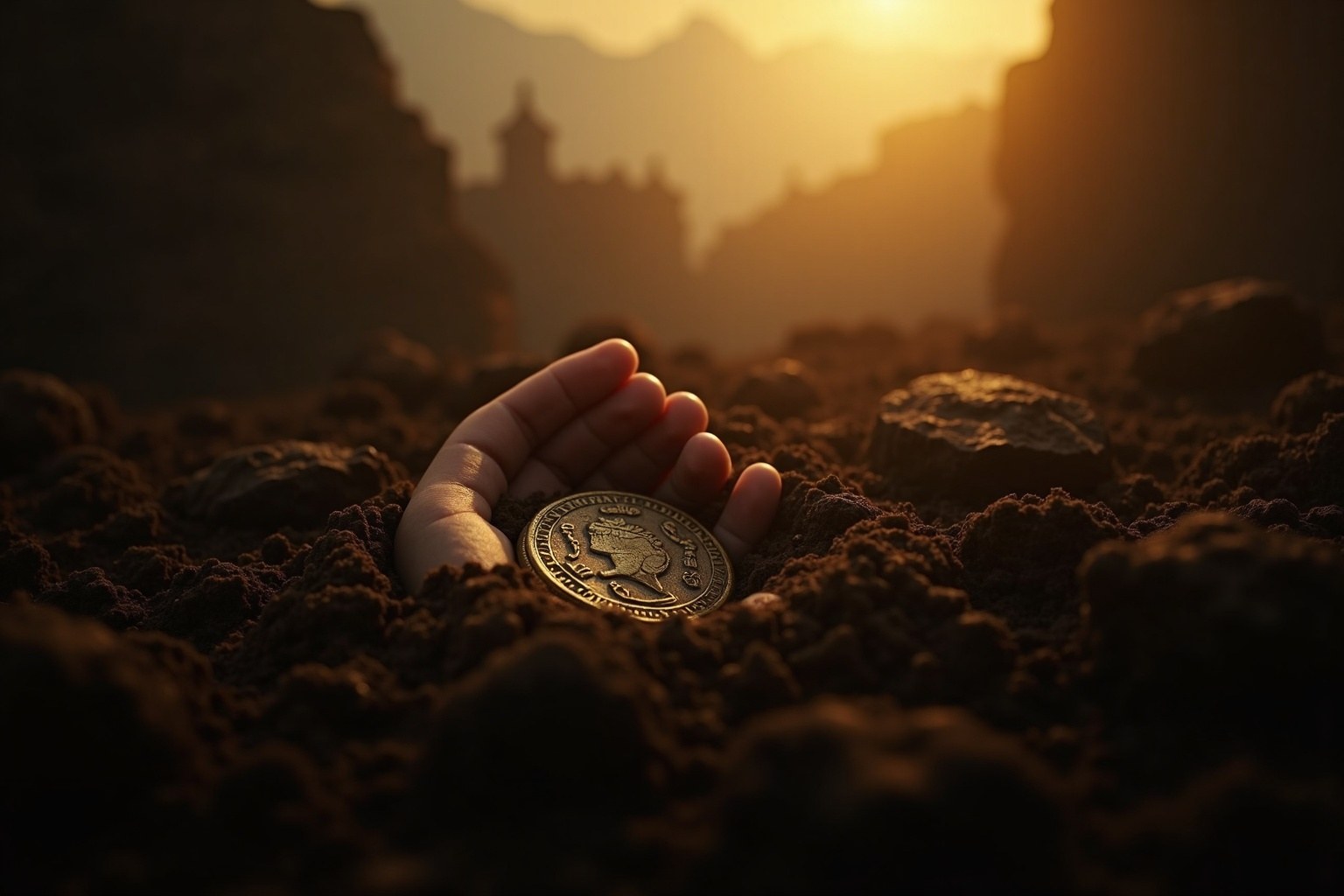
Nero began it. Caracalla pushed it further. Diocletian tried to set it right.
Supervised by: Mitsuru Hayama / Reading time (main text): About 8 min (4,079 characters of text at 500 chars/min; exercises and readings not included) / Beyond the text: 10 exercises · 4 coins · 10 readings · 1 references
What this course teaches you to do
- You can name, by the names of persons, the order in which Rome's silver declined.
- You can explain why attempts to halt the decline did not work.
- You can say how Constantine's answer differed from what came before.
- You can explain what differed when compared with the East (Han) of the same period.
- Can name, in order, the individuals responsible for the debasement from Nero to Diocletian.
- Can explain the three types of "attempts at restoration" (marks, price controls, new currency) and their outcomes.
Lessons (8)
- What Nero began did not end with NeroLower it once and the next man starts from there. A stairway forms that only descends.
- Someone tried to stop it. It did not workStop the price and, if the reason to rise remains, the trade disappears instead. Assessments differ, though.
- Constantine gave a different answerNarrow what you defend and you can hold it. Yet what took seven hundred years to build fell in decades.
- What was happening in the East at the same timeOpposite conditions can give the same result. Ask about the difference, not the likeness — and check the precision of the numbers.
- The Man Who Claimed Double — CaracallaFace value: two denarii. Content: one and a half. The radiate crown was the crown of debasement.
- The Two Percent World — The White Coins of GallienusA bronze core with silver makeup. What was destroyed was not the wealth of any single person, but the wealth of faith in the currency.
- The man who tried to restore it with a mark — AurelianStamping a mark of fineness does not bring back the silver itself. A mark alone cannot restore trust.
- The Man Who Tried to Fetter Prices — DiocletianThe Edict on Maximum Prices failed. Prices cannot be bound by law—a defeat from seventeen hundred years ago that is still in textbooks today.
Readings (10)
- The Roman Empire Overview: 2,700 years of the world AD 64 Nero's Debasement
§1. Where Nero's debasement begins. Note "in time it could no longer be stopped." - The coinage of the Roman province of Gaul France the 1st–3rd centuries An imperial mint
The source of the figure in §1. Figures for both the silver and the gold coins are given. - Byzantium Overview: 2,700 years of the world the 11th century The Twilight of the Nomisma
§3. The scene where a purity held for seven hundred years collapses in decades. - The monetary civilisation of the East Overview: 2,700 years of the world 118 BC The Wuzhu Coin of Han
§4. The wuzhu coin of the East. Material for reading side by side with the West. - The Roman Empire Overview: 2,700 years of the world AD 215 Caracalla's Watering-Down
Section 5. The device for denoting double value. The meaning of the radiate crown. - The coinage of the Roman province of Gaul France the later 3rd century The field of Châlons and the mint of Trier
Section 7. "The mark alone is not enough" — The limits of restoration by edict. - The Roman Empire Overview: 2,700 years of the world AD 301 The Defeat of the Price Edict
Section 8. Why a defeat from 1700 years ago is still in textbooks today. - The solidus and the end of the West Italy about 310 An imperial mint
Here is the answer provided by the fourth man. The empire, having failed in its attempt to control prices by law, now reformed the coinage itself. Please observe the design of striking 72 coins from one Roman pound—each weighing approximately 4.5 grams—and the decision to focus protective measures on a single gold coin. - A New Start at 20.5 Carats Greece 1092 Mint of the Imperial Capital
This is a record of what was done after the purity had completely collapsed. Instead of returning to the former nominal 24 carats, a lower standard of 20.5 carats was openly re-established. Please observe this choice: to preserve the memory of the weight, but to recast the public's trust. - Carlos and Juana Mexico From 1536 Mexico City Mint
On the other side of the chain of debasement, there is a role intended to prevent it. Please note that the single letter R between the two pillars is the initial of the first assayer, Francisco del Rincón, and that he guaranteed the standard fineness of 0.9306 with his mark.
Assessment
10 exercises in this course (7 check, 0 compare, 3 written). Progress is recorded by self-assessment.
References
- Online Coins of the Roman Empire (OCRE) — American Numismatic Society / Institute for the Study of the Ancient World, NYU A catalogue of Roman Imperial Coinage. 31 BC–AD 491, over 43,000 types. The place with the most examples of types.
Only works and primary sources whose existence has been verified are listed.