standard
本位 — Institutions
The ground on which the value of money is settled.
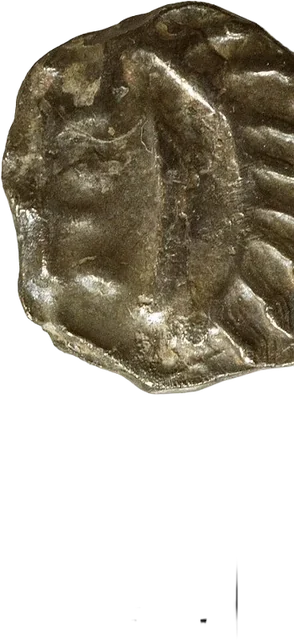 Early Merovingian silver denierLater 7th century
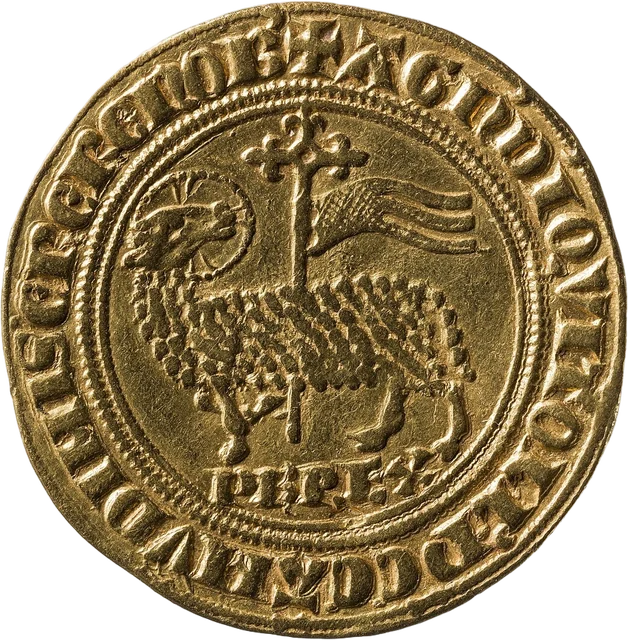 Agnel d'or (the gold lamb)1311
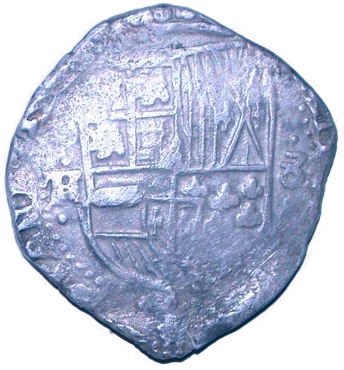 Eight reales of Potosí1556–1598 (Philip II)
Gold for the gold standard, silver for the silver standard. The standard is an agreement on 'what it ultimately reverts to', and by fixing this point of reversion, it prevented the face value from acting independently.
References
- History of Japanese Currency (main text). — Currency Museum, Institute for Monetary and Economic Studies, Bank of Japan. At its opening, the Bank of Japan was on the silver standard, with "convertible silver notes" exchangeable for silver specie. The Coinage Act of 1897 established the gold standard at "0.75g of gold = 1 yen." Recoinages occurred in Genroku 1695, Hōei 1706–11, Shōtoku 1714, Kyōhō 1715, Genbun 1736, Bunsei 1818 onward, Tenpō 1832 onward, and Man'en 1860.
The books and materials referred to in this course.