What Legends Tell: Coinage as a Battlefield
Two thousand one hundred and thirty silver coins found in a French field had no inscriptions. This is the story of how these wordless silver pellets eventually came to be engraved with poetic verses and became weapons in a war of words.
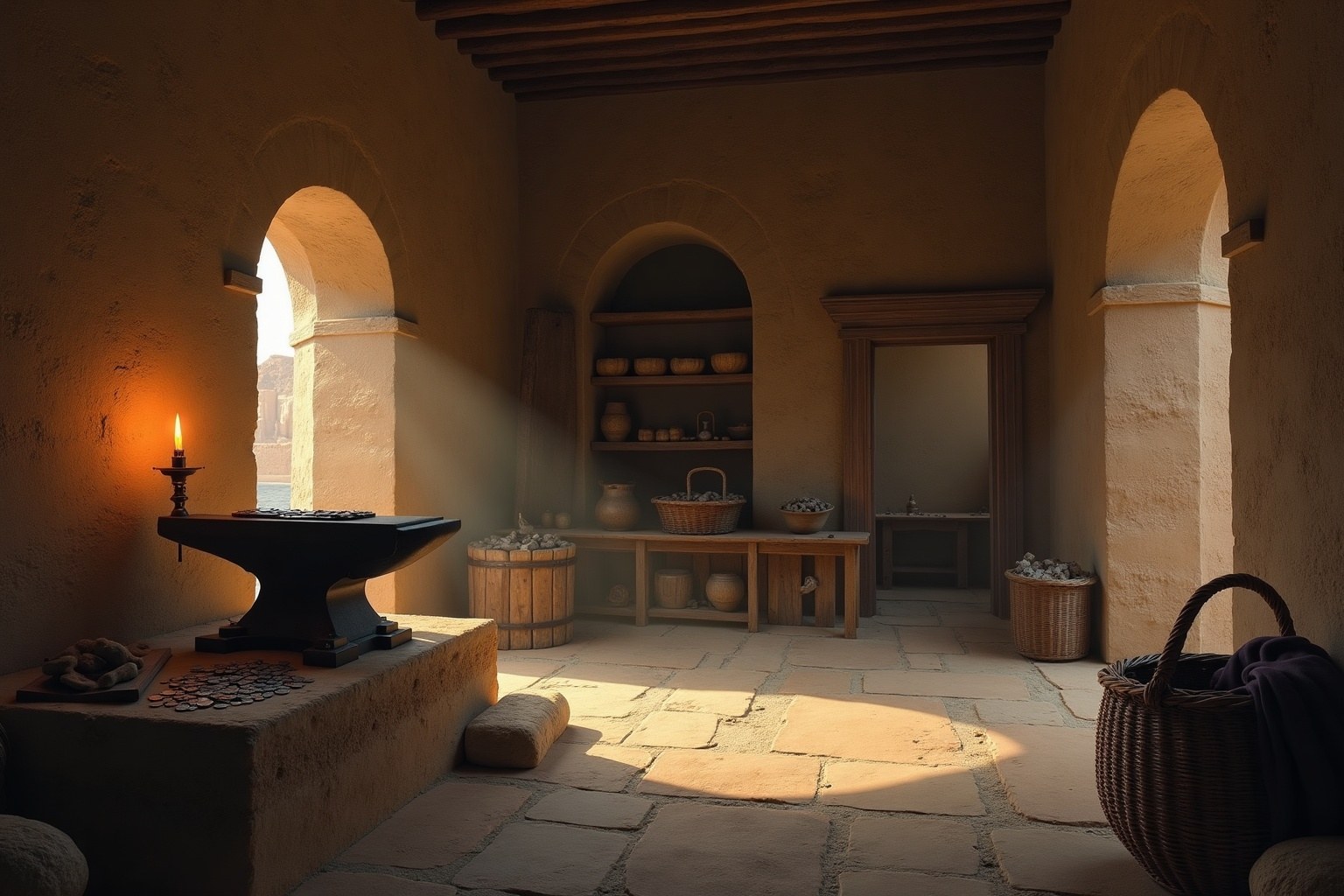
In February 1867, in a French olive grove, a farmer unearthed an earthenware pot from under a flat stone. Inside were 2,130 small silver coins. However, these coins bore no inscriptions.
Silver Pellets Without Inscriptions
This find, considered the oldest coinage known from French soil, begins in a world without writing. The obverses of the silver coins were engraved with frontal faces, helmeted heads, or the forepart of a lion devouring its prey, but there were no words to indicate the issuer or place of origin.
The weights ranged from 0.15 to 2.75 grams, and each piece was irregular. The hoard contained a mix of coins struck in Massalia, Asia Minor, and Southern Italy from the end of the 6th century BC to around 470 BC. Mere silver pellets without inscriptions—yet the very idea of a stamp and a standard was new to this land.
When Words Are Engraved
The words engraved on a coin are called a legend or inscription. This is where it is written who issued it, where it was made, and when. However, with many abbreviations and inconsistent spellings, they can be difficult to read until one gets used to them.
But inscriptions were not engraved solely for the owner to read. Even in societies where most people were illiterate, the king's name was inscribed. The writing itself functioned as a mark of authority.
The Conqueror's Words
In 44 BC, Caesar refounded the ruined city of Corinth as a Roman colony. The revived city began to strike coins again, but their appearance was different from before.
The obverse featured Caesar's laureate portrait, and the striking was supervised by Roman-style magistrates called duoviri. Most importantly, the inscription was in Latin, not Greek. Roman colonial coinage, bearing the language of the conqueror, had appeared in the ancient Greek city. The material was also bronze, not silver.
The Usurper Who Engraved Poetry
In later times, inscriptions became even more eloquent. The usurper Carausius went so far as to quote verses from the poet Vergil on the legends of his coins. He turned a single coin into a medium of propaganda to assert his own legitimacy.
The side that defeated him responded with the same weapon. The 'Arras Medallion,' celebrating Constantius I's reconquest of Britain, praised the recapture of London with the words 'Restorer of the Eternal Light.' Both the usurper and the legitimate empire spoke through coinage and fought through coinage.
The London mint continued to operate into the subsequent Constantinian dynasty, and was closed in the 320s.
More in The origin of words

Those Who Stand Before the Strongbox of the State
They had an army, but no reserves of gold and silver to support the soldiers. There was once a government that began a war—the enterprise that most voraciously consumes money—with empty hands.
The Trading Companies That Moved Nations with Invisible Strings
In the 19th century, certain trading companies financed wars and were involved in establishing banks in emerging nations. Born from a system of shared losses, these companies sometimes became powerful enough to move nations, wielding more influence than kings.

Gulden, the Name of a Coin That Was Once an Adjective
Originally an adjective meaning 'golden,' the name Gulden detached from its metallic origin, eventually becoming a unit of account in ledgers and shaping the history of a currency.
If you would like to read on
The rest of the story is in the material of NOMISMA.
Read next
Silver that Became a Wooden Wall →Price
After purchase, the full courses, the illustrated books, every country’s story and the numismatics examination are open to you.
See the price →