Those Who Stand Before the Strongbox of the State
They had an army, but no reserves of gold and silver to support the soldiers. There was once a government that began a war—the enterprise that most voraciously consumes money—with empty hands.

A War Begun with Empty Hands
The Continental Congress, where representatives of the colonies gathered, was the de facto government leading the war. It had astonishingly nothing at its disposal. While soldiers at the front awaited payment, there were no reserves of gold and silver to support them—in other words, no state treasury. It also lacked the power to levy war funds as taxes, the authority of taxation. It had an army, but no treasury. A government with empty hands had begun a war, the enterprise that most violently consumes money.
The Three Paths of a Treasury
When war begins, the ledgers of the state treasury—the nation's strongbox and its office—are cornered by the arithmetic of increasing expenses and decreasing revenues. The paths available at that time are raising taxes, borrowing money, and a third path: turning to the coinage. This involves reducing the precious metal content of silver coins while keeping their face value the same, with the profit going into the state treasury. This is sometimes called an unnamed war tax. The difference temporarily enters the treasury, but the bill is then said to be passed on to everyone holding the currency in the form of inflation. After the defeat at Cannae, Rome lightened its bronze coins.
Wealth from a Silver Mine
On the other hand, there were also wealthy treasuries. The coins of Athens were struck with the head of the goddess Athena and her bird, the owl. People simply called the four-drachma silver coin, the tetradrachm, an "owl." This silver came from the mines of Laurion in southern Attica. Herodotus wrote that the income from the mines brought great wealth to the Athenian treasury. In the first two decades of the fifth century BCE, a massive number of owls were struck. The coin was favored throughout the eastern Mediterranean and became the most widely imitated coin of antiquity.
A Windfall at a Crossroads
At times, an extraordinary windfall fell into the Athenian treasury. According to Aristotle's *Constitution of the Athenians*, in the year 483/2 BCE, a new mining district was discovered at Laurion, and the state treasury gained a profit of 100 talents from its exploitation. In retrospect, this was just a few years before the crisis of the Persian Wars. A mountain of silver had opened up just before a crossroads in history. What was to be done with this great sum? The city faced two paths: divide it among all the citizens, or turn it into something else.
Decisions concerning the state treasury can sometimes determine the very fate of a nation. And in 1557, Philip II declared the bankruptcy of his treasury—a suspension of payments.
More in The origin of words
The Trading Companies That Moved Nations with Invisible Strings
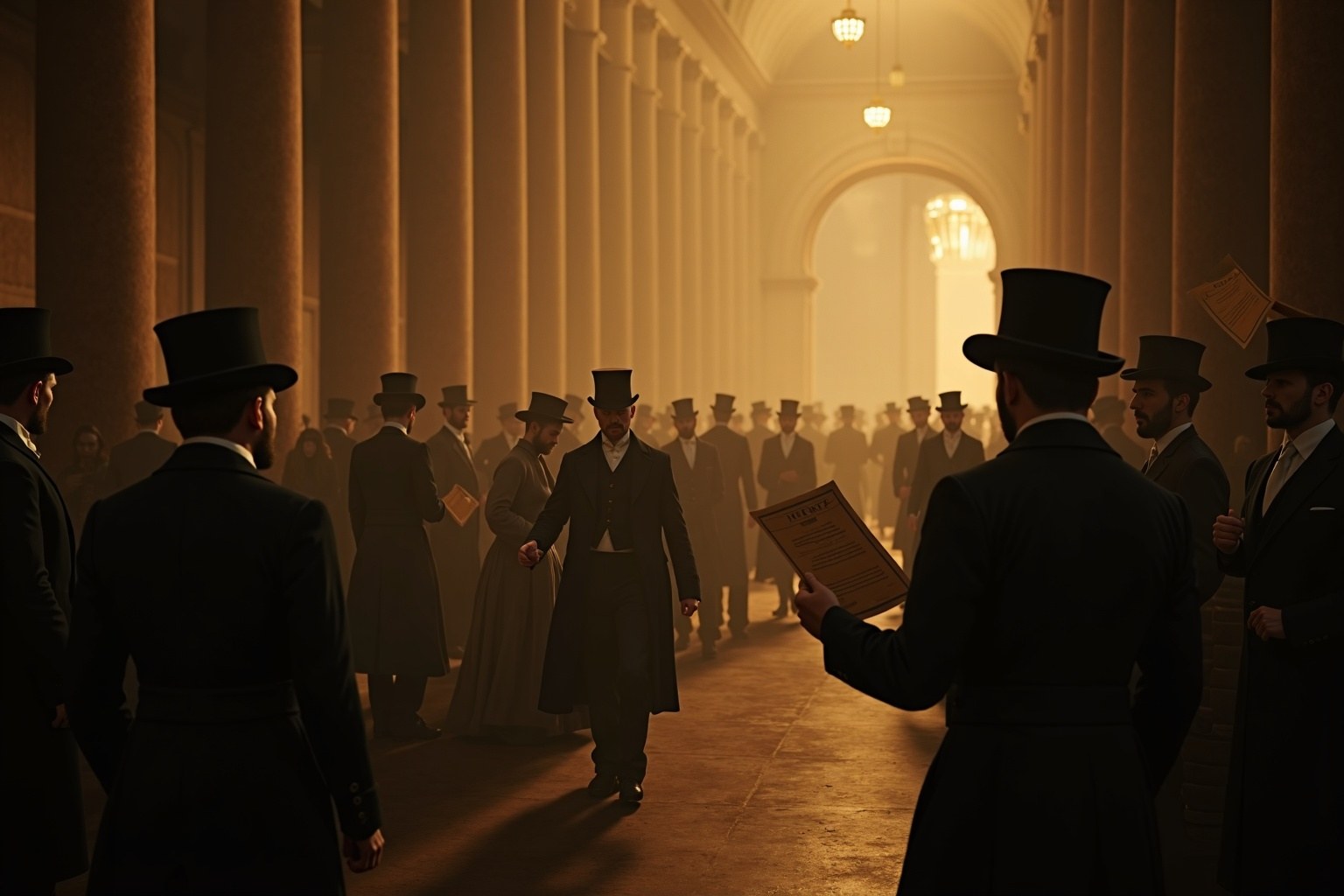
In the 19th century, certain trading companies financed wars and were involved in establishing banks in emerging nations. Born from a system of shared losses, these companies sometimes became powerful enough to move nations, wielding more influence than kings.

Gulden, the Name of a Coin That Was Once an Adjective
Originally an adjective meaning 'golden,' the name Gulden detached from its metallic origin, eventually becoming a unit of account in ledgers and shaping the history of a currency.

A System for Sharing Risk and Sharing Profit
On voyages where some ships might not return, a system for sharing risk was needed. Investing a little in one ship, and spreading investments across many. This idea would later form the backbone of the joint-stock company and grow into a pillar of modern finance.
If you would like to read on
The rest of the story is in the material of NOMISMA.
Price
After purchase, the full courses, the illustrated books, every country’s story and the numismatics examination are open to you.
See the price →