Reading Money
from Incidents
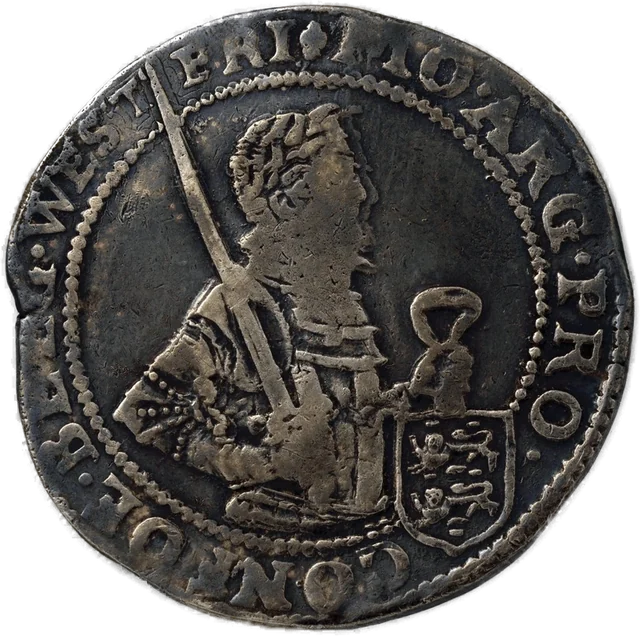
Rijksmuseum / CC0 (Wikimedia Commons)
A silver coin of the Dutch Republic, the setting for Chapter 1. The actual items from the incident are not in the ledger.
Events do not repeat themselves. Yet, why do some questions and structures reappear time and again across different eras?
This book in 3 minutes
- We will examine each incident through four sections: "What happened," "How the money moved," "What the sources tell us," and "Verifying common explanations." The nine headings will not always be arranged in the same way.
- We will position each incident using six types (mania, fraud, forgery, crisis, monetary system disruption, composite), twenty-two mechanisms (credit expansion, leverage, collateral, bank runs, opacity...), and twelve questions.
- Comparisons are always made in four steps: Similarities, Differences, Applications, and Limitations. This book avoids simple equations like "1929 is the same as 2008."
- Numbers are accompanied by a point in time, a unit, and a denominator. Nominal or real, face value or market value. We do not use numbers without a denominator.
- We trace the origins of anecdotes: satires from immediately after the collapse, later popular books, textbooks. We cross-reference with historical sources to see where and what was added.
- This edition contains 9 cases. Chapters will be added as the historical maps for each case become available.
Table of Contents
- PROLOGUEEvents do not repeat. Questions return
- 1Tulip Mania 1636–37
- 2Kipper und Wipper 1619–23
- 3John Law and the Mississippi System
- 4Railway Mania
- 5The Panic of 1907
- 6The Japanese Asset Price Bubble, 1980s
- 7The Madoff Affair
- 8The Global Financial Crisis, 2007–09
- 9The Rumour of Waterloo 1815/1846
- EPILOGUEThe same questions return with a different face
- WORKBOOKVerify the incidents for yourself
- BACK MATTERSUMMARY / OBJECTS / PEOPLE / GLOSSARY / TIMELINE / DATA / QUESTIONS / DRILL / SOURCES
Events do not repeat. Questions return.
Incidents in financial history change shape as they are retold. A satire printed the week after a collapse is copied a century later into a book on the history of inventions, from that book into a 19th-century popular work, and from there into a 20th-century textbook. With each retelling, the numbers are rounded, the cast of characters grows, and the moral becomes shorter. This book traces the path in reverse: from textbook to popular work, from popular work to satire, and from satire to the notary's records.
The reading approach is divided into four sections. What happened (dates, places, and verifiable numbers). How the money moved (what was sold, who paid whom, and the nature of collateral and settlement). What the sources tell us (which historical sources survive and which do not). Verifying common explanations (the origins of anecdotes and the extent to which they are supported by sources). Depending on the incident, we may add connections to the present and the limits of comparison.
The vocabulary for organizing incidents has three layers: six types, twenty-two mechanisms, and twelve questions. "Type" refers to "what kind of incident it is," "mechanism" to "how money and credit moved," and "question" to "what question this incident answers." After reading about an incident, locate it within these three layers and try writing a four-step comparison of what is similar and what is different from a neighboring incident.
The methods from Textbook No. 1, "Source Criticism" (what to believe and what to doubt), and No. 15, "Reading Articles and Ledgers" (opening a case file in the archives to pose questions and find answers), form the foundation of this book. The incident pages ("Reading Money from Incidents") can be read on the school's screen, and the historical sources can be opened from the archives to their originals.
Positioning Terms — Types, Mechanisms, Questions, Four Steps
Before reading about the incidents, we will introduce the vocabulary for organizing them in four diagrams. There are six types, twenty-two mechanisms, and twelve questions. This vocabulary is defined in one place as the school's lexicon of incidents, and any additions will be made there first.
Key points so far
- "Type" is "what kind of incident it is," "mechanism" is "how money and credit moved," and "question" is "what question this incident answers."
- Comparisons are made in four steps. A comparison for which the "Limitations" line cannot be written is not included, even internally.
Open to enrolled students
Ahead: Tulip Mania 1636–37, Kipper und Wipper 1619–23, John Law and the Mississippi System, Railway Mania, The Panic of 1907, Japanese asset bubble, 1980s, The Madoff affair, The Global Financial Crisis 2007–09, The Rumour of Waterloo 1815/1846, The same questions return in a different guise, Verify the Case for Yourself — and the reference section (timeline, people, sources).
Already enrolled? Log in. Free sample: Vol. 1, Source Criticism (free in full).