Karshapana (combination of marks)
400–300 BC ・ silver ・ 4th century BC ・ Rajasthan, Mauryan period
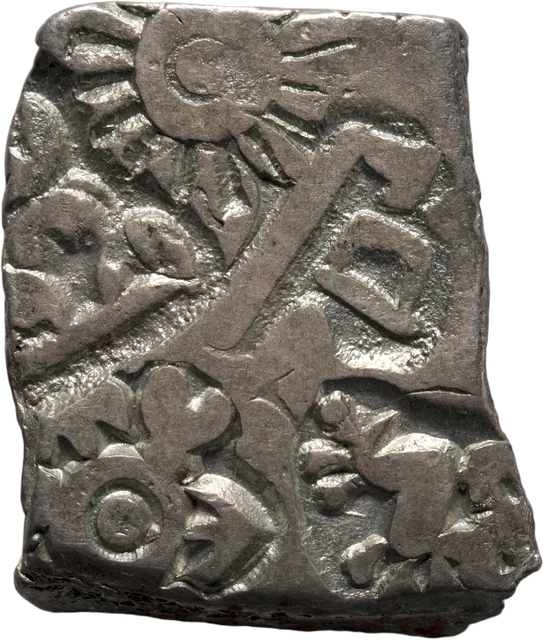
Indigenous Indian coinage was not cast in moulds, but cut from silver or copper sheets according to weight and then stamped with marks. According to the Cleveland Museum of Art's description, each punch-marked coin has a different combination of marks. This is the reverse of the thinking behind die-striking, which mass-produces the same design. First there is the weight, and the marks are layered on afterwards. No two coins have the same face, yet the weight is consistent. This silver was trusted for its weight, not its appearance.