mould
鋳型 — Making
The coin-shaped form into which molten metal is poured.
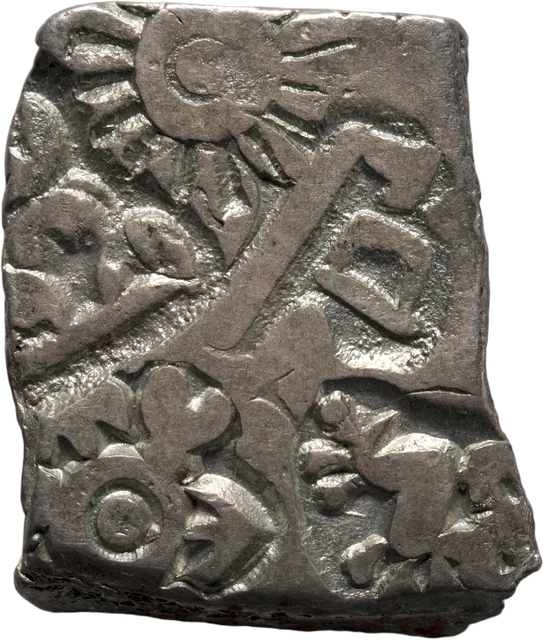 Karshapana (combination of marks)400–300 BC
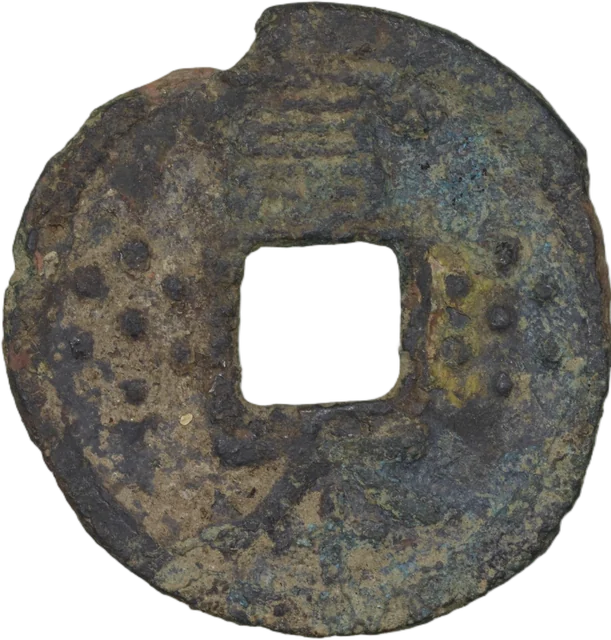 Fuhonsenc. AD 683
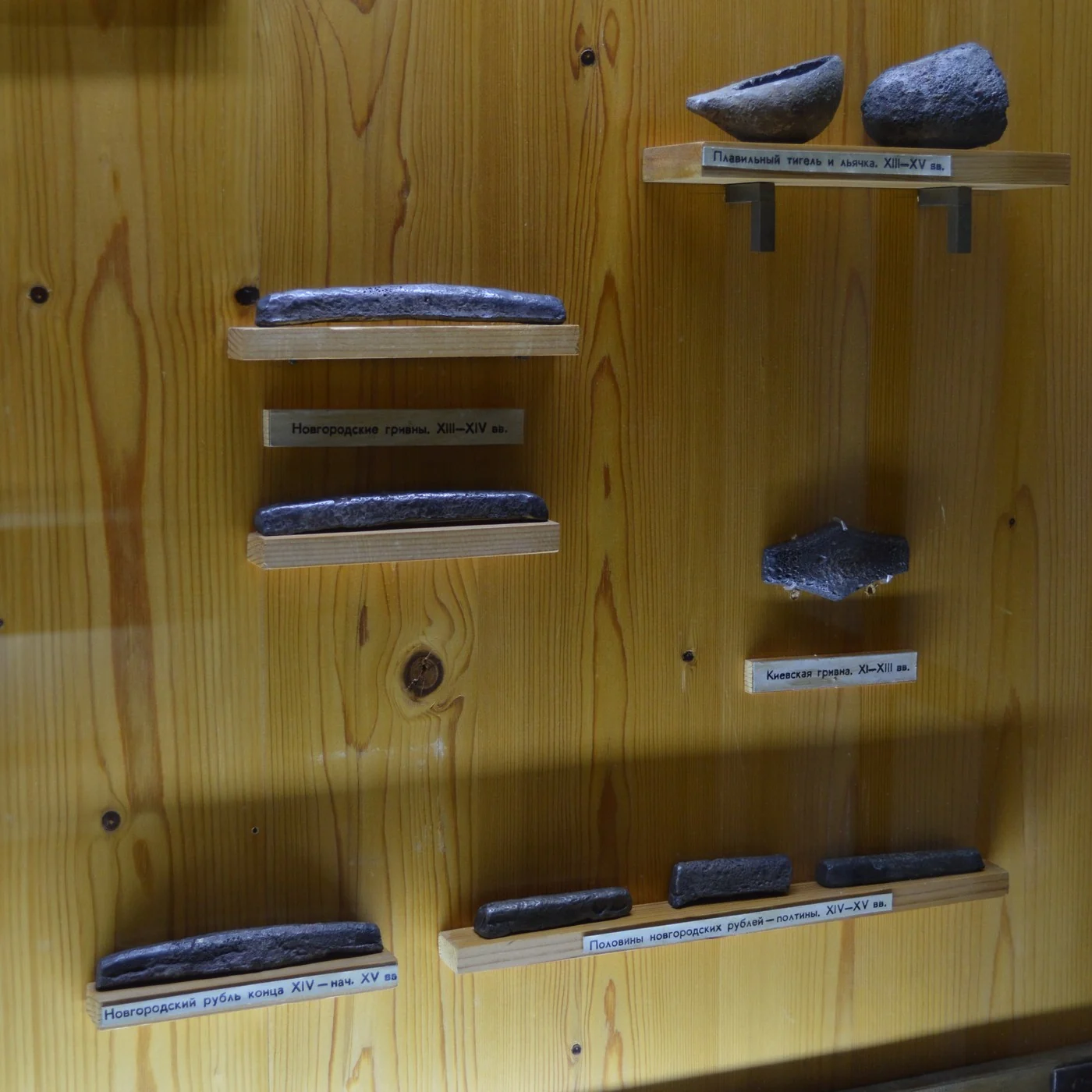 Grivna of Novgorod (silver bar)13th–15th centuries
Casting, the process of pouring molten metal into a mold, is the method used to make cash coins in East Asia. Cast coins show traces of casting flash on their rims. The square hole in cash coins is thought to have been for the convenience of the manufacturers: a square rod could be passed through to secure dozens of coins at once for filing off the flash.
The Korean Sangpyeong Tongbo coins were called 'leaf coins' because in the mold they solidified in an arrangement resembling leaves on a branch, and were then broken off one by one. Molds, crucibles, and files were excavated from the Asukaike archaeological site along with Fuhonsen coins.
⚠ In 1883, the Ten-enkyoku mint switched from casting by pouring molten metal into molds to striking with a coining press, changing the production method for the first time in several hundred years.