Cob eight reales (macuquina)
17th century (reign of Philip IV) ・ silver ・ 17th century ・ A mint of the Spanish dominions (the place of striking is not identified)
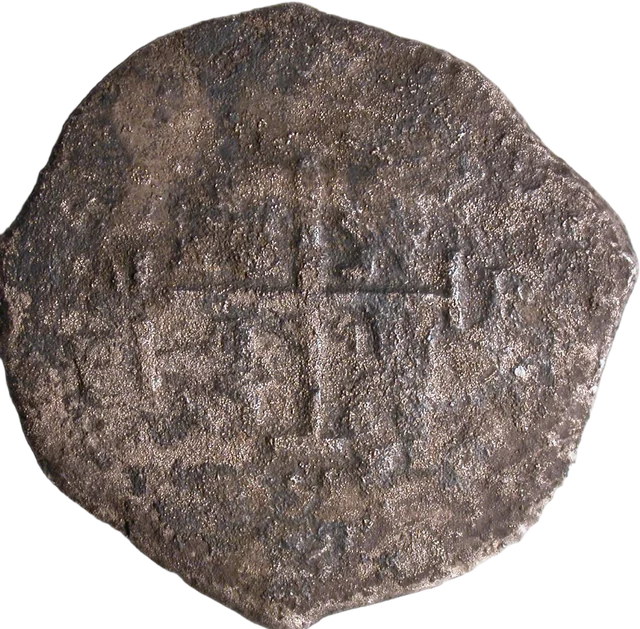
Silver cut from a bar and marked with a hammer, of no fixed shape — the eight reales of the cob (macuquina). It carries the legend of Philip IV, and is an excavated piece registered with the finds record of Cornwall in south-west England (FindID 769897), keeping the traces of loss at sea. If weight and fineness are right, the shape is not asked after — a plain statement that money is stamped bullion, and the mints of the New World went on turning silver into money in this form. When the great fraud at the Potosí mint uncovered in 1649 — a systematic falsifying of the fineness — shook confidence, the crown punished those responsible severely and rebuilt it by renewing the design in 1652 to the pillars-and-waves type; the lifeline of a world currency was trust in the standard. This piece, come out of Cornish soil, is a silent witness that the eight reales crossed the sea as far as the shores of Britain.