Eight reales of Potosí
1556–1598 (Philip II) ・ silver ・ 16th century ・ Potosí mint (Viceroyalty of Peru, present-day Bolivia)
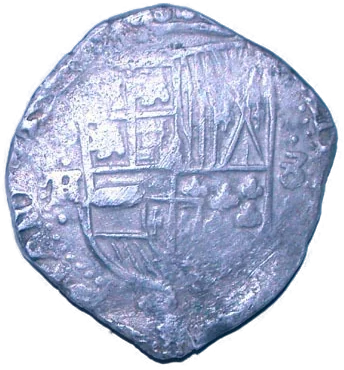
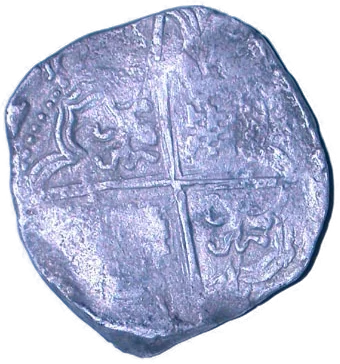
The eight-reales silver of Philip II, struck at the Potosí mint. The lopsided outline is the mark of the macuquina, the cob: a hammer-struck piece made to weight. On the face, the arms of the House of Habsburg, the figure eight of the denomination, and the punches. On the back, the cross of Jerusalem, with the castle of Castile and the lion of León in its four corners. Silver dug out of the Cerro Rico, the rich mountain, together with blood, is cast into this one piece. The eight reales came to be called pieces of eight, crossed the Atlantic and became the key silver coin of the world, shaking prices in Europe hard.