Spanish eight reales (pillar dollar)
1768 ・ silver ・ 18th century ・ Potosí mint (present-day Bolivia)
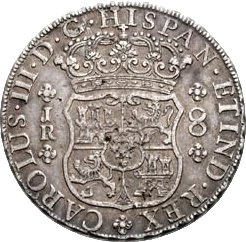
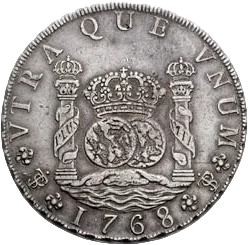
CAROLUS III — the name of Charles III, king of Spain, runs around the face, and on the back two crowned pillars stand either side of two globes. It is an eight-reales silver piece struck at Potosí (present-day Bolivia) in 1768, known as the pillar dollar. The most trusted money in colonial North America was neither the pound of the mother country nor colonial paper, but this foreign silver. The source of its name is the thaler, the silver of a Bohemian valley. Cut into eight it made small change, and a quarter was called 'two bits', a phrase that survives in American English today. It went on being legal tender after the United States was founded, and lost that standing only with the Coinage Act of 1857 — for some seventy years from the founding, this country ran on this silver coin.