How to Navigate the Courses
Among the fifty-some courses, there is a recommended path. From the single introductory course to navigating the four axes—this is a guide for the first-time student.
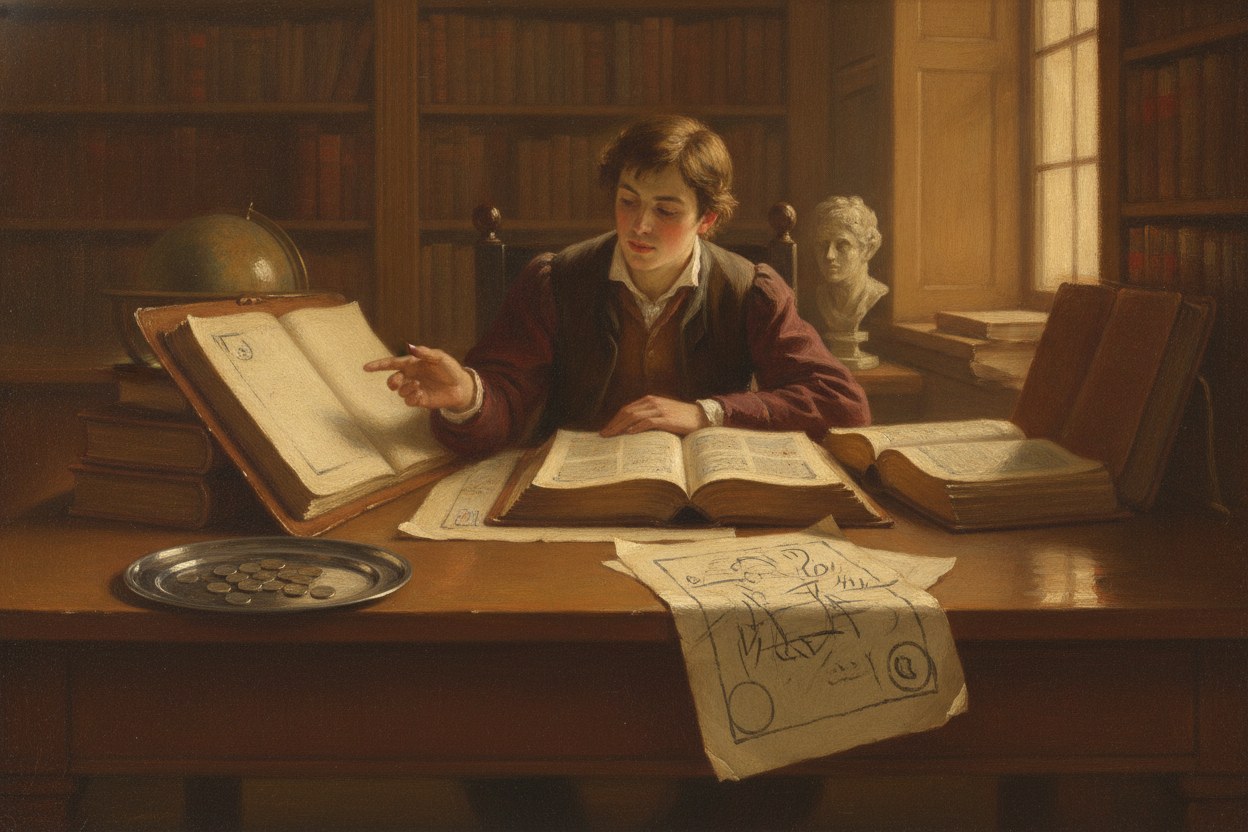
When you first stand before the shelf of courses, you might feel a bit intimidated by the fifty-some spines. In fact, there is a recommended path through this school's curriculum. Today, I will outline that path for you.
A Single Entrance
The first step is E1, "Source Criticism." This is the only course that requires no prior assumptions, and all other courses, directly or indirectly, build upon it.
E1 teaches not knowledge, but an approach. Who wrote it? Why did it survive? What did not survive? When you return to the shelf with these three questions in mind, your way of reading every course will change.
Four Axes, Four Ways of Reading
The courses are divided into four axes.
The Thematic History axis traces themes, from the birth of coinage to the history of collecting, across different eras. The Case Studies axis delves deeply into single events. The Research Methods axis deals with the methods of inquiry themselves. The Sister Disciplines axis views coinage through the lens of philosophy or anthropology.
There is no need to read everything in order. After reading a Thematic History course, move to a Case Study on a topic that caught your interest. If you become curious about research techniques, turn to the Methods axis. Moving back and forth is the most natural way to use this collection.
Journeys and Courses: A Two-Way Street
The course pages are linked to stops on our Journeys, serving as "reading materials." You learn the systems in the lectures and see the context on the Journeys. This back-and-forth is the core of this school's learning method.
You can also start with a Journey. If a stop along the way catches your interest, the course that uses that stop as its material is a good candidate for your next read.
When You Want to Check Your Progress
After testing your skills with the exercises for each course, the Numismatics Examination awaits. The 3rd Grade level covers the seven basic courses. You can look back on your learning path in the form of these grades.
There is no need to rush. The shelf with its 2,700 years of history is not going anywhere.
If you would like to read on
Everything in these pieces comes from the material itself.