Ten Thousand Archers and the Owl Silver Coins
The King of Sparta said he was driven out of Asia by ten thousand archers. This is a story about the gold coins struck by Persia. Coins sometimes tell the story of a battle more eloquently than weapons.
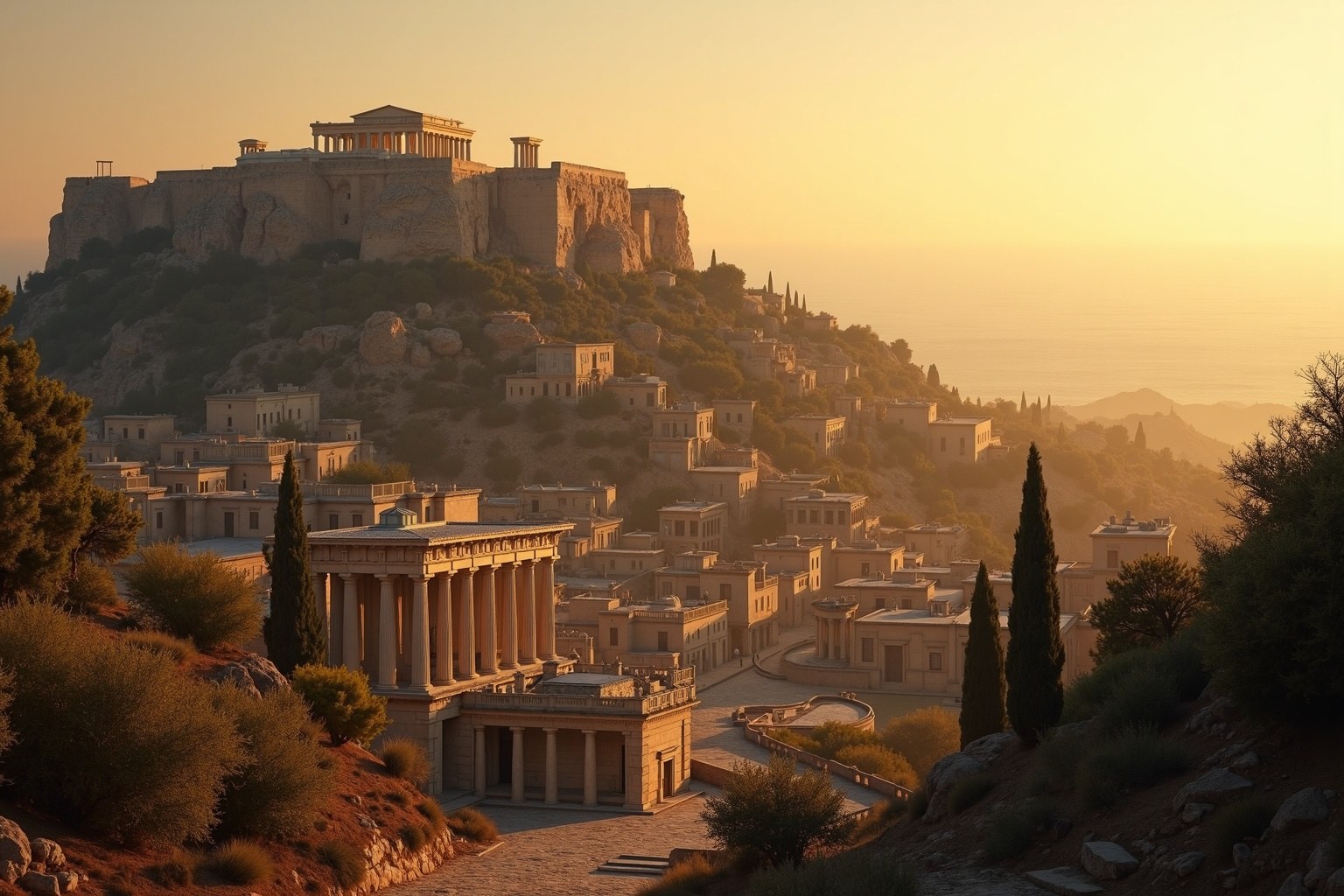
Ten Thousand Archers
Recalled from Asia Minor, the Spartan king Agesilaus said that the Great King was driving him out of Asia with ten thousand archers. This is an anecdote related by Plutarch. These archers were the gold that Persia had sent to Greece. The satrap distributed gold to the leaders of Thebes, Corinth, and Argos, urging them to fight against Sparta.
That gold coin was called the Daric, after the king who created it. It was engraved with the figure of the Great King wearing a crown, holding or drawing a bow. Around 515 BC, Darius I of Persia began striking them to replace the coins of Croesus of Lydia. The design of a lion and a bull was thus replaced by the figure of the king drawing a bow. The Siglos silver coins, struck alongside the Daric gold coins, became the everyday currency that ran the Persian administration and military in West Asia.
A Battle Without Archers
Persia sent not coins, but a real army to mainland Greece. The field of Marathon, 490 BC. According to Herodotus, the Athenian hoplites, without cavalry or archers, charged the enemy at a run. Herodotus writes that they were the first Greeks known to have charged at a run.
The casualties were approximately 6,400 on the Persian side and 192 on the Athenian side. After the battle, the Athenian army returned to the city at full speed, arriving before the Persian fleet that had sailed around. The story of the runner who announced the victory and then died is not in Herodotus. Plutarch, some 600 years later, records it under the name Eucles, as related by many historians. The runner Herodotus named, Pheidippides, was the one who ran to Sparta before the battle to ask for reinforcements.
The Owls of Athens
The Athenian coins that fought at Marathon initially had a slightly different appearance. An amphora, a wheel, the hindquarters of a horse, a bull's head. These were silver coins with rapidly changing designs, which scholars call Wappenmünzen. One scholar places these Wappenmünzen after 546 BC, when Peisistratus returned to power.
Eventually, Athenian coinage settled on a single face. On the obverse, the head of the goddess Athena; on the reverse, her bird, the owl. People called this four-drachma silver coin, the tetradrachm, simply 'owls'. Kroll dates the beginning of this design to near the end of the 6th century BC, during the time of Hippias. The silver came from the Laurion mines in southern Attica. Herodotus writes that the revenue from the mines brought great wealth to the Athenian treasury.
The Faces Struck by the Cities
Coins, born in Lydia and Ionia, crossed the sea and came to be struck in the Greek city-states as well. The design revealed which city's silver it was. Aegina engraved a sea turtle on its silver coins, and Corinth, the winged horse Pegasus.
The combination of Athena and the owl for Athens remained largely unchanged for a long time, with only the addition of an olive leaf to the helmet in the 470s BC. The 'owls' of the 5th century BC were favored throughout the Eastern Mediterranean and became the most imitated coin of antiquity. However, Kroll writes that it was the gold coins of Croesus that first spread in the Aegean as a kind of international currency of trade.
More in Stories of money

The Right to Mint Coins, Lost in Seven Days
There was a man, the only subject ever to be given the power to determine the value of coins. But his wealth and power vanished in just seven days from the day his bell and seal were taken from him.

The Autumn When Children Played with Money
What children were using as building blocks were not pieces of wood, but wads of banknotes still in their wrappers. This is a story from the autumn of 1923 in Germany, a time when currency was reverting to mere paper.

Why Do Prices Rise? France and the Century of Silver
In sixteenth-century France, prices rose quietly but steadily. Was the cause the king's policies, or the silver flowing in from across the sea? People began to question this invisible enemy.
If you would like to read on
The rest of the story is in the material of NOMISMA.
Price
After purchase, the full courses, the illustrated books, every country’s story and the numismatics examination are open to you.
See the price →