Born from a calculation,
died on television.
The Life and Death of the Gold Standard — From Newton's Ratio to Nixon's Sunday
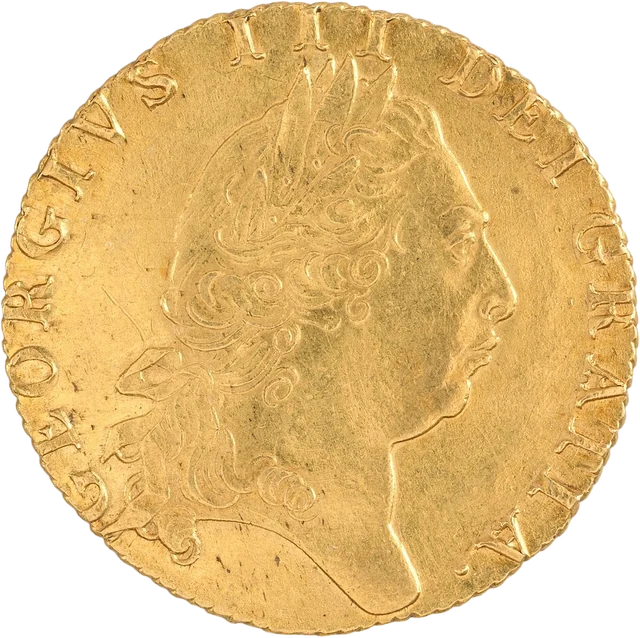
Guinea gold coin, 1663–1814. In 1717, Isaac Newton, Master of the Mint, fixed the value of this gold coin at twenty-one shillings. An unintended consequence of his calculation was that silver left the island and gold remained — the gold standard began not with a declaration, but by sliding in through the pricing of this single coin.
Source: Lewis Pingo / CC0 (from the school's object ledger, coin/guinea)
When is a system born,
and when does it die?
This volume in 3 minutes
- The gold standard was not born by design. It was the unintended consequence of a calculation of the bimetallic ratio in 1717, which caused silver to flow out and gold to remain.
- The law stating that "gold shall be the standard" was written a century later (1816). The beginning was ambiguous, the end was clear — the life of a system usually takes this form.
- The theory (Ricardo) was not written before the system, but while convertibility was suspended. The theory was written after the problem arose.
- The question was not "whether to return" but how to return. The old parity was a declaration of confidence — both Churchill's Britain and Inoue's Japan made the same choice and faced the same consequences.
- The consequences for Japan were the gravest in this chain. Hamaguchi was shot at Tokyo Station, and Inoue was killed in the League of Blood Incident — an era when monetary policy was a matter of life and death.
- In 1944, the gold standard did not die but was entrusted to a single country. One ounce of gold = 35 dollars. The guardian was in a position where the longer it stood watch, the more credibility it lost.
- The end came not on a battlefield or in a parliament, but during a weekend at a mountain retreat. On Sunday evening, August 15, 1971, the gold window was closed on television.
- The gold standard was never an ideology. Calculation, memory, and the reality of power successively gave it shape.
Table of Contents
- PROLOGUETwo Dates
- 1The Man Who Set the Ratio Was a Physicist
- 2The Theory Was Written During the Suspension
- 3What Happened in the Year of the Return
- 4At the Old Parity — The Door of Inoue Junnosuke
- 5Not for the Glory of the Currency — Keynes's Opposition
- 6Entrusting Gold to One Country — The Thirty-Five-Dollar Design
- 7A Weekend at the Mountain Retreat — August 1971
- 8A Life in One Line
- EPILOGUEIt Was Never an Ideology
- CASE STUDIESA View from Outside the Chain (4 articles)
- BACK MATTEROBJECTS / PEOPLE / GLOSSARY / TIMELINE / DATA / SOURCES
Two Dates
We frame the life of a single system between two dates.
1717 — At the mint in London, a physicist submits a report on the bimetallic ratio of gold and silver. The value of the guinea is twenty-one shillings.
Sunday evening, August 15, 1971 — In Washington, a president addresses the nation from a television screen. The window for exchanging dollars for gold is to be closed.
The starting date has no ceremony, no declaration. It is just a pricing decision. The ending date has a specific time. The beginning is ambiguous, the end is clear — the life of the system known as the gold standard is this asymmetry itself.
This book is a textbook for Axis C, "The Chain of People." It traces the system not through its articles, but through the people who decided, wrote, restored, and closed it. A physicist, a merchant-turned-economist, two finance ministers and an economist, the architect of a conference, and a weekend president — the chain is also marked by two deaths.
When is a system born, and when does it die?
The Man Who Set the Ratio Was a Physicist
- The gold standard did not begin with a declaration. It remained as a result of the bimetallic ratio being fixed, which caused undervalued silver to flow out.
- Newton's action was a recommendation on the ratio. The shift to a gold standard was an unintended consequence.
- Legal enactment came a century later in 1816 — systems are built from an accumulation of consequences rather than from a single person's blueprint.
In 1696, England's silver coinage was at its limit. The old hammered coins were clipped at the edges and underweight. The Great Recoinage — as we saw in Volume 3, Chapter 8, the unexpected figure appointed to oversee this operation was the scientist Isaac Newton.
Then, in 1717, Newton, who had become Master of the Mint, submitted a report on the bimetallic ratio of gold and silver, and the value of the guinea was fixed at twenty-one shillings. This fixed the value of the guinea, which had long fluctuated.
However, this decision had a sequel. Under this ratio, gold was overvalued and silver was undervalued in England. What happened then? Good-quality silver coins were taken abroad, silver flowed out of the island, and what remained in the country was gold. The system did not choose gold. Gold remained as a result of people taking silver out.
The course material refutes a common myth — Newton did not design the gold standard. What he did was recommend a ratio, and the shift to a gold standard was its unintended consequence. The history of systems is made more from an accumulation of such consequences than from a single person's blueprint.
Key Points So Far
- The 1717 ratio undervalued silver, causing it to flow out and gold to remain — the actions of individuals created the system.
- Newton's work was a recommendation. The shift to a gold standard was an unintended consequence.
- Legal enactment (1816) came a century later. The starting date cannot, in fact, be chosen.
Open to enrolled students
Ahead: The theory was written while it was suspended, What happened in the year it was restored?, At the same old value—the door of Inoue Junnosuke, Not the glory of the currency — Keynes's objection, Entrusting gold to a single country — the thirty-five-dollar design, The weekend at the mountain lodge — August 1971, Writing a life in one line, It was never an ideal., Seeing from outside the chain — and the reference section (timeline, people, sources).
Already enrolled? Log in. Free sample: Vol. 1, Source Criticism (free in full).