Keichō koban
AD 1601–1695 ・ gold ・ 17th century ・ Edo gold mint (Gotō Shōzaburō Mitsutsugu)
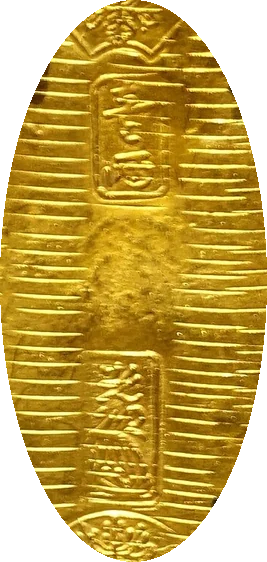
A one-ryō gold coin whose issuance began in the sixth year of the Keichō era (1601). The surface features horizontal lines called *gozame*, paulownia crests, and the stamps for "Ichi Ryō" and "Mitsutsugu".
The Japan Mint's catalogue records the weight of the Keichō Koban as 17.8 grams. This is a description for the coin type, not the measured weight of the single piece in this photograph.
For the gold fineness, it is necessary to distinguish between the value derived from historical documents of the Kinza (gold mint) and the value obtained from analyzing surviving koban. Research by the Bank of Japan's Institute for Monetary and Economic Studies examines this difference. The analyzed value of the specimen shown has not been confirmed here.
The source of the photograph identifies this as a Keichō Koban from the Tokyo National Museum, which was excavated from a site in Ginza 6-chome, Tokyo.
Basic Information
| Type of coin | |
|---|---|
| Issuing authority | Edo gold mint (Gotō Shōzaburō Mitsutsugu) |
| Period | AD 1601–1695 |
| Material | gold |
| Face value | Koban (1 ryō) |
| The specimen photographed | |
| Collection | Tokyo National Museum |
| Accession number | 今回参照した画像出典に記載なし |
| Photographer | Daderot |
| Terms of Use | CC0 1.0 |
| Open photo source → | |
| Reverse not shown | |
