Two-euro commemorative (ten years of Economic and Monetary Union)
2009 ・ nickel ・ 21st century ・ Spain
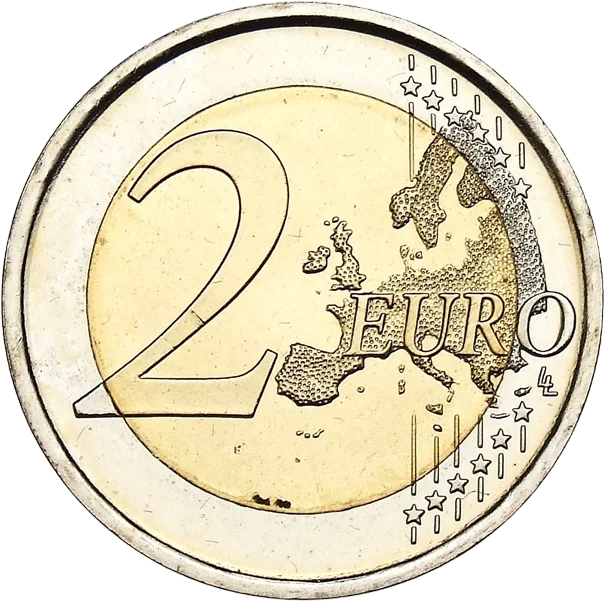
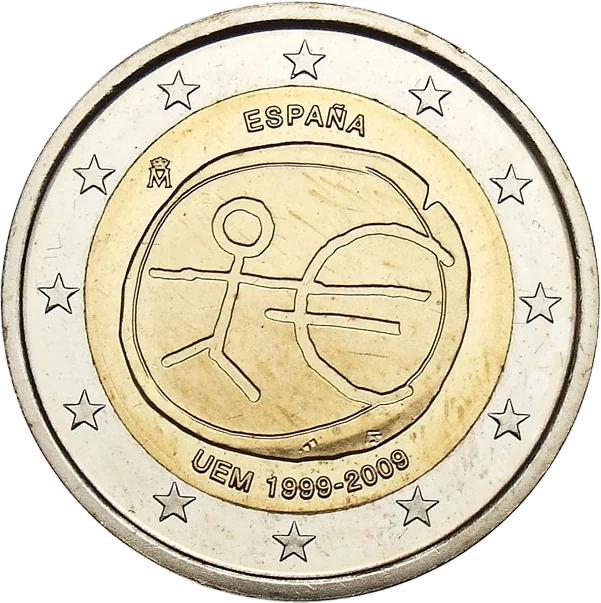
A Spanish striking of the two-euro commemorative issued in 2009 for the tenth anniversary of monetary union (this piece is in the Münzkabinett, the coin cabinet in Berlin). On 1 January 1999 the euro started as a currency of account, and the peseta was fixed at 1 euro = 166.386 pesetas. Euro cash began to circulate on 1 January 2002, and on 28 February of that year the peseta ended its standing as legal tender — 134 years from the decree of 19 October 1868. As the franc did, and as the mark did, a national currency joined a common currency. But the circle Spain closes runs deeper. The country that issued the first global currency in world history, the eight reales, now stood on the side of those with no currency of their own. The empire that could not make the silver it sent round the world its own shared, at the last, money itself — the closing piece of the route of the real.