Two-peseta silver coin (provisional government)
Dated 1870 ・ silver ・ 19th century ・ The provisional government of Spain
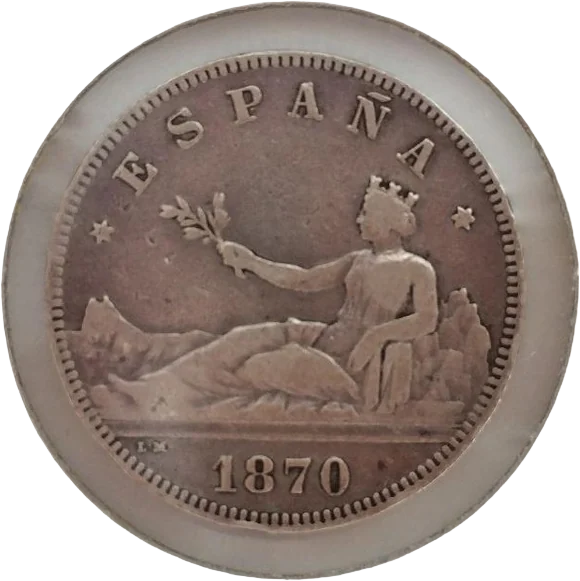
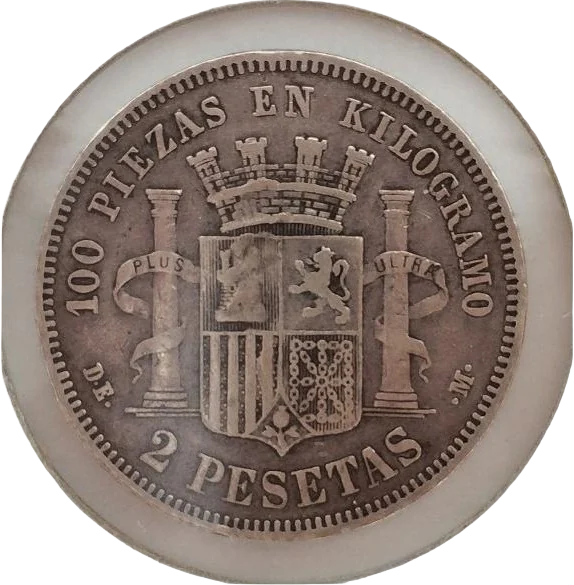
Hispania reclining — the personification of the land, following the Roman coinage of Hadrian, takes the face in place of a monarch's portrait. It is a two-peseta silver coin dated 1870, one of the earliest pieces of the peseta, the new currency born of the Glorious Revolution of 1868. After the revolution drove Isabella II from the throne, Laureano Figuerola, finance minister of the provisional government, changed the unit together with the whole coinage system of the old dynasty by the decree of 19 October 1868 — the peseta, a decimal silver unit divided into 100 céntimos. At that time 97 kinds of coin were circulating within the country; Figuerola himself, who would later unify the system, counted them so. The standard was matched to the Latin Monetary Union, one peseta being 5 grams of silver, designed at par with the franc. But Spain did not formally join the union; it was an outside follower sharing only the standard. The country that had furnished the world's money with the eight reales at last put its own money in order — the 134 years of the peseta begin here.