Gallo-Belgic gold stater
2nd–1st century BC ・ gold ・ 2nd century BC ・ Belgic Gaul (present-day Belgium to northern France)
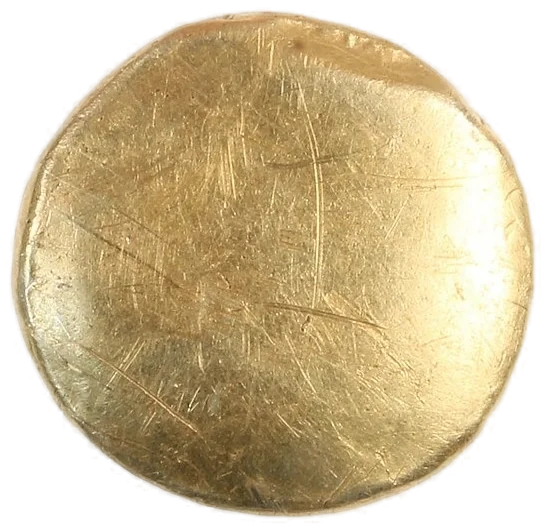
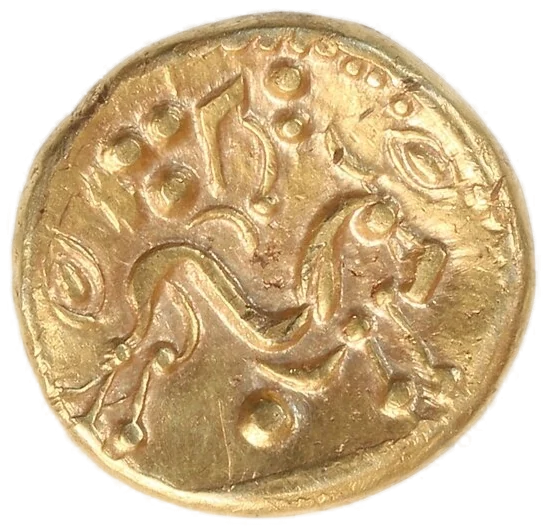
The first money used in Britain was not made on the island. It was the gold stater struck in Belgic Gaul, which crossed the Channel and came in from about the middle of the 2nd century BC. The source of the imagery is the gold of Philip II of Macedon. The head of Apollo and the two-horse chariot, copied from copy to copy by Celtic hands, turned into a pattern of curves and dots. One side being almost blank is also of this line. The face of a Greek king became a Celtic pattern over three hundred years — a piece that tells in its own body the game of telephone played by coin imagery.