Copper Axe
14th–15th century ・ copper ・ 15th century ・ Central Mexico
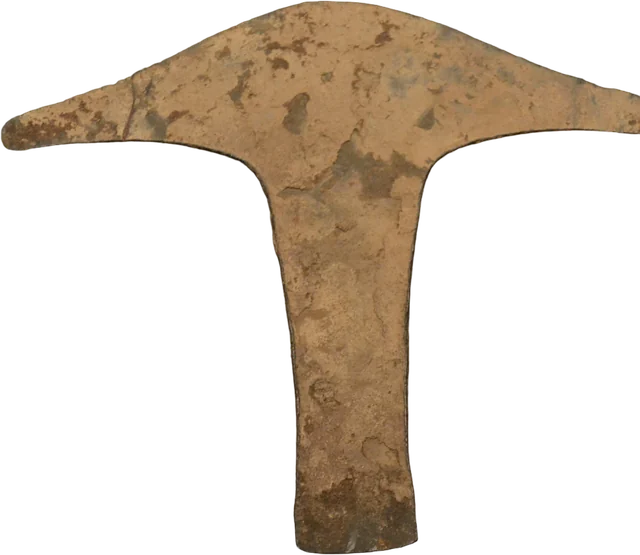
This thinly hammered piece of copper is shaped like a 'T' or an axe. Known as a tajadero, it was a medium of exchange that circulated from Central Mexico to Central America. Accounts of its value differ greatly depending on the historical source. The description of the Smithsonian's collection states it was equivalent to 8,000 cacao beans, while colonial-era records note that four new pieces were worth five reales, and ten worn pieces were worth one real. It has not been determined to what extent its standard and value were unified. Nevertheless, the copper axe, in its niche between beans and cloth, certainly passed from hand to hand.