Gold stater of Philip II
Circa 336–328 BC ・ gold ・ 4th century BC ・ Kingdom of Macedon (Pella mint)
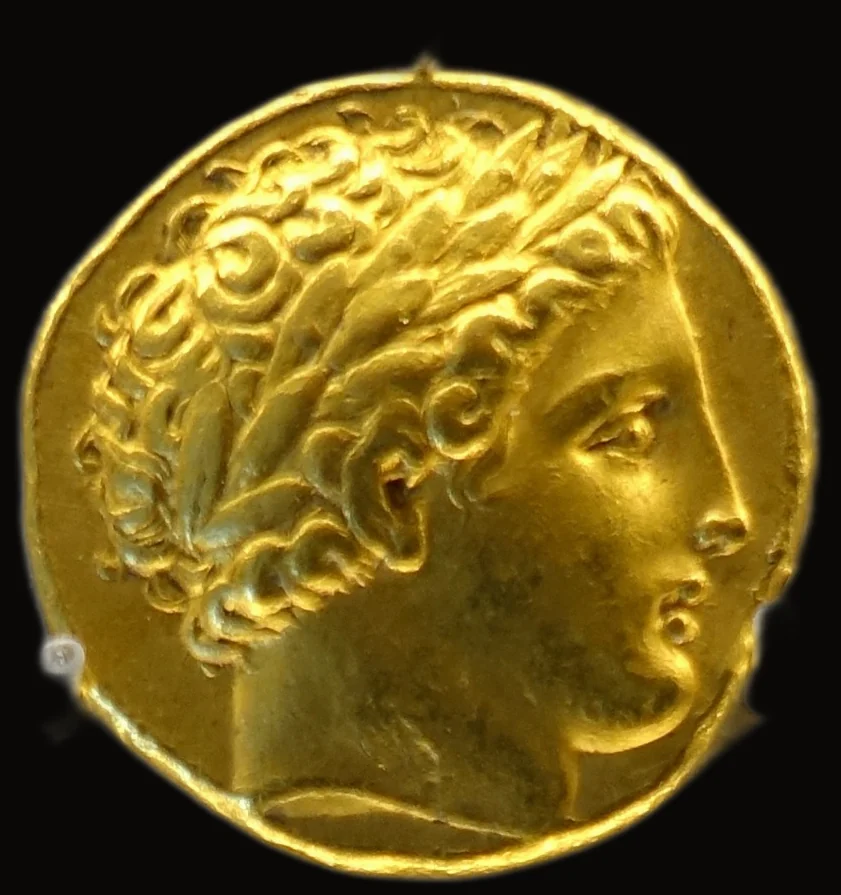
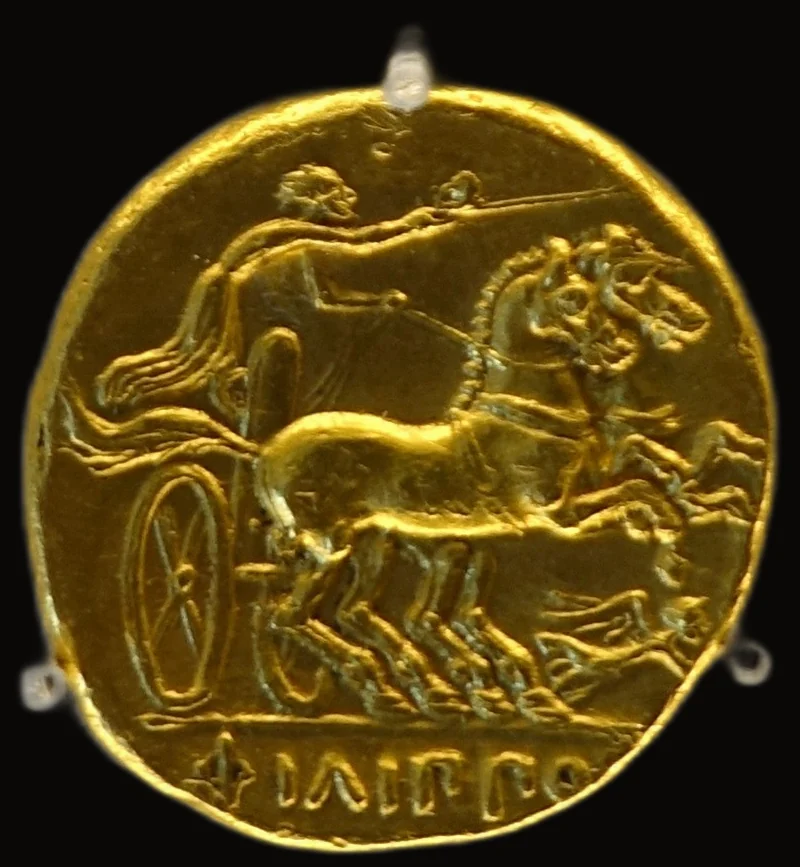
Gold stater from the Pella mint, circa 336–328 BC. The obverse features Apollo wearing a laurel wreath; the reverse shows a biga (two-horse chariot). Diodorus Siculus reports that the gold mines in the Pangaion region, controlled by Philip II, yielded "over one thousand talents a year," and the gold coins struck from this metal were called "Philippeioi" after the king. The king himself won three victories in the chariot racing events at Olympia, and it is widely believed that the reverse commemorates these victories. This type continued to be struck after the king's death. From the collection of the Harvard Art Museums/Arthur M. Sackler Museum.