Grasping the History of Money
at a Glance
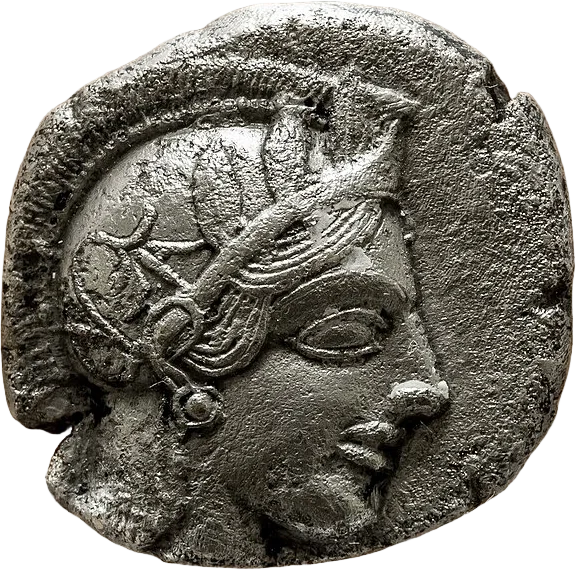
ArchaiOptix / CC BY-SA 4.0 (Wikimedia Commons)
A 10,000 yen note in your wallet can be used as 10,000 yen, even though it's just paper.
In the past, people paid with shells and cloth, and paid with gold and silver by weighing them.
What underpins the value of money has changed over time. First, let's look at one of these changes through a single coin.
The First Coin
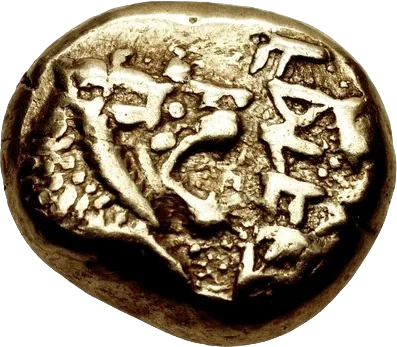
Electrum trite, Lydia, Sardis, 610–560 BC, diameter 13 mm
A coin of the Lydian royal house, struck in electrum (a mixture of gold and silver) with the head of a lion. This lion's head is the mark struck by the royal house.
- Before that, what backed payments?The weight of metalSilver and copper were weighed on scales for payment. Each time a payment was made, it required the effort of weighing and verifying the quality.
- What changed with coins?Stamped metalCities and kings struck marks to guarantee weight and quality. It became possible to pay by counting, without weighing.
The next question is how long the guarantee of the mark could support value. The support would later shift to paper promises, state credit, and numbers in ledgers. See Figure 1 for the sequence and Figure 2 for the twelve periods.
Figure 1: What has supported money
- 1 The thing itselfShells, cloth, grain, livestock. Paying with things that have a use in themselves. There were also ways to record debtBefore coins were born
- 2 The weight of metalPaying by weighing silver or copper on a scale. Each payment required the effort of weighing and checking the qualityBefore coins were born
- 3 Marked metalCities or kings struck marks to guarantee weight and quality. It became possible to pay just by countingFrom the first coins
- 4 A promise on paperReceipts for deposited metal and paper promising 'to exchange' began to circulate as moneyPaper money in medieval China, the age of banks and national debt
- 5 The credit of the stateIn 1971, the exchange of dollars for gold stopped. Banknotes continued to be used without being convertible to goldMoney untied from gold
- 6 Numbers in a ledgerDeposits, electronic money, digital currency. Much of money has become numbers in the ledgers of banks and central banksMoney today, digital money
Figure 2: The twelve eras
650–336 BC
The first coins
The invention of striking marks on metal was born in Lydia and Greece
Electrum trite / Unknown / Photography by CNG coins / CC BY-SA 3.0 (Wikimedia Commons)
Source photo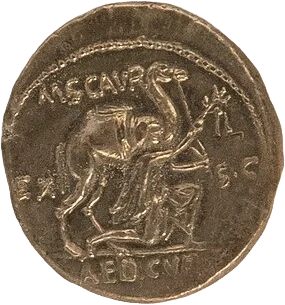 335 BC–475 AD
Money of great empires
The currencies of Rome and the Qin and Han dynasties connected vast regions
Denarius / Unknown / CC0 (Wikimedia Commons)
Source photo
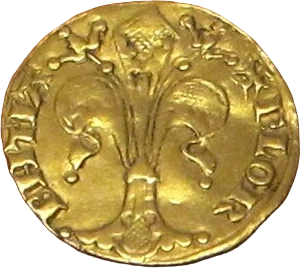 476–1449
Three worlds of the Middle Ages
An empire of gold coins, a currency of only words, and paper money in China
Florin (fiorino) / Francesco Bini / CC BY-SA 4.0 (Wikimedia Commons)
Source photo
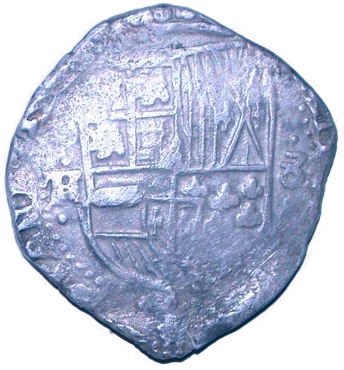 1450–1649
Silver circles the globe
Silver from the New World crossed the seas and met the demand of East Asia
Eight reales of Potosí / National Museum Liverpool / Frances McIntosh (PAS) / CC BY-SA 2.0 (Wikimedia Commons)
Source photo
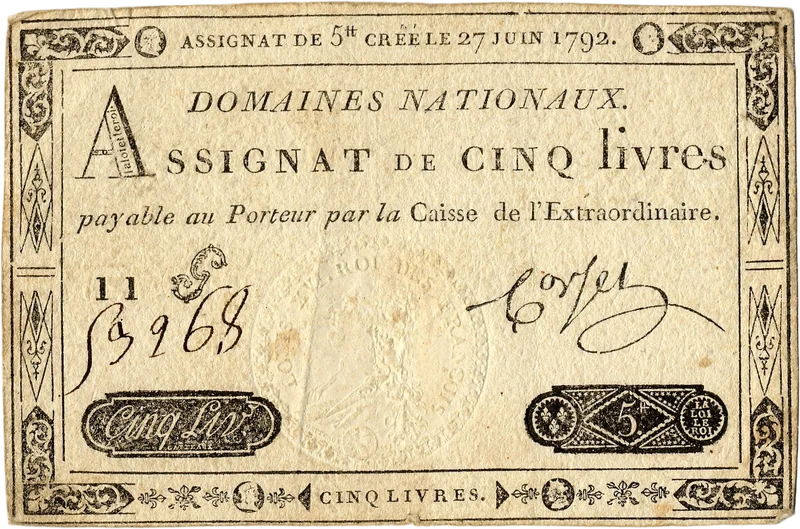 1650–1815
Banks and national debt
Deposit receipts become banknotes, and states borrow money from banks
Assignat of 5 livres (national lands) / French Revolutionary Government (National Assembly) / Public domain (Wikimedia Commons)
Source photo
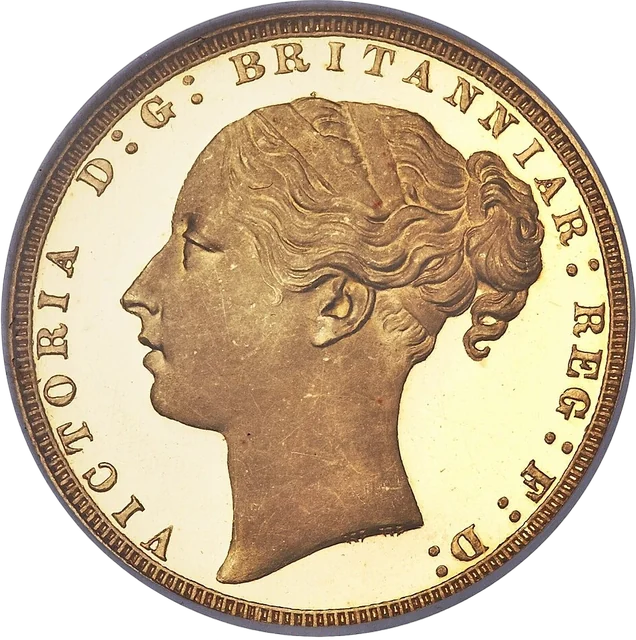 1816–1913
The age of the gold standard
The currencies of various countries were linked together using gold as a yardstick
Gold sovereign / Heritage Auctions for the photo, William Wyon designed the coin / Public domain (Wikimedia Commons)
Source photo
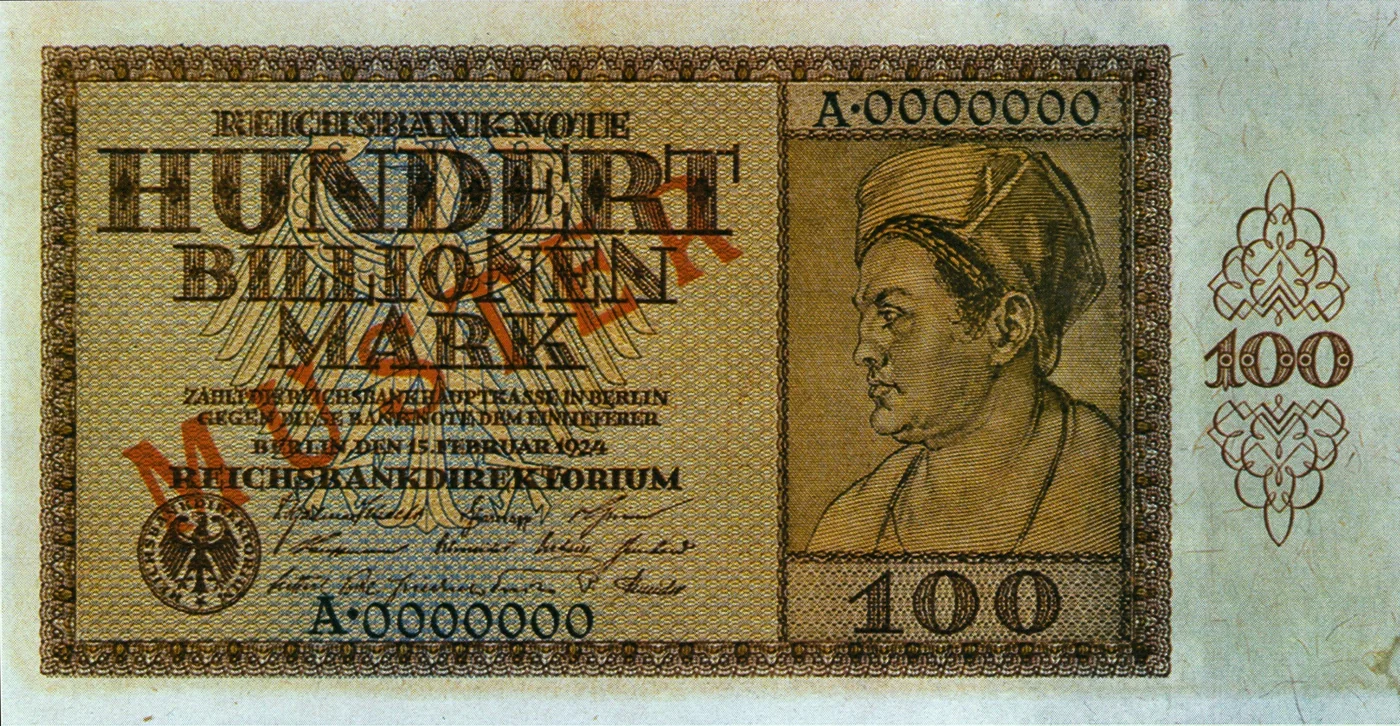 1914–1944
War and depression
The gold system collapsed, paper money increased, and a great depression arrived
One hundred trillion mark note / Reichsbank / Public domain (Wikimedia Commons)
Source photo
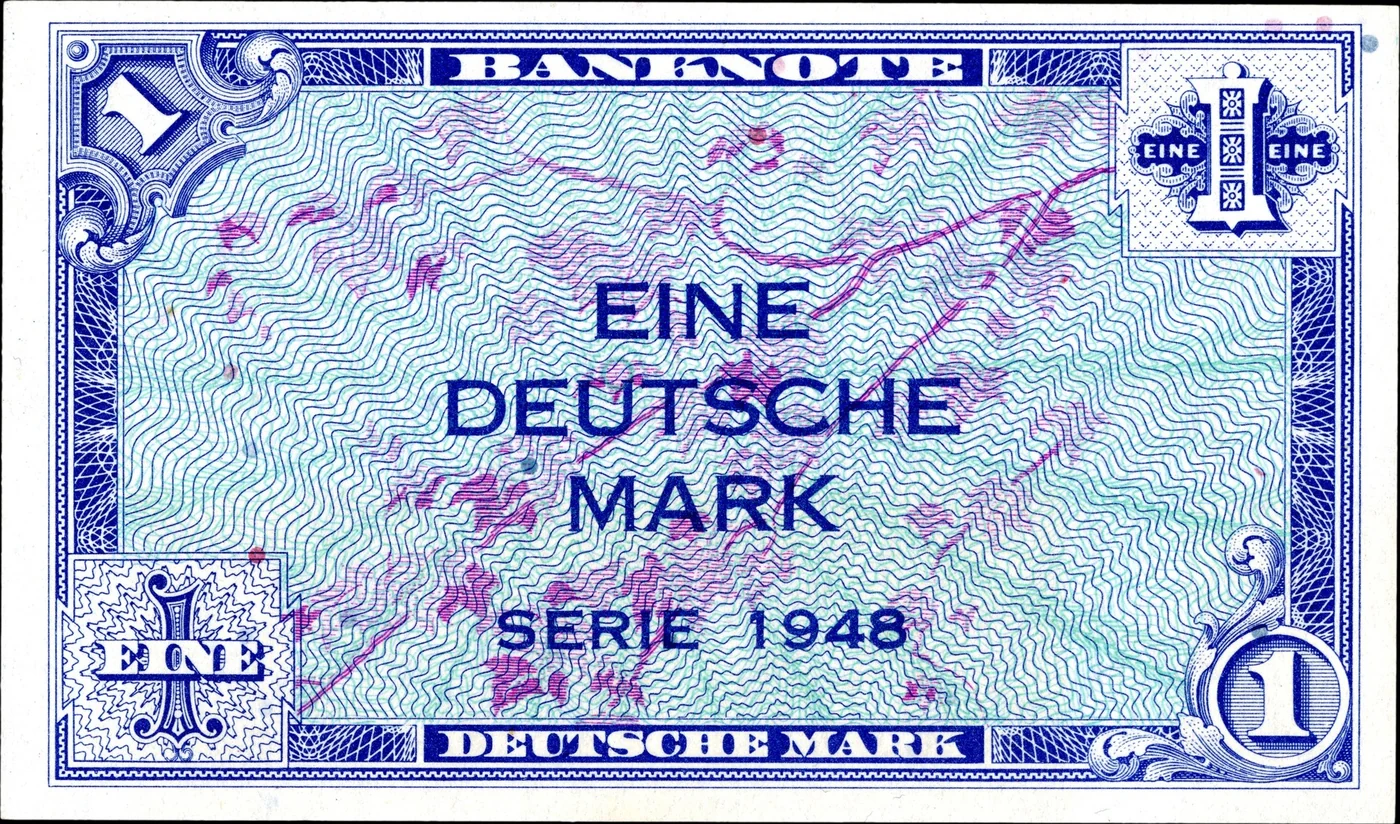 1945–1971
The Age of the Dollar
Currencies were pegged to the dollar, and only the dollar was pegged to gold
One Deutsche Mark note (1948 series) / National Museum of American History / Public domain (Wikimedia Commons)
1972〜2007
Money Untethered from Gold
The convertibility of the dollar to gold ended, and money became backed by national credit.
Source photo
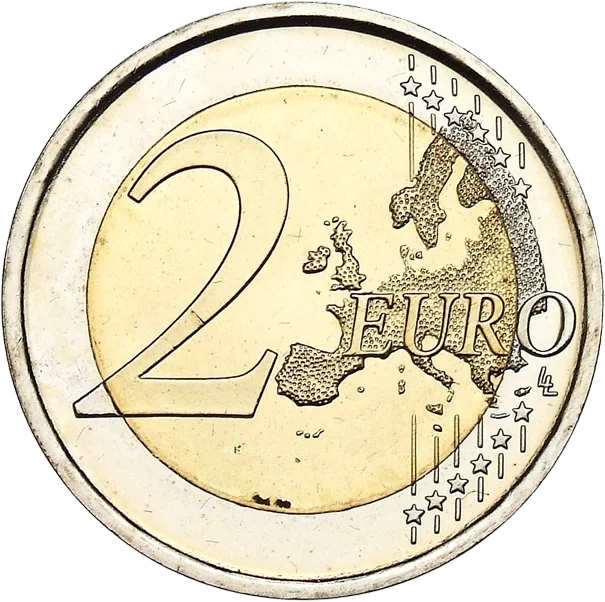 2008–2019
Money Today
From the 2008 financial crisis. Understood through the ledgers of banks and central banks
Two-euro commemorative (ten years of Economic and Monetary Union) / Reinhard Saczewski / Public domain (Wikimedia Commons)
2020〜
Digital Money
Electronic money, Bitcoin, and central bank digital currencies.
Where to start?
- I want to understand the whole story in orderFollow the periods chronologically, starting from Chapter 1, "Before the Invention of Coins."
- To start with a specific eraClick one of the twelve notes above
- Learn how to read itGo to Issue No. 1, "Is It Really True? Checking History" (Full text free)
- I want to check the number of materials includedGo to the index of materials (maps and tables) at the end of the book.
What has backed the value of money throughout the ages?
This volume in 3 minutes
- What underpins the value of money has shifted over time from commodities themselves, to the weight of metal, stamped metal, paper promises, state credit, and finally to numbers in ledgers (Figure 1).
- The old supports have not disappeared but still overlap. Coins are metal, and deposits are numbers in ledgers.
- This book traces these shifts through twelve periods (Figure 2). Each chapter explains the money of that period and lists the chapters where you can read about that era.
- The timeline rearranges the chapters by century. Chapters from the same century are placed side by side.
- A map showing the number of materials included and the number of materials for each period, arranged in a single table, is compiled in the index of materials at the end of the book. It is not necessary to read it first to trace the history.
Table of Contents
- BeforeHow to Navigate This Book
- 1Before the Invention of Coins
- 2The First Coins
- 3The Money of Great Empires
- 4The Three Worlds of the Middle Ages
- 5Silver Circulates the Globe
- 6Banks and National Debt
- 7The Age of the Gold Standard
- 8War and Depression
- 9The Age of the Dollar
- 10Money Untethered from Gold
- 11Money Today
- 12Digital Money
- 13Timeline — Chapters arranged side by side for each century
- AfterWhere to Go from This Book
- End MatterSUMMARY / Index of Materials (Maps and Tables) / DATA / QUESTIONS / DRILL / SOURCES / INDEX / REVISION HISTORY
NOMISMA's materials are structured on the principle of starting with a single coin and creating a continuous thread to modern money. This book is an introduction that provides an overview of this entire story, divided into twelve periods.
Each chapter begins with an explanation of what supported the value of money in that era. This is followed by a list of books and chapters that cover that period. Clicking on a chapter title allows you to read it on the NOMISMA screen.
The years marking the boundaries between periods are not sharp lines where everything changed at once. Stories from around these boundaries may be relevant to either period. Please interpret these boundaries as transitional zones.
The years mentioned in the description of each period are those assigned to the period in the overall curriculum map. Boundary years (e.g., 1914) appear in the descriptions of both the preceding and following periods. The list of chapters is created by sorting each chapter into the period that contains most of its story's years. In this sorting, a boundary year is included in only one of the two periods, and this range is indicated as "Date range (years by which the chapters were sorted)". Therefore, there may be a one-year difference from the years in the description.
The number of materials included and a numerical table are in the index of materials at the end of the book. It is not necessary to read it first to trace the history.
Before coins were born
Money before the invention of coins. Records of debt, metal weighed on scales, and commodity money such as shells, cloth, and livestock.
- Date range (years by which the chapters were sorted)
- 〜7th c. BC
- Books covering this era
- book not yet published (awaiting the chronological history) (Chronological History ①)
| Volume | chapters | The years of the stories in that chapter | |
|---|---|---|---|
| Overview: the world | 1 Before the beginning | 3000–650 BC | Read in the learning screen |
| China | 1 A memory called cowries | 1050 BC–2026 AD | Read in the learning screen |
This is the end of the free sample
What follows — The First Coins, The Money of Great Empires, The Three Worlds of the Middle Ages, Silver Circulates the Globe, Banks and National Debt, The Age of the Gold Standard, War and Depression, The Age of the Dollar, Money Untethered from Gold, Money Today, Digital Money, Chronology — Arranging chapters side-by-side for each century — is for purchasers (the reference section too).
Already a student? Log in to read on.