Visigothic gold tremissis
c. 575–711 (the age of striking the king's name) ・ gold ・ 6th century ・ Kingdom of the Visigoths
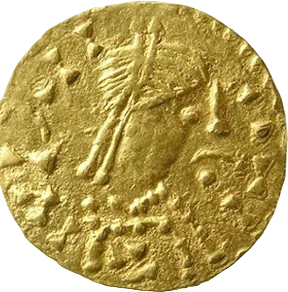
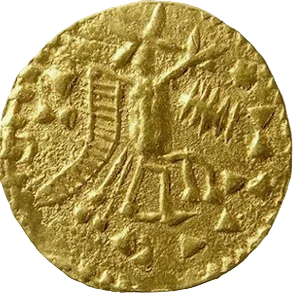
A small gold coin cut with a facing bust — the tremissis of the Visigothic kingdom, a gold coin of a third of a solidus (this piece is an excavated find recorded with the Portable Antiquities Scheme, the finds-recording system of England). The Visigothic kingdom, which took over the peninsula after the western empire came apart, at first struck gold with a pseudo-imperial legend borrowing the name of the Roman emperor. The turn came about 575 — King Leovigild began to cut his own name into the gold. It is the moment when money passed from being borrowed from the emperor to being the king's own. Gold from then on carries the king's facing bust with his name and the name of the minting city (Toledo, Mérida and many more), and the struck coinage of the kingdom is held to be almost entirely the gold tremissis. In whose name is Rome's gold to be carried on? The Visigoths were among the kingdoms that answered early with 'the king's name'. In 711 the kingdom collapsed under the invasion of the Islamic armies.