Denarius of the horseman (Bolskan)
2nd century BC to the early 1st century BC ・ silver ・ 1st century BC ・ Bolskan (present-day Huesca)
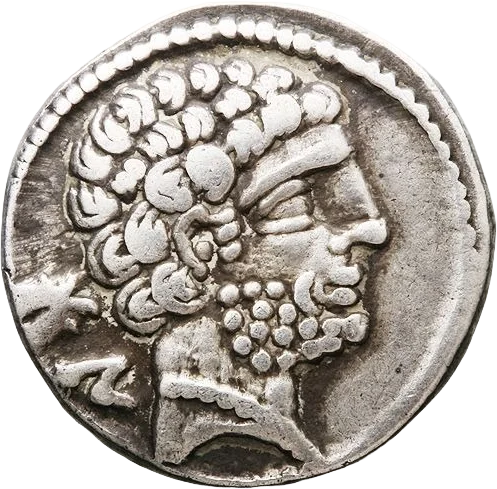
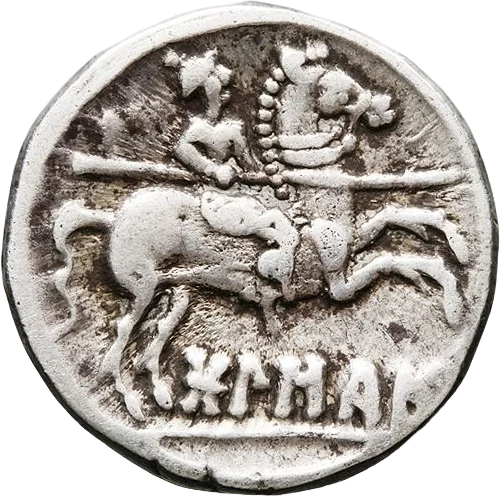
A bearded male head, and a horseman charging with levelled spear — the denarius of the horseman, cut with the city name Bolskan (present-day Huesca) in Iberian script. In the interior under Roman rule, this type — silver of the same standard as the denarius, carrying the letters of the land — was shared by many minting cities, and Bolskan's output was especially large, held to be concentrated between the 2nd century and the early 1st century BC. In the revolt of Sertorius of 80–72 BC, Osca (Bolskan) was the base of the rebel side, and the large issue is often explained in connection with the costs of that war. Coinage in Iberian script disappears within the 1st century BC — the shape of a completed conquest, in which the letters of the land vanish from the money. A land that produced silver and yet could not become the leading player in coinage: here is the first notice of the peninsula's story.