Sceatta
Late 7th–8th century ・ silver ・ 7th century ・ The Anglo-Saxon kingdoms and the North Sea trading world
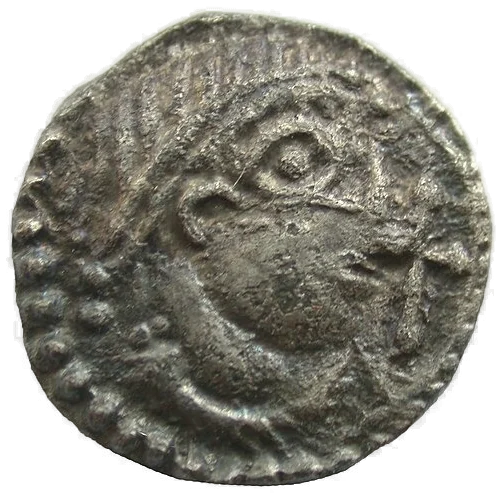
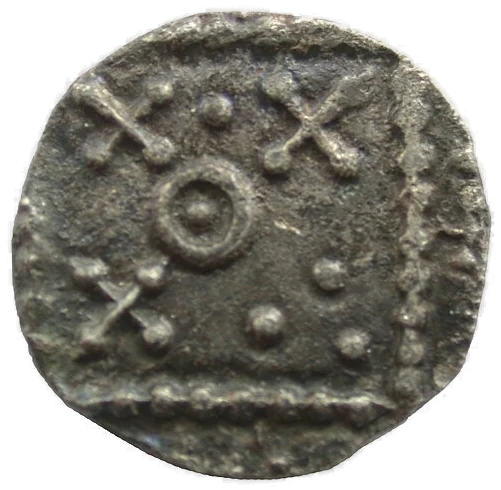
Small silver that appeared again in Britain, an island that had held no coinage for some two centuries after the Roman withdrawal. It came later to be called sceatta (the name used at the time has not come down to us). On small, thick pellets of silver were cut varied images — birds, beasts, mask-like faces — and they flowed in quantity through the North Sea trading world of England, Frisia and Denmark. For many of them the issuing authority is unknown. Trade called money back before the state was rebuilt: a piece from the daybreak of money's return to the island.