Cistophorus of Pergamon
c. 160–150 BC ・ silver ・ 2nd century BC ・ Pergamon
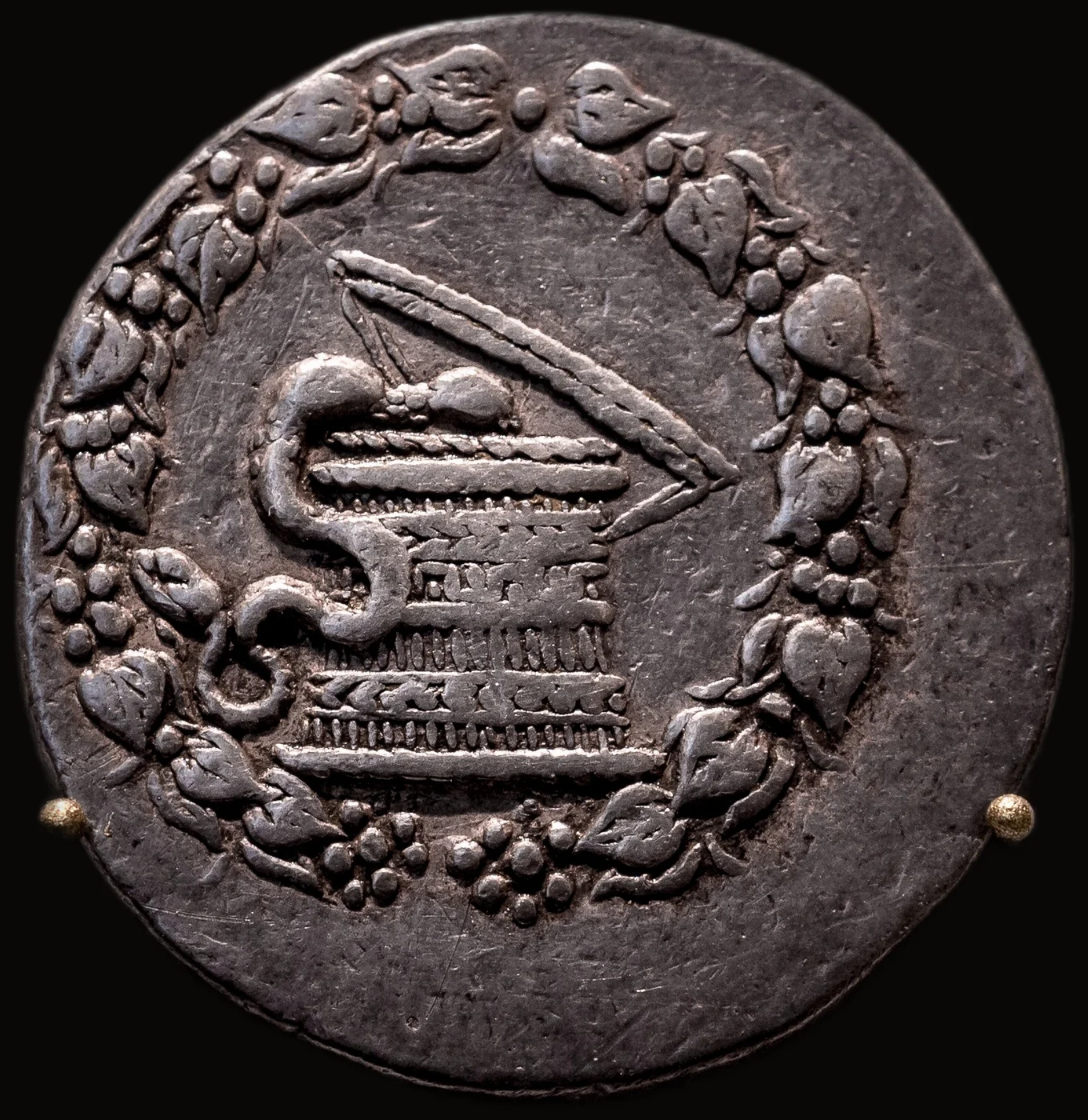
Cistophorus of Pergamon, c. 160–150 BC. Diameter 28 mm, 12.42 g. The obverse shows the cista mystica—the sacred basket from which the coin derives its name—from which a serpent emerges, all within an ivy wreath. The reverse depicts a bow case between two serpents. This silver coin, introduced by the Attalid dynasty, was an overvalued currency, about 25% lighter than the Attic standard, and served as a tool for a closed currency area, circulating at face value within the kingdom. It is also unusual as a royal coinage for not featuring the king's portrait. From the collection of the Münzkabinett, Berlin.
Diameter 28mm